
Lake Lucerne: A Complete Guide to a Long Weekend in Spring (2026)
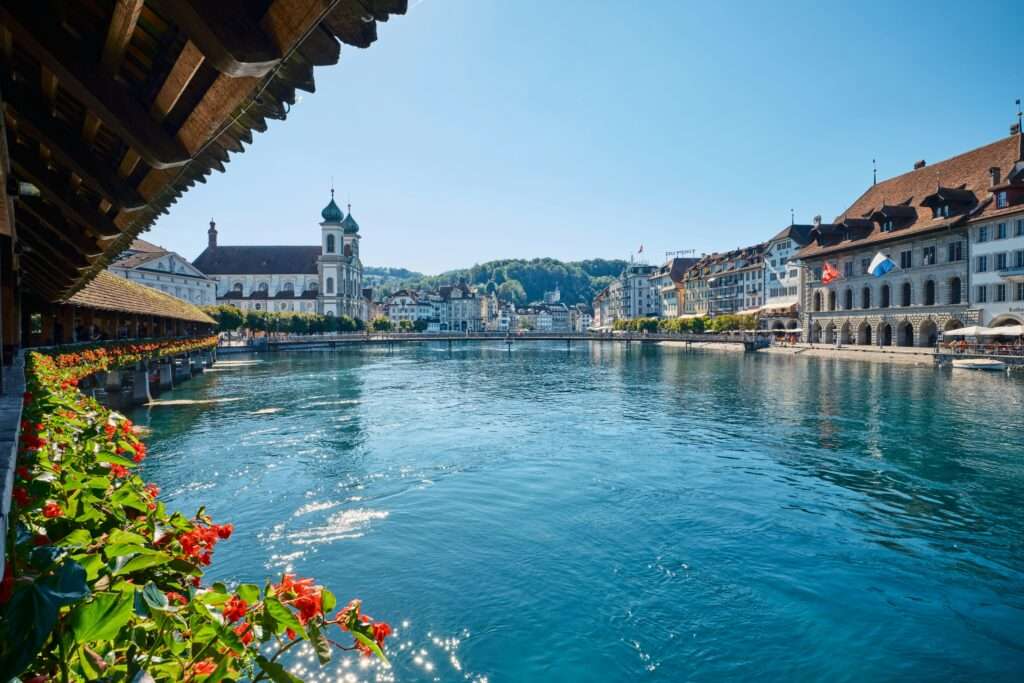
There’s a moment on the Lake Lucerne boat cruise – somewhere between watching the mountains rise steeply out of the water and realising you’ve been quietly staring for twenty minutes – where Switzerland fully justifies every word ever written about it. The lake earns it. You’ll feel it too. We spent a long weekend here in spring, and I’ll be honest: it completely delivered. The city is one of the most beautiful in Europe (genuinely), the boat trip is one of those experiences you talk about for years, and the surrounding mountains offer some of the best accessible hiking you’ll find anywhere. Add in villages that look straight out of a painting and you’ve got a trip that works from basically every angle. Here’s the full guide – city, lake, villages, hikes, practical tips – so you can plan yours properly. Why Spring Is the Best Time to Visit Lake Lucerne Spring visits to Lucerne hit a very specific sweet spot. April through early June brings wildflowers on the mountain slopes, clear air that makes the peaks look genuinely close, and noticeably fewer crowds than peak summer. The lake boat services run on spring timetables from mid-April, and the mountain railways at Rigi and Pilatus operate throughout – though some cable cars come back online in April, so it’s worth checking specific timetables if you’re planning a mountain day. The light is also extraordinary in spring. Low sun angles, green hillsides still fresh, snow dusting the higher peaks. Everything looks slightly more cinematic than it has any right to. Temperature-wise, expect 10-18°C at lake level in May – good walking weather, especially combined with long daylight hours. First: Lucerne City Before you get on a boat or up a mountain, give Lucerne itself proper time. Most people underestimate it. Two to three hours in the old town is the minimum – a half-day is better. Chapel Bridge (Kapellbrücke) Start here. The Chapel Bridge is Lucerne’s most photographed landmark and, unusually for something so famous, it completely lives up to the hype. It’s a covered wooden footbridge built in the 14th century, spanning the River Reuss between the old and new towns, with the octagonal Water Tower rising from the water at its midpoint. Under the roof, triangular 17th-century paintings depict scenes from Swiss history and the lives of Lucerne’s patron saints. Much of the bridge was destroyed by a fire in 1993 and rebuilt within a year – some charred panels were deliberately left in place as a reminder. Worth knowing before you visit. The best time to be here is early morning before the tour groups arrive, or in the hour before sunset when the light on the water is genuinely exceptional. The photo spot opposite the tower from the riverbank gives the most satisfying full-frame view. The Old Town (Altstadt) Cross the Chapel Bridge and spend an hour getting genuinely lost in the old town. Car-free cobbled streets, frescoed facades, painted fountains, and squares that open up unexpectedly. The Weinmarkt, Hirschenplatz, and Kornmarkt are all worth wandering through. There are independent shops and good cafés woven throughout – this isn’t a sanitised tourist district, it’s an actual working city that happens to look like this. The Musegg Wall Walk the 14th-century city walls for the best views over Lucerne’s rooftops, the lake, and the mountains beyond. Nine towers punctuate the wall, four of which are open to climb for free during summer months. The Zytturm – home to Lucerne’s oldest clock – is the most famous. The views from up here are properly special, especially in clear spring weather. The Lion Monument (Löwendenkmal) A few minutes’ walk from the old town, a dying lion carved directly into a sandstone cliff. It was created in 1820 to commemorate Swiss Guards who died defending the French Royal Family during the Revolution of 1792. Mark Twain called it “the most mournful and moving piece of stone in the world.” It’s not overstating it. Practical Lucerne Tips Lucerne is 45 minutes by direct train from Zurich on SBB Rail, and 3 hours from Geneva. The main boat station for lake cruises is right next to the train station – Pier 1 serves Weggis, Vitznau, Brunnen, and Flüelen. Overnight guests in Lucerne receive a free Visitor Card that covers local buses and trams in Zone 10 – ask your hotel for it at check-in. The Lake Lucerne Boat Trip Do not skip this. It is, without question, one of the best ways to spend four hours in Switzerland. Lake Lucerne – or Vierwaldstättersee in German, meaning “lake of the four forest cantons” – covers 114 km² and has 32 boat piers dotted around its shores. Its shape is deeply irregular, with multiple arms and peninsulas that create constantly changing scenery. The northern section between Lucerne and Brunnen is open and green, with villages on the hillsides and the Alps in the distance. The southern Urnersee section – from Brunnen south toward Flüelen – is a different experience altogether: steep cliffs drop almost vertically into the water, the scale becomes dramatically bigger, and the whole thing starts to feel more like a Norwegian fjord. It’s one of the most spectacular stretches of water in Central Europe. Choosing Your Route For a full lake experience, the boat to Flüelen and back takes around 3.5 hours each way – most people do a partial route and hop off along the way. The classic approach is: Lucerne – Vitznau (30-40 minutes): The most popular section for combining with a Mount Rigi excursion. The cogwheel railway departs from the jetty in Vitznau. Lucerne – Weggis (30 minutes): Weggis is the “Riviera” of the lake – mild microclimate, palm trees along the promenade, the Rigi cable car accessible from here. Good for a short escape with a coffee and a walk. Lucerne – Brunnen (1.5 hours): Takes you through the widest part of the lake before the scenery starts to close in. Brunnen has a lovely waterfront. Lucerne