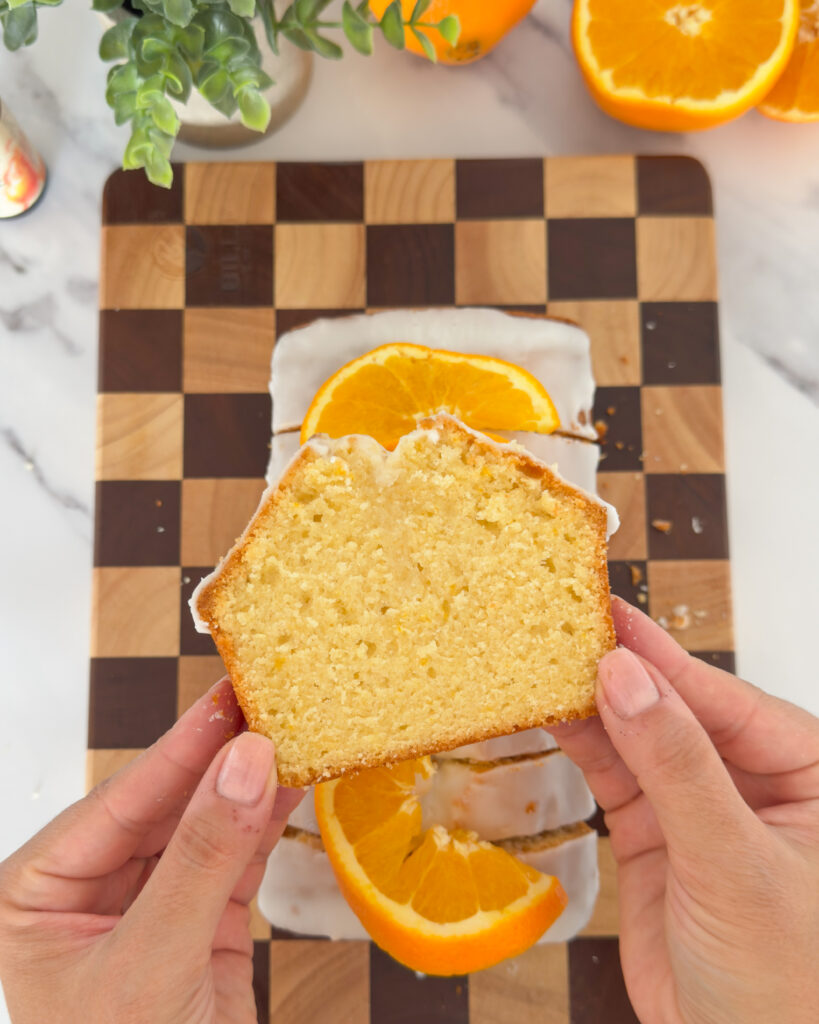
I’ve been a bit obsessed with Portuguese food ever since my first trip there. The pastéis, the wine, the long lunches — but more than anything, the citrus. Oranges in Portugal just taste different. Sweeter, more fragrant, the kind you eat standing over a sink because they’re too good to mess about with a plate.
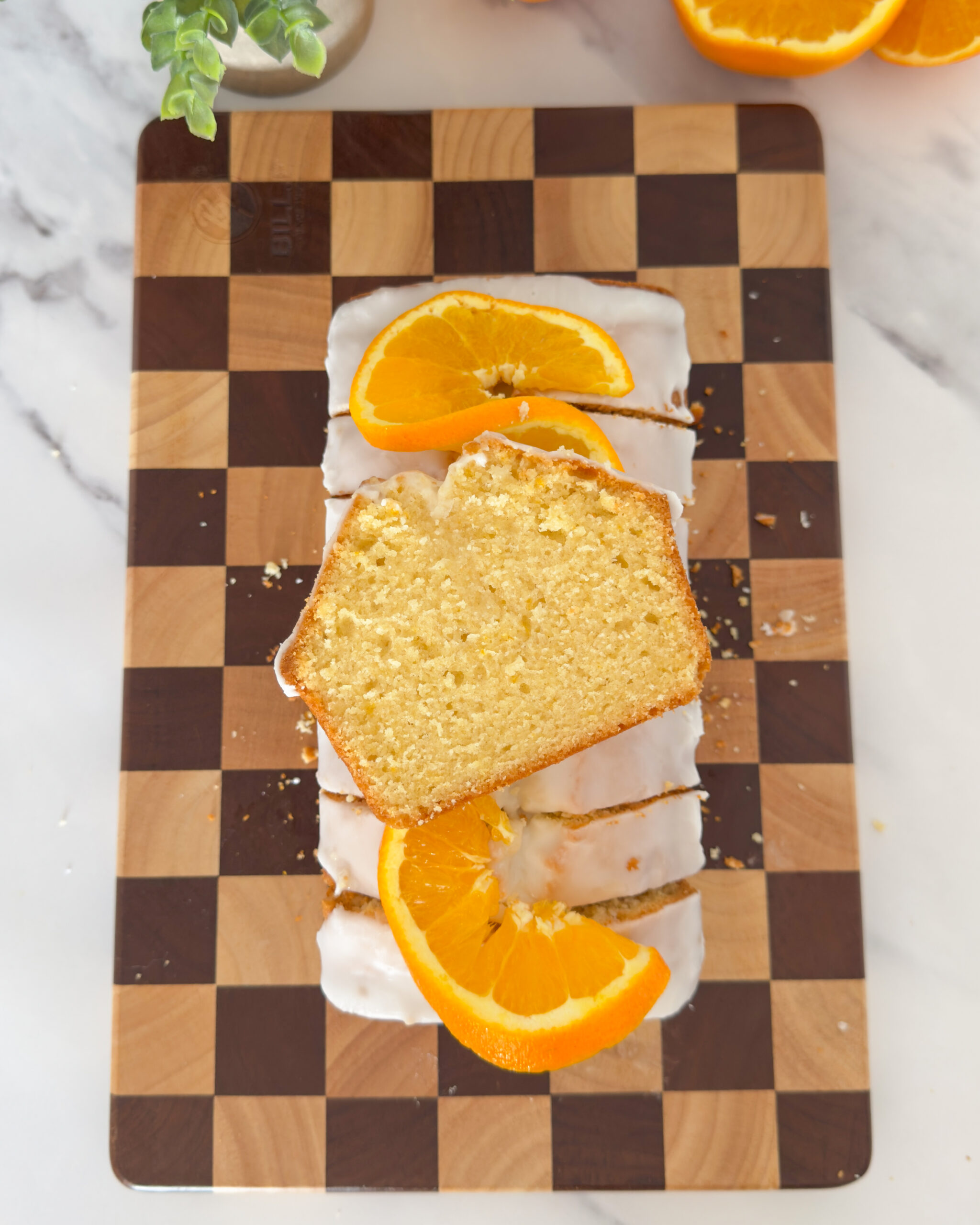
This loaf cake is my attempt to bring that home. Buttery sponge packed with the zest of three oranges, soaked in an orange syrup while it’s still warm from the oven, and finished with a simple orange drizzle. The syrup is the step that makes all the difference — it soaks into the crumb, deepens every bit of orange flavour, and leaves the crust with this slightly sticky, caramelised quality that means the end pieces always go first.
It keeps well for days, tastes even better the next morning, and is the kind of thing I find myself making for no particular reason on a weekday afternoon.
Why This Orange Loaf Cake Works So Well
The base is a classic pound cake – butter, sugar, eggs, flour – but the addition of three oranges’ worth of zest and a post-bake orange syrup takes it somewhere completely different. The syrup is the step that most people skip and shouldn’t. It’s just orange juice and sugar, stirred together and spooned over the warm cake while it’s still in the tin, and it does two things: soaks moisture and flavour deep into the crumb, and lets the sugar sit on the crust and caramelise slightly as the cake cools. You end up with a crisp, almost candied top and a soft, deeply flavoured interior.
The optional orange drizzle at the end is purely decorative – a little icing sugar and orange juice – but it makes the cake look properly finished and adds one last layer of citrus that is never a bad idea.
A Note on the Oranges
Two large oranges for the zest feels like a lot, and it is – but it’s exactly right. This is not a cake where you want a subtle hint of citrus. You want it unmistakably, unapologetically orange. Use fresh oranges rather than bottled juice, particularly for the syrup. The flavour is sharper, more fragrant, and far closer to what you’d find in a Portuguese café than anything from a carton.
Portuguese Orange Loaf Cake
Serves 10 · Prep: 30 mins · Bake: 1 hour 10 mins
The Cake
- 220g unsalted butter, softened
- 190g caster sugar
- 3 medium eggs, room temperature
- Zest of 2 large oranges
- 270g plain flour
- 1 tsp baking powder
- 1tsp Orange extract
- ¼ tsp salt
- 110ml full-fat milk, room temperature
The Orange Syrup
- 45ml (3 tbsp) freshly squeezed orange juice
- 70g caster sugar
The Orange Drizzle (optional)
- 3 tbsp icing sugar, sifted
- 2-3 tsp freshly squeezed orange juice
Method
The Cake
- Preheat your oven to 170°C (150°C fan). Grease and line a 9 × 5 inch loaf tin with baking paper.
- Add the softened butter and caster sugar to a large mixing bowl. Beat with an electric mixer on low speed until combined, then increase to medium and beat for a further 1-2 minutes until the butter is pale, creamy, and almost fluffy. This step builds the structure of the cake — don’t rush it.
- Add the eggs one at a time, beating briefly to combine after each one. Don’t worry if the mixture looks slightly curdled at this stage — it will come together once the flour goes in. Scrape down the sides of the bowl and add the orange zest.
- Add the flour, baking powder, salt, and milk. Mix on low speed until the batter is smooth and combined — it will be thick. Stop as soon as it comes together and don’t overmix.
- Pour the batter into the prepared tin and smooth the top. Bake for approximately 1 hour and 10 minutes, or until a skewer inserted into the centre comes out clean. If the top is browning too quickly after 50-60 minutes, loosely cover with foil and continue baking.
- Place the cake — still in the tin — on a wire rack and leave to cool for 10 minutes.
The Orange Syrup
- While the cake is cooling, stir the orange juice and caster sugar together in a small bowl until combined — don’t heat it, you want the sugar to stay slightly grainy so it settles on the crust.
- Spoon the syrup slowly over the warm cake while it’s still in the tin, allowing it to soak into the crumb and any cracks on the surface. The sugar will settle on top and give you that slightly crisp, caramelised crust as the cake cools.
- Once the syrup has been absorbed, use the baking paper to carefully lift the cake out of the tin and transfer to a wire rack to cool completely.
The Orange Drizzle
- Once the cake is fully cool, mix the sifted icing sugar and orange juice together until smooth — add the juice gradually until you reach a thick but pourable consistency.
- Drizzle over the top of the cake and leave to set for a few minutes before slicing.
Notes & Tips
- Butter and eggs at room temperature are important — cold butter won’t cream properly, and cold eggs can cause the batter to split. Take them out of the fridge at least 30 minutes before you start.
- Don’t overmix the batter once the flour goes in. Mix on low speed and stop as soon as it comes together — overmixing develops the gluten and can give you a tougher crumb.
- Pound cakes do crack on top — this is completely normal and nothing to worry about. The crack is actually the perfect channel for the orange syrup to soak into.
- The syrup is the most important step in this recipe. If you only do one extra thing, make it that.
- This cake keeps well in an airtight container at room temperature for up to 4 days and actually improves after the first day as the syrup continues to work its way through the crumb.
- The unglazed cake freezes well — wrap tightly in cling film and then foil and freeze for up to 1 month. Defrost at room temperature before adding the drizzle.
Orange Loaf Cake Questions, Answered
Why did my cake crack on top?
Pound cake cracks are completely normal and nothing has gone wrong. The batter is dense and takes a long time to bake — the top sets first, and the remaining batter pushes through as it rises. It’s the ideal place for the orange syrup to soak in and is part of what makes this cake look so good.
Do I have to add the syrup?
You don’t have to, but I’d strongly encourage it. The cake is good without it, but the syrup is what takes it from a straightforward loaf cake to something genuinely special — it deepens the orange flavour throughout the crumb and gives the crust that slightly sticky, caramelised quality. If you’re only going to do one extra step, make it this one.
Can I make this a lemon loaf cake instead?
Yes — swap the orange zest and juice for lemon throughout, including in the syrup and drizzle. Use 2-3 lemons for the zest and the same quantities of juice. It works beautifully and has that same intensely citrus quality as the orange version.
Why is my cake dry?
The most common reason is too much flour — it’s very easy to add more than intended when measuring by cups rather than weight. Always weigh your ingredients for the most accurate result. Overbaking is the other culprit — start checking with a skewer from the hour mark and pull it out as soon as it comes out clean.
Can I make this ahead of time?
Yes — and it’s actually better the next day. The syrup continues to work its way through the crumb overnight and the flavour deepens. Bake the day before, apply the syrup while warm, leave to cool, then store in an airtight container and add the drizzle the following day before serving.
Can I use a different tin?
A 9 × 5 inch loaf tin is ideal for this recipe. A smaller tin will give you a taller cake that takes longer to bake and may need the foil cover earlier. A bundt tin also works well if you want a more decorative result — reduce the baking time slightly and check from the 50-minute mark.