Covent Garden is probably the most tourist-dense square mile in London, and I say that as someone who genuinely likes it here. Yes, the piazza is packed with people taking photos of street performers. Yes, the Apple Store has a queue at 10am on a Tuesday. Yes, you’ll hear more American and European accents than London ones. But beneath all that, there’s a reason this area has been a gathering place for centuries.
I’ve been navigating Covent Garden for years – sometimes for theatre trips, sometimes for specific shops, sometimes just because I’m meeting someone nearby and arrive early. What I’ve learned is this: Covent Garden rewards those who look beyond the obvious. The side streets are where the real neighbourhood lives. The early mornings and late evenings are when it breathes normally. And if you know where you’re going, you can have an excellent day here without fighting through crowds or spending a fortune.
This isn’t a guide to the Apple Store and tourist restaurants. It’s the Covent Garden I’ve pieced together through countless visits – the cafés worth the price, the streets to wander, the shops that justify the trip, and how to actually enjoy one of London’s busiest areas.
Getting to Covent Garden
By Tube:
- Covent Garden (Piccadilly line) – Right in the centre but often rammed. Lifts only, no escalators or stairs, and they’re frequently broken. Exit queues can be 15+ minutes on busy days.
- Leicester Square (Piccadilly, Northern lines) – 5 minute walk, better connected, easier to get in and out
- Holborn (Piccadilly, Central lines) – 8 minute walk, far less crowded, good option
- Charing Cross (Bakerloo, Northern lines, National Rail) – 8 minute walk via Strand
Best approach: Unless you’re already on the Piccadilly line, use Leicester Square or Holborn. You’ll save time and stress.
By Bus: Routes 9, 13, 15, 23, 139, and many others serve the area. The 9 is particularly useful (Aldwych stop) if you’re coming from West London.
Walking from nearby areas:
- 10 minutes from Trafalgar Square
- 10 minutes from Soho
- 15 minutes from Embankment (along Strand)
- 15 minutes from British Museum (via Bloomsbury streets)
Reality check: Covent Garden station itself is often not worth the hassle. Walk from Leicester Square or Holborn instead.
When to Visit Covent Garden
Weekday mornings (8-10am): The neighbourhood before it wakes up properly. Cafés are open, shops are opening, street performers haven’t started yet. You can actually walk through the piazza without dodging crowds.
Weekday afternoons (2-5pm): Busy but manageable. Lunchtime office workers have gone, evening theatre crowds haven’t arrived yet.
Early evenings (5-7pm): Theatre district energy. People heading to shows, restaurants filling up, street performers working the crowds. Busy but with purpose rather than aimless tourist wandering.
Avoid: Saturday afternoons (absolutely rammed), Sunday mornings (every tourist in London descends), December (Christmas market chaos), any time school holidays align with good weather.
Best kept secret: Very early weekend mornings (8-9am) before the crowds arrive. The area is actually peaceful, you get your pick of cafés, and you remember it’s a proper neighbourhood, not just a tourist attraction.
The Covent Garden Piazza: What You Need to Know
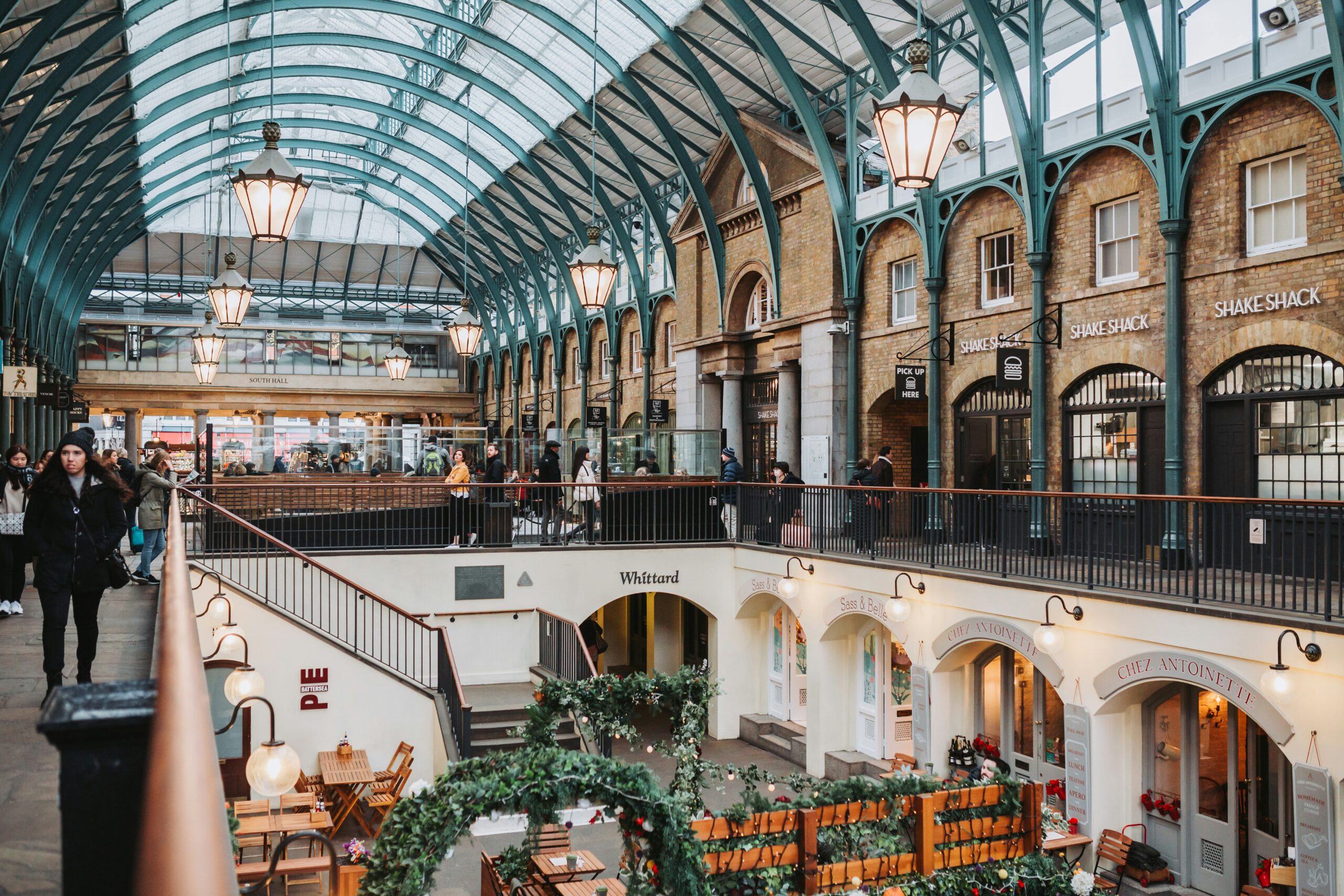
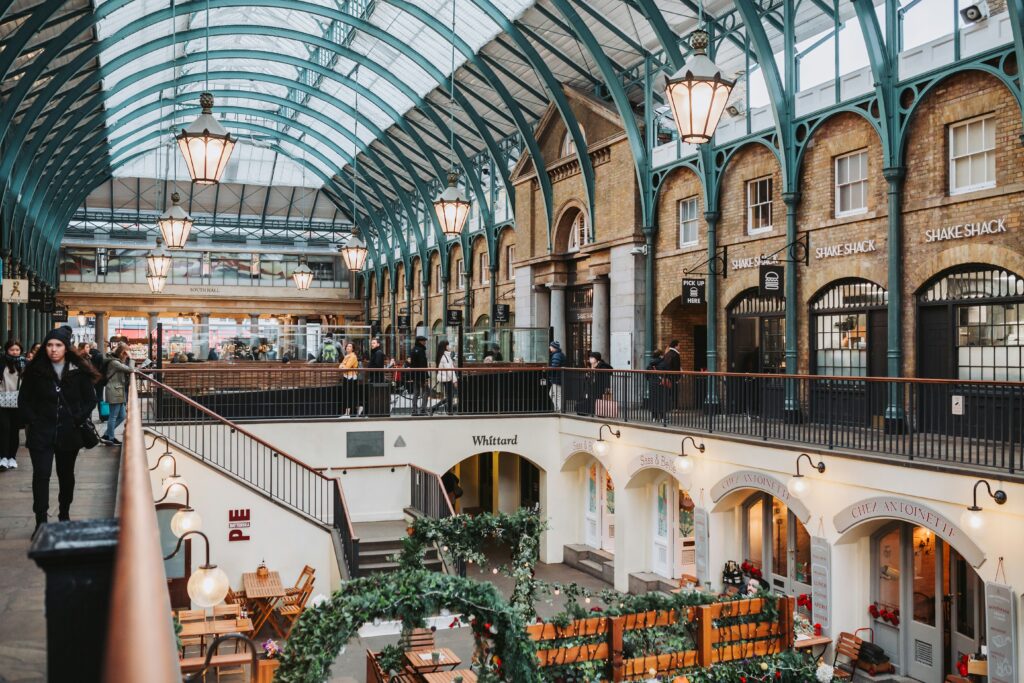
The central market building is what everyone comes to see. Built in the 1830s, it’s now home to shops, cafés, and the Apple Store that seems to be perpetually busy.
The Market Itself
Apple Market (inside the main building): Daily, 10am-6pm. Antiques on Mondays, arts and crafts Tuesday-Sunday. Quality varies dramatically. Some genuinely talented makers sell here, but there’s also a lot of overpriced tourist tat.
Jubilee Market (south side): Antiques on Mondays, general market Tuesday-Friday, arts and crafts on weekends. More touristy than the Apple Market, lower prices, lower quality.
Worth visiting? Once, to see the building and atmosphere. Don’t expect to find treasures unless you’re very lucky or very knowledgeable.
Street Performers
The piazza has licensed buskers – acrobats, musicians, living statues, magicians. They’re often quite talented (there’s an audition process), and they work hard for tips.
Etiquette: If you stop to watch a full act, tip. If you’re just passing through, keep moving rather than blocking views.
Best performers: Usually late afternoon and early evening. Weekend performers tend to be more elaborate (brings bigger crowds = more tips).
Where to Eat in Covent Garden
This area is expensive and full of chain restaurants targeting tourists. But there are places worth your money.
The Ivy Market Grill (1 Henrietta Street)
Brasserie from the Ivy collection. Breakfast through dinner, all-day dining, classic British/European menu.
Why it works: Reliable quality, beautiful interior, manages to feel special without being stuffy Good for: Pre-theatre dinner, weekend breakfast, reliable meal Price: £25-40 per person Booking: Essential for dinner, walk-ins possible at off-peak times
Dishoom (12 Upper St Martin’s Lane)
Bombay café-inspired restaurant. The Covent Garden branch is huge, beautiful, and surprisingly maintains quality despite the volume.
Order: Bacon naan roll for breakfast, black daal and naan for dinner, any of the grilled items Best time: Breakfast (9-11am) has shorter waits, or book ahead for dinner Price: £20-30 per person Reality check: There’s usually a queue. It’s worth it, but factor in 20-30 minutes wait time.
Frenchie (16 Henrietta Street)
Covent Garden outpost of the Paris restaurant. Small plates, French technique, excellent wine list.
Good for: Special dinner, wine lovers, when you want something beyond chains Atmosphere: Buzzy, informal fine dining Price: £45-60 per person Booking: Required
Balthazar (4-6 Russell Street)
French brasserie modelled on the New York original. Large, grand, all-day menu.
Why people like it: Reliable, impressive room, good for groups, handles dietary requirements well Good for: Pre-theatre dinner (they know theatre schedules), weekend brunch Price: £30-45 per person Booking: Recommended
Rules (35 Maiden Lane)
London’s oldest restaurant, established 1798. Traditional British food, old-school atmosphere, walls covered in art and theatre memorabilia.
Best for: If you want “historic London” dining experience, game season (grouse, venison, pheasant), pre-theatre Price: £50-70 per person Character: Very British, quite formal, charming if you’re into that Booking: Essential
The Delaunay (55 Aldwych)
Viennese-style café from the Corbin & King group. All-day dining, breakfast through late dinner.
Why I like it: Civilised, comfortable, excellent for solo dining, good people-watching Order: Wiener schnitzel, any of the breakfast options, käsekrainer Best time: Mid-afternoon for coffee and cake, avoiding meal rush times Price: £25-40 per person
Flat Iron (17-18 Henrietta Street)
Steak restaurant. Simple concept, good quality meat, reasonable prices for the area.
Good for: When you want steak without paying £50, casual dinner Order: The flat iron steak (obviously), comes with salad Price: £15-25 per person Note: No bookings, expect to queue at peak times
Sushisamba (Heron Tower, 110 Bishopsgate)
Wrong location – that’s in the City. In Covent Garden, for Japanese, try Kiln nearby in Soho instead.
Budget Options That Don’t Feel Like Tourist Traps:
Buns & Buns (4 Mercer Walk) – Korean-style buns, good quality, £8-12
Five Guys (various locations nearby) – Yes it’s a chain, but reliable and cheaper than sit-down restaurants
Pret, Leon, Wasabi – Multiple locations, decent for quick lunch under £8
Honest Truth: Most restaurants directly on the piazza are overpriced and mediocre. Walk two streets back for better value and quality.
Cafés Worth Your Time
Monmouth Coffee (27 Monmouth Street)
The original location of one of London’s best coffee roasters. Tiny shop with a few stools, takeaway primarily.
Why it’s special: They roast their own beans, coffee is excellent, staff know their stuff Order: Filter coffee, pastries are good too Best time: Early morning or mid-afternoon to avoid queues Price: £3-5
Notes (31 St Martin’s Lane)
Coffee and food spot. Multiple floors, lots of seating, good for working or meeting people.
Good for: Breakfast, lunch, coffee meetings, working on laptop (with purchase) Menu: Salads, sandwiches, hot dishes, extensive coffee menu Price: £8-15 Atmosphere: Busy but spacious enough to feel comfortable
Fernandez & Wells (73 Beak Street)
Wrong location – that’s in Soho. In Covent Garden proper, stick with Monmouth for quality coffee.
The Petersham Nurseries Covent Garden (Entrance from Floral Street)
Florist and café. Beautiful space filled with plants, excellent coffee, light food menu.
Why it’s special: Feels like an escape from the chaos outside, genuinely lovely space Good for: Mid-morning coffee, afternoon break, meeting someone in peaceful surroundings Price: £8-15 Note: Popular, can be busy on weekends
Shopping in Covent Garden
Neal’s Yard Remedies (Original shop in Neal’s Yard)
Natural beauty and wellness products. The original shop in the colourful Neal’s Yard courtyard.
Worth it for: Natural skincare, aromatherapy, the Neal’s Yard location itself Price: Mid-range to expensive Atmosphere: Knowledgeable staff, can try products
Stanford’s (7 Mercer Walk)
Map and travel bookshop. Been here since 1853, largest travel bookshop in the world.
Why it’s special: Every map you could want, travel guides, globes, travel writing, knowledgeable staff Good for: Planning trips, map enthusiasts, travel lovers Note: Worth visiting even if you’re not buying – it’s an impressive space
Cass Art (13 Charing Cross Road)
Art supplies. Large shop, good range, reasonable prices.
Best for: Artists, students, quality art materials Better than: Tourist gift shops for quality creative supplies
Floral Street Boutiques
Paul Smith – British designer, the Floral Street shop is the flagship Mulberry – British leather goods, handbags Chanel – French luxury fashion Various other high-end boutiques
Reality check: These are luxury price points. Window shopping is free, buying requires significant budget.
The Tintin Shop (34 Floral Street)
Entirely devoted to Tintin. Books, figurines, prints, posters, memorabilia.
Worth it if: You love Tintin Skip if: You’re not into Tintin – it’s very niche
Covent Garden Market Shops (inside the piazza building)
Apple Store – Always busy, good for repairs or genius bar appointments Beauty shops, jewellery, gifts – Mostly mid-range, better quality than market stalls outside Tea shops, souvenir shops – Variable quality, check prices before buying
Honest opinion: The permanent shops in the market building are fine but nothing you can’t find elsewhere. The location is the attraction more than the shops themselves.
The Royal Opera House
Worth discussing separately because it’s significant.
What it is: One of the world’s leading opera houses. Opera, ballet, occasional concerts.
Tickets: £5-250+ depending on seat and production. Yes, really. Upper balcony seats (amphitheatre) can be £10-20 for some productions. Orchestra stalls for a major opera? £150+.
Worth it? If you like opera or ballet, absolutely. The building alone is spectacular, the productions are world-class, and you can get in cheaply if you’re flexible about seating.
Getting cheap tickets:
- Amphitheatre seats (released online a few weeks before each show)
- Day seats (sold at box office from 10am on performance day)
- Friday Rush tickets (£10 tickets on TodayTix app, limited availability)
- Standing room (some productions)
Dress code: No official dress code, but people dress up. Smart casual minimum for stalls, anything goes in upper levels.
Tours: Daily tours of the building (£14) if you want to see inside without watching a performance.
Neal’s Yard: The Instagram Corner
Tiny courtyard off Shorts Gardens, painted in bright colours. Looks like a film set, photographs beautifully.
What’s there: Neal’s Yard Remedies, Wild Food Café (vegan), homeopathy shop, therapy centre.
Worth visiting? Yes, for five minutes. Take your photos, grab coffee if you want, move on. It’s genuinely pretty but very small.
Best time: Early morning (8-9am) for photos without crowds, or weekday afternoons when it’s quieter.
Reality check: It’s one tiny courtyard. Don’t plan your day around it, but it’s worth ducking into if you’re nearby.
Seven Dials: The Better Part of Covent Garden
Seven streets radiating from a central pillar. Less touristy than the piazza, more independent shops, better atmosphere.
What’s here:
- Independent boutiques and designers
- Monmouth Coffee
- Small cafés and restaurants
- Theatre access
- Residential feel despite being central
Why I prefer it: Feels more like actual London. Still busy but with locals shopping, working, living rather than pure tourism.
Best streets:
- Monmouth Street (shops, cafés, restaurants)
- Neal Street (slightly alternative vibe, vintage shops)
- Mercer Street (quieter, residential)
Shopping here: Mix of independent and small chains. Better browsing than the main piazza area.
Covent Garden’s Food Markets
Jubilee Market Hall (south side of piazza)
Monday: Antiques and collectibles Tuesday-Friday: General market (clothing, accessories, gifts) Weekend: Arts and crafts
Food: No fresh food market in Covent Garden proper.
For food markets: Borough Market (15 minutes south) or Maltby Street Market are better options.
Walks Around Covent Garden
Covent Garden to Leicester Square via Theatreland
Walk down Garrick Street, past multiple theatres, into Leicester Square. See the theatre district atmosphere.
Time: 10 minutes Good for: Theatre lovers, people watching, pre-show wandering
Covent Garden to Embankment via Strand
Walk down Southampton Street to Strand, turn right, walk past Somerset House to Embankment. See the Thames.
Time: 15 minutes Good for: Combining Covent Garden with river walk Via: Somerset House courtyard (free to walk through)
Seven Dials Loop
Start at the Seven Dials pillar, walk down each of the seven streets radiating from it, circling back. See the less touristy Covent Garden.
Time: 30-45 minutes Good for: Shopping, exploring, local atmosphere
Covent Garden to British Museum
Walk up Bow Street, through Bloomsbury streets, to the British Museum.
Time: 15 minutes Good for: Combining two major areas Route: Quieter streets showing residential London
Seasonal Highlights
Spring (March-May)
- Longer daylight, pleasant street walking
- Somerset House summer season begins (courtyard fountains)
- Outdoor seating appears at cafés and restaurants
Summer (June-August)
- Busiest tourist season (be warned)
- Somerset House courtyard fountains
- Outdoor cinema in various venues nearby
- Extended daylight hours
- Street performers in full force
Autumn (September-November)
- Best theatre season (new productions launch)
- Fewer tourists than summer
- Comfortable walking weather
- Cosy pub and café atmosphere
Winter (December-February)
- Christmas decorations throughout December
- Festive atmosphere and market stalls
- Theatre pantomime season
- Cold but atmospheric for evening theatre visits
Best Times for Different Purposes
Shopping: Weekday afternoons (2-5pm) or Saturday mornings (9-11am)
Theatre: Evening performances start 7:30pm, arrive 6pm for dinner beforehand
Photography: Early morning (7-9am) or late evening for fewer crowds
Peaceful visit: Weekday mornings (8-11am) before tourist crowds arrive
Atmosphere and energy: Friday/Saturday evenings when theatre district is buzzing
How Long to Spend in Covent Garden
Quick visit (1-2 hours): Walk through piazza, watch a street performer, browse Seven Dials, coffee at Monmouth. You’ve seen the highlights.
Half day (3-4 hours): Thorough exploration of piazza and Seven Dials, lunch, shopping or museum visit, coffee. Comfortable pace.
Full day (6+ hours): Leisurely morning exploration, proper lunch, matinee theatre performance, pre-dinner drinks, evening meal. Makes most sense if you’re seeing a show.
My recommendation: Half day is enough unless you’re seeing theatre. Covent Garden is geographically small and most people overestimate how long they need here.
Combine with: Soho (5 minutes walk), Leicester Square (5 minutes), Somerset House (5 minutes), British Museum (15 minutes walk).
Final Thoughts: What Makes Covent Garden Work
Here’s what I’ve learned after years of visiting: Covent Garden is exhausting if you try to fight it. The crowds, the prices, the tourist atmosphere – it can feel overwhelming. But if you adjust your expectations and approach it on its own terms, there’s enjoyment to be found.
Come early or late. Duck into the side streets. Don’t eat in the piazza itself. Remember that it’s been a gathering place and market for centuries, and that energy is why people keep coming. The tourists are annoying until you remember you’re also a tourist, at which point you might as well relax and enjoy the street performers.
What surprises people is how small it actually is. The famous piazza is one building surrounded by one square. Everything you’ve heard about and seen in photos is within a five-minute walk of that central point. This concentrated energy is both Covent Garden’s strength and its problem – it packs a lot into a small space, which means it gets overwhelmed easily but also means you can experience it all quickly.
The neighbourhood works best as part of a larger day rather than a destination itself. Combine it with Soho for food, the British Museum for culture, Somerset House for art, or anywhere in the West End. Covent Garden is the aperitif or dessert, not the main course.
If you’re seeing theatre here, arrive early. Have dinner, walk around, let the evening energy build. The area makes sense in the context of a theatre visit in a way it doesn’t when you’re just ticking it off a tourist list.
And if you find yourself here on a quiet Tuesday morning with the street cleaners still working and the shops just opening, you might catch a glimpse of what the neighbourhood is when it’s not performing for visitors. Those moments are rare, but they’re worth the early wake-up.
Save This Guide
Bookmark this page for your next trip to central London. Covent Garden changes with the shows, the seasons, and the crowds, but the bones of the neighbourhood remain.
Want more London neighbourhood guides? I write regularly about discovering the city beyond the obvious tourist routes, finding the cafés worth the price, and making the most of even the busiest areas.
Have you navigated Covent Garden? Found a quiet corner or restaurant I’ve missed? Leave a comment – I’m always looking for new recommendations.