If you’ve already made the base Swiss Meringue Buttercream and you’re now standing in the kitchen wondering what to do with it – this is the article for you.
One of the things I love most about SMBC is how ridiculously well it takes on flavour. The base itself is light, silky, and not overly sweet, which means it lets other ingredients shine rather than fighting them. You’re not masking anything with icing sugar – you’re genuinely building flavour into something already delicious.
Below are all nine of my favourite variations, each one tested and trusted. Every single one is built on my base recipe – so if you haven’t made that yet, start there first, then come back here and pick your flavour.

A Few Things to Know Before You Start
All quantities below are based on the full base recipe (500g sugar, 250g egg whites, 500g butter). If you’re making a smaller or larger batch, scale accordingly.
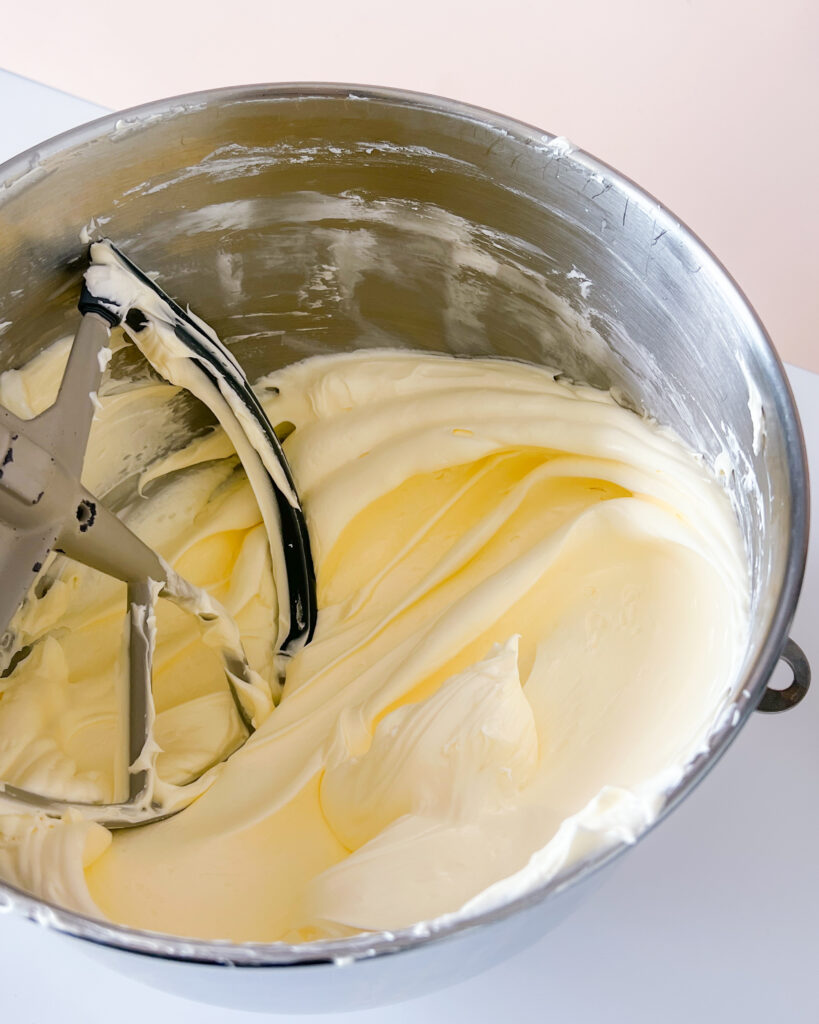
Add your flavouring at the very end – after the paddle attachment step — and mix through on low speed until fully combined. For anything liquid or spreadable, fold it in gently to avoid knocking the air out of your beautifully whipped buttercream.
Taste as you go. The amounts I’ve given are to my taste, and taste is personal. Start with slightly less than the recipe suggests, taste, and add more from there.
1. Chocolate Swiss Meringue Buttercream
Milk, white, or dark – your call
This is probably the most requested variation I make, and honestly it’s easy to see why. The combination of silky SMBC with rich chocolate is genuinely hard to beat. It pipes beautifully, tastes incredible, and works on almost any cake flavour you can think of.
What to add: 200–250g melted and cooled chocolate
How to do it: Melt your chocolate gently in the microwave in short bursts, stirring between each one. I tend to do this right at the start of making the base recipe, so by the time the buttercream is ready, the chocolate has had plenty of time to cool to room temperature. You want it fully liquid but not warm – if it’s even slightly too hot it can cause the buttercream to melt and split. Pour it in slowly with the mixer on low and watch it transform.
Which chocolate to use: Dark chocolate gives you a more intense, bittersweet result. Milk chocolate is richer and sweeter. White chocolate creates something almost caramel-like and pairs brilliantly with fruit cake layers. All three work – it just depends on the cake you’re making.
Best paired with: Chocolate sponge (obviously), vanilla, hazelnut, or raspberry cake layers.
2. Caramel Swiss Meringue Buttercream
If dark chocolate SMBC is the classic, caramel SMBC is the one that makes people absolutely lose their minds. There’s something about the combination of the buttery, silky base and that deep, slightly salty caramel that is just outrageously good. It also looks stunning – a warm golden hue against a white cake crumb.
What to add: 4–5 tbsp salted or unsalted caramel
How to do it: Add the caramel a tablespoon at a time on low speed, tasting as you go. Salted caramel gives you that gorgeous sweet-salty contrast that I personally love; unsalted is more straightforward and a little gentler. Either works.
A note on consistency: Caramel adds liquid to the buttercream, so if it starts to look a little soft after adding it, pop the bowl in the fridge for 10 minutes and then mix again. It’ll firm right back up.
Best paired with: Apple, banana, vanilla, or brown butter sponge layers. Also incredible sandwiched between layers of chocolate cake.
3. Lemon Swiss Meringue Buttercream
Bright, fresh, and zingy – this one is a total showstopper on a summer cake. The combination of lemon extract and lemon curd gives you both depth of flavour and a lovely citrus sharpness that cuts through the richness of the buttercream beautifully. It’s the kind of thing that makes people say they didn’t think they liked buttercream, and then eat three slices.
What to add: Replace the vanilla extract in the base recipe with lemon extract, and add 4-5 tbsp of lemon curd
How to do it: Skip the vanilla entirely when making the base and use lemon extract in its place. Then, once the buttercream has come together, fold in the lemon curd a tablespoon at a time on low speed.
Homemade vs shop-bought curd: Honestly, both work. A good-quality shop-bought lemon curd is completely fine and saves you a step. If you do have time to make your own, it’s absolutely worth it – the flavour is brighter and more intensely lemony.
Best paired with: Lemon, elderflower, vanilla, or blueberry sponge layers.
4. Berry Swiss Meringue Buttercream
Raspberry, strawberry, blueberry, or blackberry
This one is as pretty as it is delicious. Depending on the berry you use, you get everything from a deep jewel-toned purple to a soft dusty pink – all completely natural, no food colouring required. The berry compote adds a subtle tartness that keeps things from being too sweet, and the flavour is genuinely fruity rather than artificial.
What to add: 5 tbsp of berry compote (homemade or shop-bought)
How to do it: Fold the compote in a tablespoon at a time on low speed. Make sure the compote is completely cool before adding – warm compote will melt the buttercream. If it looks a little soft after adding, refrigerate the bowl for 10-15 minutes and mix again.
Which berry to use:
- Raspberry gives you a beautiful pink with a sharp, punchy flavour
- Strawberry is softer, sweeter, and a little more delicate
- Blueberry creates a stunning lilac-purple and a slightly floral flavour
- Blackberry gives a deeper, darker purple and a more intense taste
Homemade compote: If you have time, making your own is easy and makes a real difference. Simmer your chosen berries with a little sugar and a squeeze of lemon until jammy, then cool completely before using. Strain out the seeds if you prefer a smoother result.
Best paired with: Vanilla, lemon, almond, or coconut sponge layers.
5. Biscoff Swiss Meringue Buttercream
I’ll be straight with you: this one is dangerously good. If you’ve ever eaten Lotus Biscoff spread straight from the jar (no judgement, we’ve all been there), you’ll understand exactly why this variation is such a hit. It’s warming, spiced, deeply caramel-like, and completely irresistible.
What to add: 200–250g smooth Lotus Biscoff spread
How to do it: Add the Biscoff spread in a few spoonfuls at a time on low speed. It incorporates easily and transforms the colour of the buttercream to a gorgeous warm caramel-brown. Start with 200g, taste, and add more if you want a stronger flavour.
A note on texture: Biscoff spread is quite thick and dense, which actually helps the buttercream hold its shape really well. This makes it a great choice for taller or more elaborate cakes where stability matters.
Best paired with: Banana, vanilla, cinnamon, or chocolate sponge layers. A Biscoff cake with crushed biscuit crumbs between the layers is an absolute crowd-pleaser.
6. Hazelnut Swiss Meringue Buttercream
Think Nutella without the chocolate – all that deep, toasty, nutty flavour in the smoothest buttercream you’ve ever tasted. This one is rich and indulgent, with a warmth to it that makes it feel almost cosy. It’s also one of those flavours that tastes far more sophisticated than it is to make.
What to add: 200–250g smooth hazelnut spread
How to do it: Fold in the hazelnut spread a few spoonfuls at a time on low speed until fully combined. As with Biscoff, start with 200g and taste before adding more.
Which spread to use: A smooth, good-quality hazelnut spread works best here. If you want a purer hazelnut flavour without sweetness, look for a 100% hazelnut butter – the result will be nuttier and less sweet, which pairs brilliantly with a chocolate cake.
Best paired with: Chocolate, coffee, vanilla, or praline sponge layers.
7. Coffee Swiss Meringue Buttercream
This is the one for the coffee lovers – and it’s a serious contender for my personal favourite. The espresso cuts through the richness of the buttercream in the most satisfying way, giving you something that’s bold and sophisticated without being bitter. It also makes the kitchen smell absolutely incredible while you’re making it.
What to add: 2 tbsp espresso powder dissolved in 2 tbsp warm water, cooled completely
How to do it: Mix the espresso powder into the warm water until fully dissolved, then leave it to cool to room temperature before adding. This is important – adding it warm will cause issues with the buttercream consistency. Once cooled, pour it in slowly with the mixer on low.
Adjusting the strength: 2 tbsp of espresso powder gives a strong, punchy coffee flavour. If you want something subtler, start with 1 tbsp and taste before adding more. For a really intense hit, go up to 3 tbsp – just make sure it’s fully dissolved.
Best paired with: Coffee, chocolate, walnut, or vanilla sponge layers. A coffee and walnut cake with this buttercream is genuinely one of my favourite combinations.
8. Matcha Swiss Meringue Buttercream
If you’re after something a little unexpected, this is it. Matcha SMBC has a beautiful earthy, slightly grassy flavour that’s delicate but distinctive, and the colour – a soft, natural sage green – is absolutely stunning without any food colouring. It’s the kind of thing that looks incredibly impressive and tastes completely unique.
What to add: 3–4 tsp matcha green tea powder
How to do it: Sift the matcha powder directly into the buttercream – sifting is important here as matcha can clump – and mix through on low speed. Start with 3 tsp, taste, and add the fourth if you want a stronger flavour and deeper colour.
Which matcha to use: Quality really matters with matcha. A good ceremonial-grade matcha will give you a vibrant green colour and a smooth, sweet flavour. Lower-grade matcha can be more bitter and will give a duller, more olive-toned colour. It’s worth spending a little more here for a noticeably better result.
Best paired with: Vanilla, white chocolate, lemon, or almond sponge layers. Matcha and white chocolate together is a combination I come back to again and again.
9. Pistachio Swiss Meringue Buttercream
Last but absolutely not least – and honestly, if you haven’t tried pistachio buttercream before, you are in for a treat. It’s nutty, slightly sweet, with a gorgeous natural pale green colour, and it feels genuinely luxurious in a way that’s hard to describe until you’ve tasted it. This one tends to surprise people in the best way possible.
What to add: 3 tbsp smooth pistachio paste
How to do it: Fold the pistachio paste through on low speed until fully incorporated. It blends in easily and gives a subtle but unmistakable flavour.
Where to find pistachio paste: Specialist baking shops, Middle Eastern grocery stores, and online are your best bets. Make sure you’re buying 100% pistachio paste rather than a sweetened pistachio spread – the pure paste gives a more natural, intense flavour. It can be pricey, but a little goes a long way.
Best paired with: Vanilla, lemon, rose, white chocolate, or almond sponge layers. Pistachio and rose is a combination I find completely impossible to resist.
Tips for Flavouring SMBC Successfully
A few things that apply across all variations:
Temperature is everything. Always make sure anything you’re adding is at room temperature before it goes into the buttercream. Cold additions can cause it to seize; warm additions can cause it to melt.
Add gradually. Even if you’re confident about the quantity, add your flavouring a little at a time. You can always add more; you can’t take it out.
Taste constantly. This is genuinely the most important instruction on this entire page. Buttercream flavour intensifies slightly as it sits, so if it tastes almost right, it’s probably exactly right.
If it goes sloppy, refrigerate it. Most additions add a little liquid or fat to the buttercream, which can soften it slightly. If it looks too soft to use after flavouring, cover the bowl and refrigerate for 10–15 minutes, then mix again on medium speed. It will come back together.
Use oil-based food colouring if you want to adjust or enhance the colour of your finished buttercream. It combines far more smoothly with SMBC than water-based colouring.
Ready to Get Started?
All of these variations start in the same place – my Signature Swiss Meringue Buttercream base recipe. Get that right first, and the flavour possibilities really are endless.
If you make any of these, I’d love to see them – tag me and let me know which flavour you went for. My money’s on Biscoff for most of you, but pistachio fans, I see you.