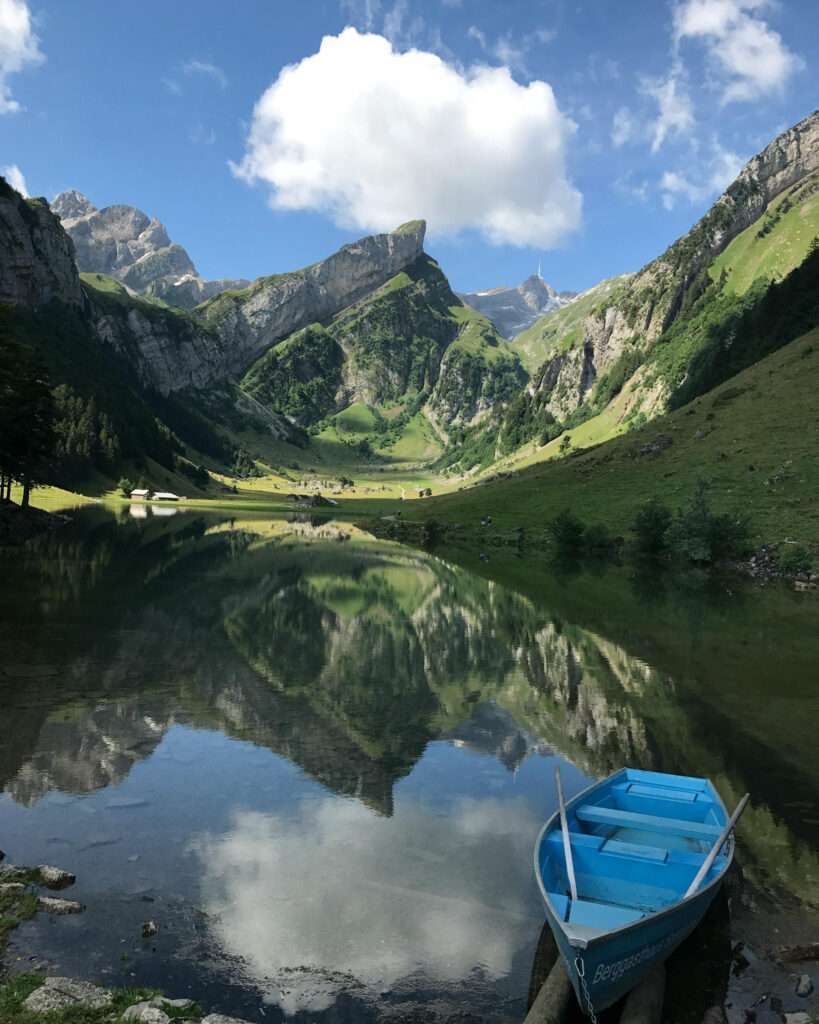
If there’s one thing Switzerland does better than anywhere else in Europe, it’s lakes. The combination of Alpine peaks, impossibly clear water and charming lakeside villages creates the kind of scenery that feels almost too good to be true. I’m not joking when I say you’ll stand there, fully overwhelmed, wondering how this place actually exists.
But here’s the thing – with around 1,500 lakes dotted across the country, knowing where to focus your time can feel seriously daunting. Should you head to the Italian south and sip Merlot by Lake Lugano? Cruise the fjord-like arms of Lake Lucerne? Or base yourself in the Bernese Oberland for the turquoise drama of Lakes Thun and Brienz?
This guide breaks down the best lakes in Switzerland by vibe, what to do at each one, and all the practical information you need to plan your visit – including how the Swiss Travel Pass fits in, which lakes are best for swimming, and which scenic train routes connect them all.
Save this. You’ll want to come back to it.
Why Switzerland’s Lakes Are Worth the Hype
The colour alone is enough to justify a trip. Swiss lakes get their distinctive turquoise and blue hues from glacial meltwater carrying fine particles of rock (called glacial flour) that reflect light in extraordinary ways. The result is water that ranges from deep cobalt to almost unreal turquoise depending on the lake, the season, and how the light falls.
Switzerland’s excellent public transport network – trains, buses, and boats – means most lakes are easy to reach without a car. The Swiss Travel Pass covers regular boat services on the major lakes, which makes hopping between lakeside villages genuinely enjoyable rather than logistically stressful. In 2026, a 3-day consecutive Swiss Travel Pass starts from CHF 254 for 2nd class, and it covers unlimited travel on trains, buses, and lake boats across the Swiss Travel System network.
The Best Lakes in Switzerland
1. Lake Geneva (Lac Léman) – The Grand Dame
Best for: Culture, vineyards, cosmopolitan energy, and classic Swiss elegance
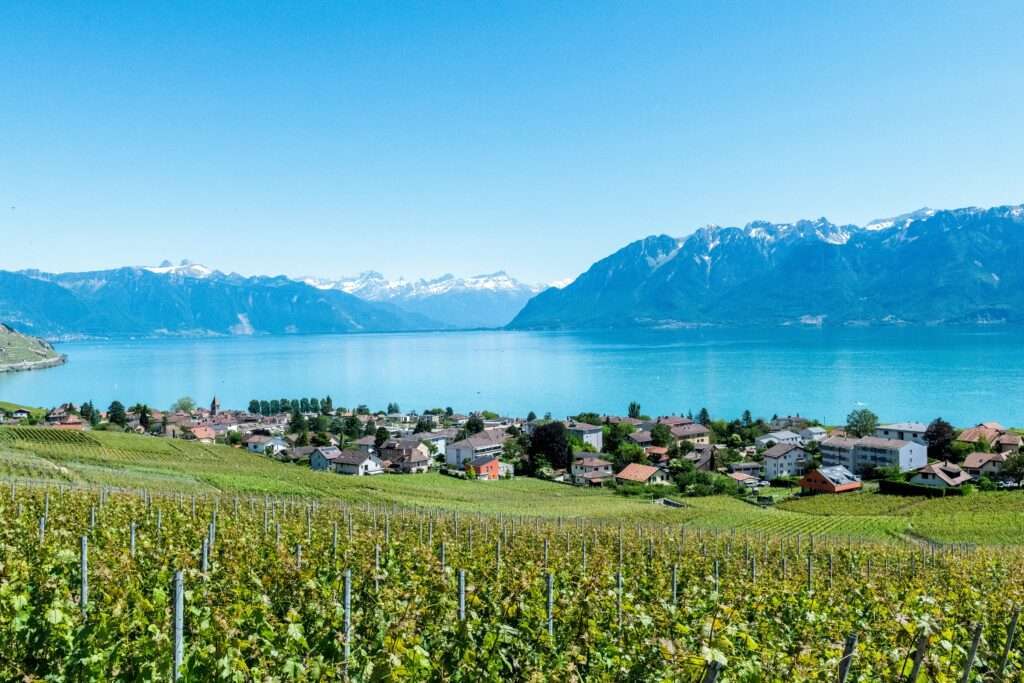
Lake Geneva is Switzerland’s largest lake, sitting on the border with France. At the western tip, Geneva itself is one of Europe’s most sophisticated cities – home to the United Nations headquarters and a formidable arts and dining scene. Head east along the northern shore and you’ll pass through the UNESCO-listed Lavaux vineyards before reaching Lausanne, then Montreux.
Montreux is the standout stop. It sits on the lake’s eastern shore, famous for its annual jazz festival (held each July), the Freddie Mercury statue on the promenade, and the jaw-dropping Château de Chillon – a medieval fortress built directly on the water’s edge. It’s the most visited historical building in all of Switzerland, and honestly, it earns that title.
The promenade along Lake Geneva is one of Switzerland’s most beautiful, and walking between Montreux and Vevey on a sunny day is the kind of experience that quietly ruins you for everything that comes after.
What to do:
- Visit Château de Chillon (allow 2–3 hours)
- Walk or cycle the promenade from Montreux to Vevey
- Take a boat from Lausanne east to Montreux, stopping at lakeside towns
- Explore the Lavaux vineyards – pick up a local Chasselas white and find a terrace with a view
Getting there: Direct trains run from London St Pancras via Eurostar to Paris, then Paris Gare de Lyon to Geneva. From London, the total journey takes around 7–8 hours. The Golden Pass Express connects Montreux to Interlaken for onward travel into the Swiss Alps.
Best time to visit: May to September for warm lakeside weather. The jazz festival in July draws huge crowds to Montreux, so book accommodation far in advance if you’re visiting then.
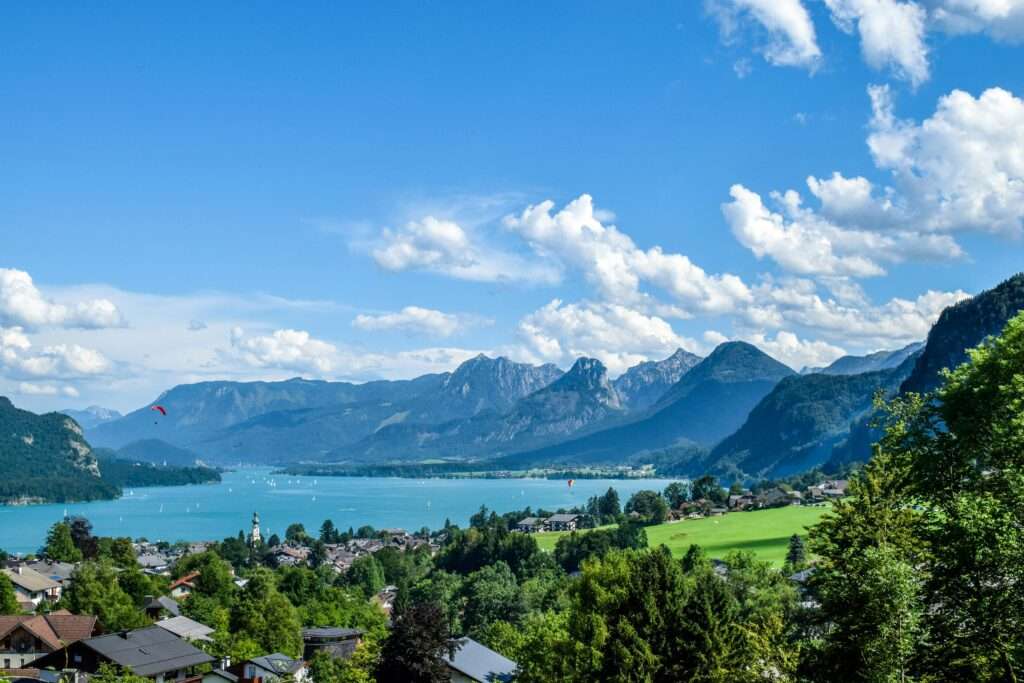
2. Lake Lucerne (Vierwaldstättersee) – The One That Keeps Giving
Best for: Scenic drama, boat hopping, mountain excursions, and Swiss history
Lake Lucerne is one of those places that genuinely surprises you with how much it offers. It covers 114 km² with a deeply irregular shape – multiple arms and peninsulas create constantly changing scenery, so the views on a boat trip never feel repetitive. The southern sections, particularly the Urnersee arm, are the most dramatic: steep mountainsides plunge directly into the water in a way that feels more Scandinavian fjord than Swiss lake.
The city of Lucerne sits at the lake’s northwestern tip and is one of Switzerland’s most beautiful cities. The iconic Chapel Bridge – a covered wooden footbridge dating to 1332 – crosses the River Reuss right in the heart of the medieval old town. The Lion Monument, the Water Tower, and the Jesuitenkirche all sit within easy walking distance, making a half-day in Lucerne before a lake cruise a genuinely rewarding combination.
From Lucerne’s boat station, right next to the main train station, cruises head out across the lake in multiple directions. A ride toward Vitznau gives access to Mount Rigi – from where, on a clear day, you can see four countries. Mount Pilatus (home to the world’s steepest cogwheel railway) is another spectacular option.
What to do:
- Walk the Chapel Bridge and explore Lucerne’s medieval old town
- Take an afternoon lake cruise toward Vitznau or Flüelen – allow 2–4 hours depending on your route
- Ride the cogwheel train up Mount Pilatus (50% discount with Swiss Travel Pass) – the full circular route via cable car costs around CHF 72 without discount
- Visit the Swiss Museum of Transport (free with Swiss Travel Pass)
- Rent a pedalo from SNG Boat Rental along the waterfront – around CHF 30 per hour, with a CHF 20 deposit
Getting there: Lucerne is 45 minutes from Zurich by direct train on SBB Rail.
Best time to visit: Year-round, though summer boat timetables run fully from April through October. The lake has a reduced autumn timetable from mid-September.
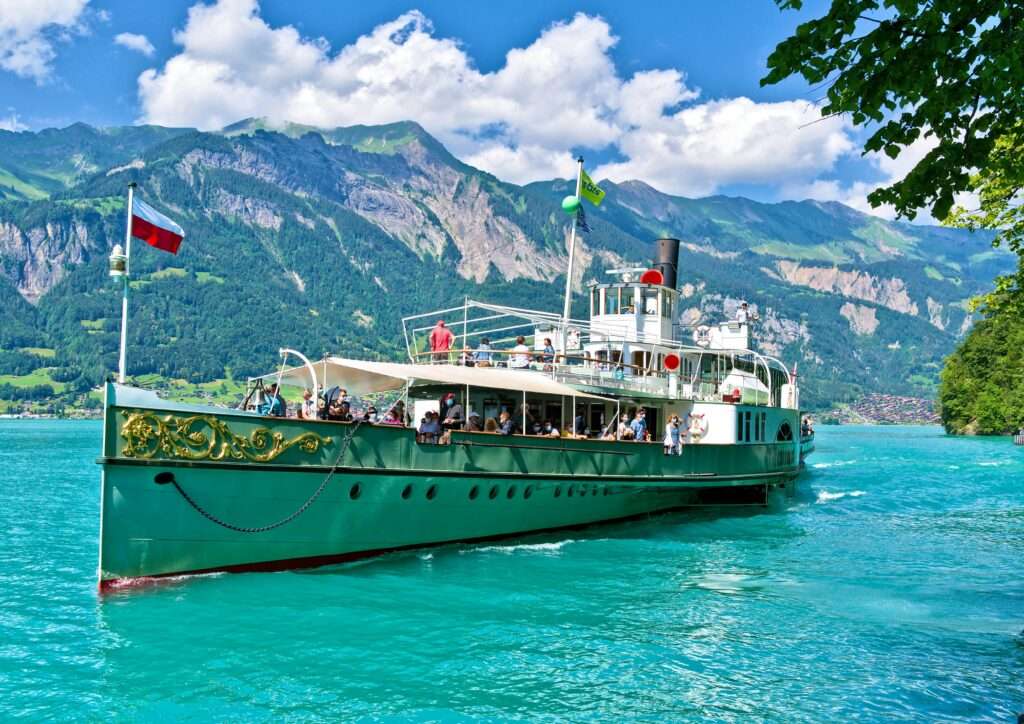
3. Lake Brienz – The Turquoise One
Best for: Dramatic colour, a quieter atmosphere, and the Giessbach Waterfalls
If you only have time for one lake in the Bernese Oberland, make it Lake Brienz. It’s my personal favourite. The water is an almost surreal shade of turquoise – low in nutrients, high in glacial sediment – and the mountains rise steeply on all sides, creating a more intimate feel than larger lakes like Lucerne.
Brienz town on the lake’s northern shore is charming, full of traditional Swiss mountain chalets and known for its woodcarving tradition. The star attraction mid-lake is the Giessbach Waterfalls – a dramatic series of cascades that you can reach by stopping off the boat and riding the historic funicular (one of Switzerland’s oldest) up to the Grandhotel Giessbach. Even if you don’t stay for dinner, the combination of the waterfall spray and the Belle Époque hotel above is worth the stop.
Note that Lake Brienz is cold – swimming is technically possible but most people opt for Lake Thun (slightly warmer and just around the corner). The boat season runs from mid-April to October; winter service is more limited.
What to do:
- Take the full boat cruise from Interlaken Ost to Brienz (around 1 hour 45 minutes) – included with the Swiss Travel Pass
- Stop at Giessbach for the waterfalls and the funicular
- Walk around Brienz town and explore the woodcarving workshops
- Ride the Brienzer Rothorn cogwheel steam railway up to 2,350m for spectacular views
Getting there: Direct trains run from Lucerne to Brienz in around 90 minutes.
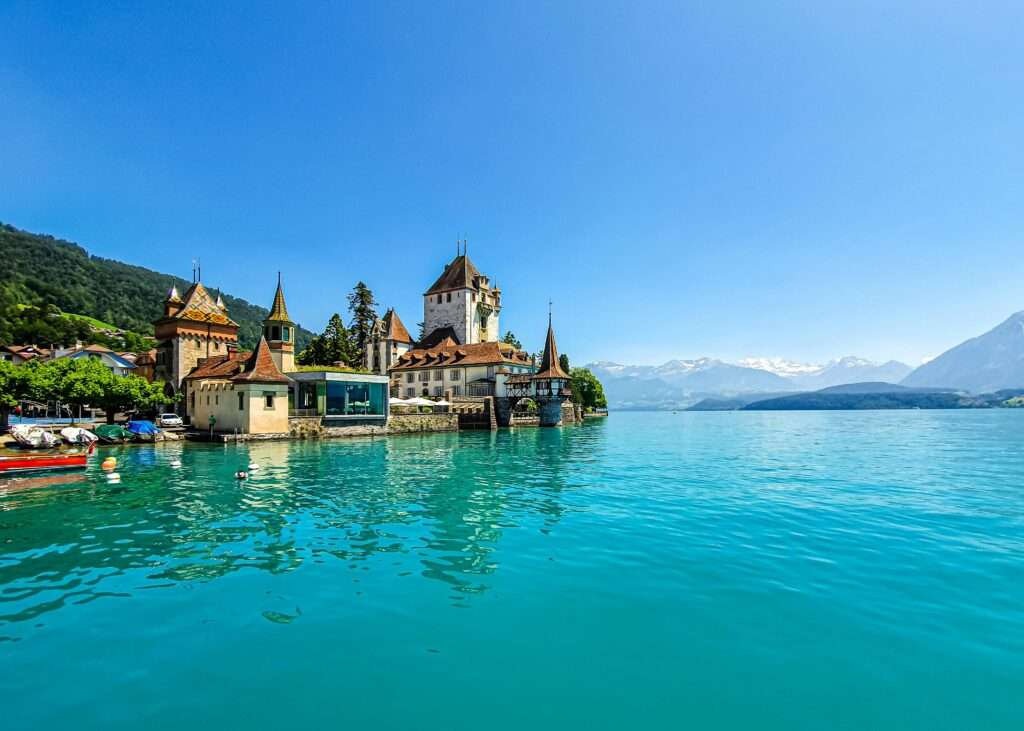
4. Lake Thun – Castles on the Water
Best for: Castle-spotting, pretty lakeside towns, and a mellower pace
Lake Thun sits just west of Lake Brienz, with Interlaken wedged between the two. Until the 10th century, they were actually one single lake – nature has excellent taste. Where Brienz is about raw alpine drama, Lake Thun feels gentler, with rolling hillsides dotted with medieval castles and pretty villages.
Thun town at the western end is worth an hour or two – Thun Castle perches above the old town offering some of the best views over the lake and rooftops in the whole region. Spiez, midway along the southern shore, is one of the prettiest stops: a small baroque castle with vineyard-covered slopes reaching down to the water. Oberhofen Castle, projecting directly into the lake on the northern shore, is another highlight – its manicured gardens are a genuinely lovely place to sit for a while.
What to do:
- Take the boat from Interlaken West to Thun, stopping at Spiez and Oberhofen (included with Swiss Travel Pass)
- Visit Thun Castle for panoramic views
- Walk the lakeside promenade in Spiez
- Explore the Saturday farmers’ market in Thun town
Getting there: Interlaken is 2 hours from Zurich or Lucerne by train.
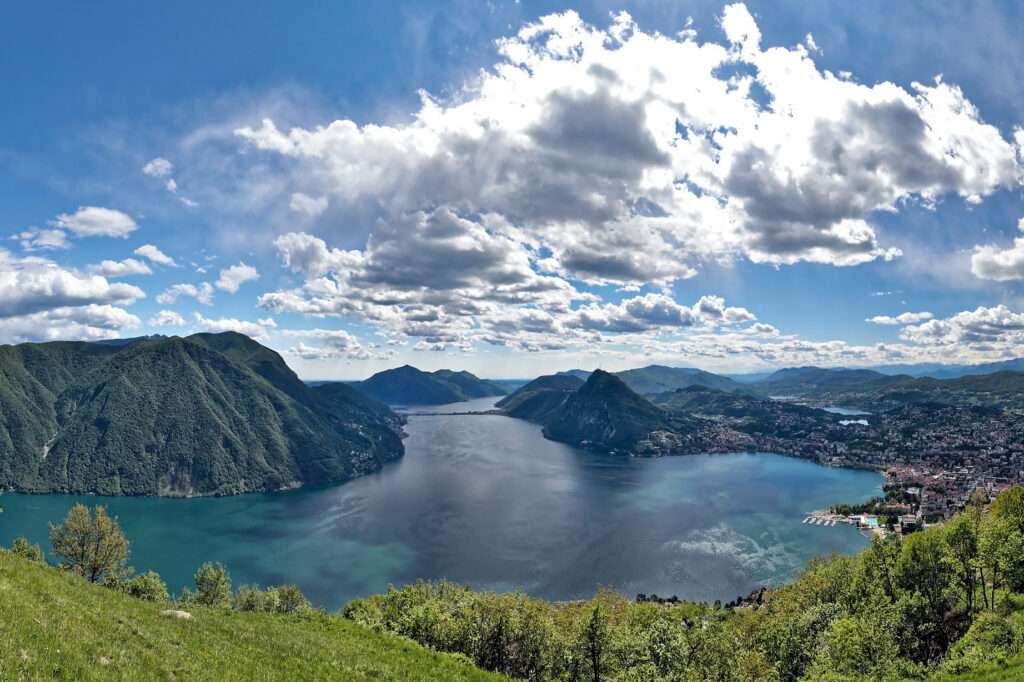
5. Lake Lugano – The Swiss Riviera
Best for: Italian atmosphere, sunshine, and a completely different side of Switzerland
Lake Lugano is Switzerland’s most surprising lake. Located in the southern canton of Ticino – Switzerland’s only Italian-speaking region – it has a Mediterranean feel that catches most visitors completely off guard. Palm trees along the promenade, strong espresso at sunny piazzas, north Italian food, and a warm microclimate that sits noticeably apart from the rest of the country.
The city of Lugano is elegant and walkable. Piazza della Riforma is the social heart of the city: café terraces, pastel facades, and a pleasant buzz that belongs more to Milan than Zurich. The lakeside promenade stretches south through Parco Ciani – the city’s lush park with ancient trees, lake views, and benches that invite you to do absolutely nothing for a while.
Two villages are essential stops: Gandria, a small fishing village built into steep slopes east of Lugano, reached by boat or the Olive Grove Trail (a 2-mile flat walk from Castagnola with sweeping lake views). And Morcote, which is widely cited as one of the most beautiful villages in Switzerland, accessible by boat in around 25 minutes – steep stone stairways, Renaissance arcades, and the Church of Santa Maria del Sasso perched above with views over the entire lake.
For views, the Monte Brè funicular (from Cassarate, opened in 1908) and Monte San Salvatore funicular (from Paradiso, around 10–12 minutes to the summit) offer genuinely spectacular panoramas. On a clear day, you can see into Italy, across the Po Valley, and toward the Alps.
What to do:
- Walk the Olive Grove Trail from Castagnola to Gandria
- Take a boat to Morcote – allow 2–3 hours with time to explore
- Ride the Monte Brè funicular for panoramic views and lunch with a view
- Explore Piazza della Riforma with an espresso and do nothing particularly productive for a while
- Visit the Santa Maria degli Angioli church in the city centre – it contains a stunning fresco by Bernardino Luini, a student of Leonardo da Vinci
- Take a day trip across the border to Bellagio on Lake Como (around 1 hour 15 minutes)
Getting there: Lugano is 1 hour 45 minutes from Zurich by train via the Gotthard Base Tunnel, or around 1 hour from Milan.
Insider tip: If you’re staying overnight in Ticino, ask your hotel about the Ticino Ticket – it covers free public transport across the entire canton and gives discounts on many attractions.
6. Lake Zürich – The City Lake
Best for: Easy access, city breaks, and day escapes from Zurich
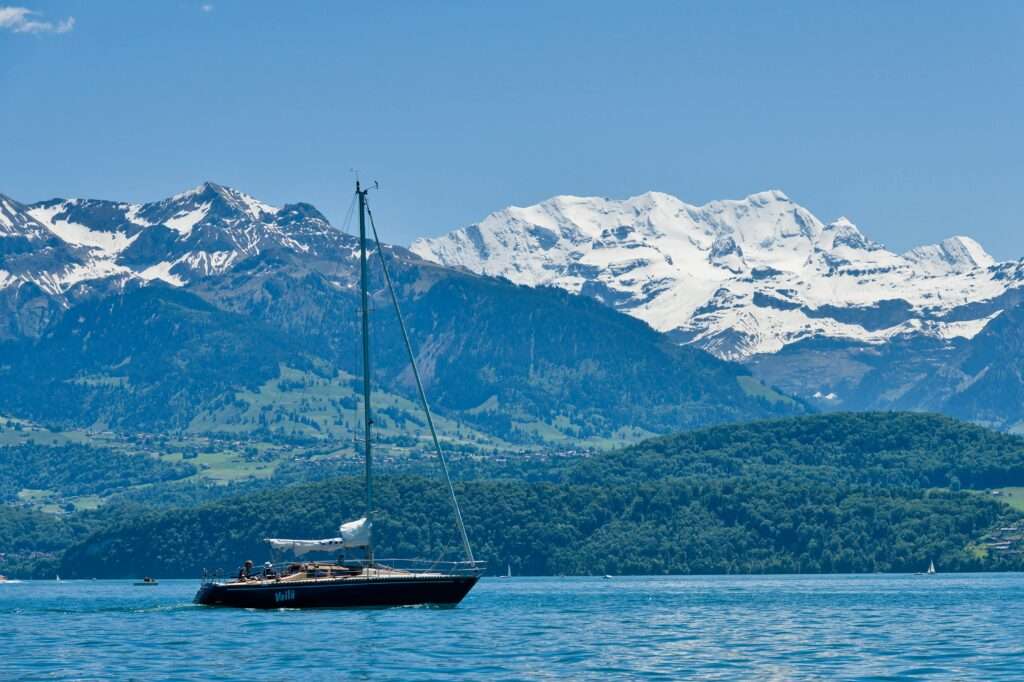
Lake Zürich is the most accessible lake in Switzerland – its northern section runs directly into Switzerland’s largest city, making it easy to combine an urban city break with a proper lakeside afternoon. In summer, the lake is popular for swimming (the water is clean and surprisingly warm in July and August), and a 2-hour boat cruise from Zurich’s Bürkliplatz takes you out to the medieval rose town of Rapperswil – a lovely half-day addition to any Zurich itinerary.
What to do:
- Walk the lakeside promenade from the city centre – Zürichhorn park is particularly lovely
- Take the boat to Rapperswil (around 1 hour 40 minutes – covered by Swiss Travel Pass) and spend a few hours exploring the rose gardens and castle
- Swim at one of Zurich’s lakeside lidos in summer
7. Oeschinensee – The Hidden Alpine Beauty
Best for: Instagram-worthy hikes, glacial turquoise water, and escaping the crowds
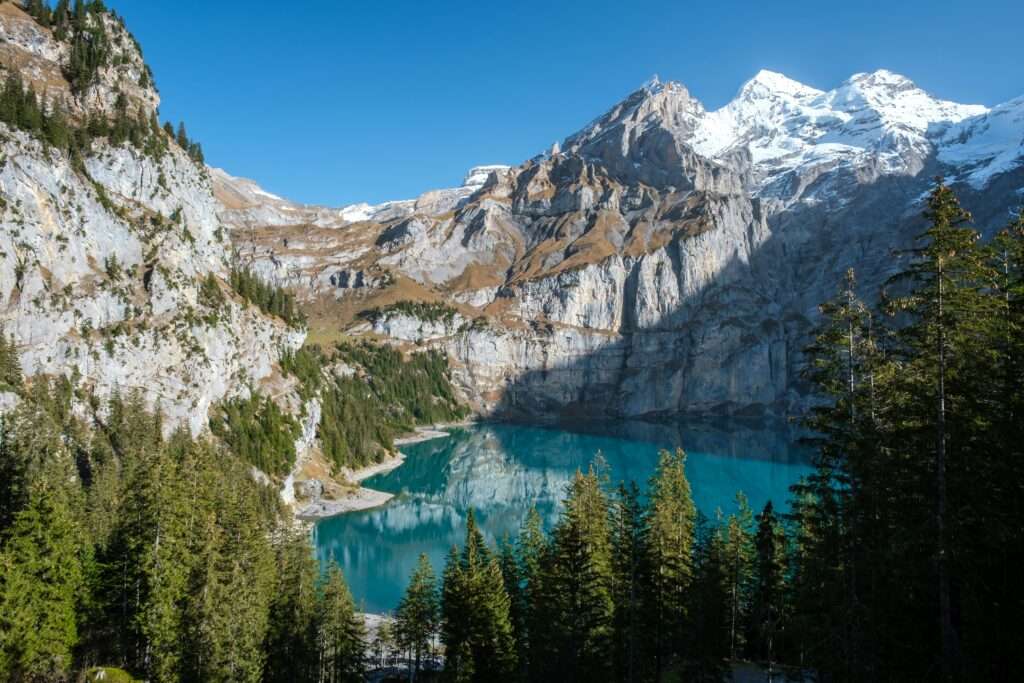
Oeschinensee is Switzerland’s most dramatic small lake – a cirque lake sitting above the town of Kandersteg in the Bernese Oberland, surrounded by the towering peaks of the Blüemlisalp massif. The water is glacially fed, the colour is extraordinary, and the hiking is some of the best in Switzerland.
It’s not the easiest lake to reach, but that’s partly what makes it special. Take the gondola from Kandersteg (10 minutes, 50% discount with Swiss Travel Pass) and you arrive at the lake’s edge. In summer you can swim, rent a rowing boat, and picnic on the shore. There’s also a lakeside restaurant for when you’ve exhausted the picturesque options.
What to do:
- Take the gondola from Kandersteg to the lake
- Rent a rowing boat and head out across the water
- Hike the circuit trail around the lake (around 2 hours for the full loop)
- Combine with an afternoon in Kandersteg itself – a peaceful mountain village worth a wander
Getting there: Kandersteg is around 45 minutes from Interlaken by train.
The Best Lake Road Trip: The Golden Pass Express
If you want to experience multiple lakes and alpine landscapes in a single journey, the Golden Pass Express is the answer. This scenic rail route connects Montreux (on Lake Geneva) with Interlaken (between Lakes Thun and Brienz) through the heart of Switzerland’s mountains, with panoramic windows and reverse-facing seats in some carriages.
The full journey takes around 3 hours and passes through dramatically different landscapes – the vine-covered shores of Lake Geneva, mountain passes, lush valleys, and finally the broad mountain bowl of the Bernese Oberland. It’s one of the most visually rewarding train journeys in Europe, and it’s covered by the Swiss Travel Pass (seat reservations are required and cost extra – book in advance).
Practical Guide to Switzerland’s Lakes
The Swiss Travel Pass
If you’re visiting multiple lakes, the Swiss Travel Pass makes a significant difference. Regular boat services on Lake Lucerne, Lake Geneva, Lake Thun, Lake Brienz, Lake Lugano, and Lake Zürich are all included with the pass, meaning you can hop on and off between lakeside stops without buying individual tickets.
In 2026, the pass starts from CHF 254 for 3 consecutive days in 2nd class. There was a modest price increase of around 5% from 2025 to 2026, but coverage remains the same. Youth passes (for ages up to 24) offer a 30% discount.
Important notes:
- Panoramic trains like the Glacier Express and Golden Pass Express require paid seat reservations (usually CHF 15–35) even if your travel is covered by the pass
- Most mountain railways and cable cars are discounted (usually 50% off) rather than free
- Special culinary cruises and event boats are not included – standard scheduled services are
If you’re spending most of your time in one area, regional passes like the Jungfrau Travel Pass or the Lake Lucerne Navigation Day Pass can sometimes work out better value. Do the maths before you buy.
When to Visit Switzerland’s Lakes
May–June: Arguably the best time. Wildflowers still on the mountain slopes, boat services running in full, fewer crowds than peak summer.
July–August: Peak season. Warm enough for swimming, all services running, lidos and boat decks full. Book accommodation early.
September–October: Autumn colour on the hillsides, quieter than summer, still warm enough for lakeside afternoons. Some boat services begin to reduce in mid-September.
November–March: Limited boat services on most lakes. Beautiful if you want a peaceful, atmospheric trip, but plan carefully around reduced timetables.
Getting to Switzerland from the UK
The Eurostar from London St Pancras connects to Paris in around 2.5 hours, then onward trains run from Paris Gare de Lyon to Geneva (around 3 hours 30 minutes) or Lausanne. Alternatively, fly direct into Zurich or Geneva – both airports have train stations directly underneath.
From London to Geneva by train, door to door, takes around 7–8 hours. It’s a genuinely comfortable journey and worth considering if you want to reduce your environmental footprint or simply enjoy the experience of arriving at the lake by train.
Final Thoughts
Switzerland’s lakes are the kind of thing you tell people about when you get home and they don’t quite believe you. The photos look like they’ve been edited. The water really is that colour. The mountains really do drop directly into the shoreline like that.
What makes them so enjoyable to visit is the infrastructure surrounding them. Trains, boats, and mountain transport connect almost everything, and with a Swiss Travel Pass you can move between lake towns, boat stops, and mountain viewpoints with a freedom that makes the whole country feel like one big, extraordinarily beautiful playground.
Start with whichever lake makes sense for your base, give yourself at least one full afternoon on the water, and save the rest of this guide for trip two. Because there will absolutely be a trip two.