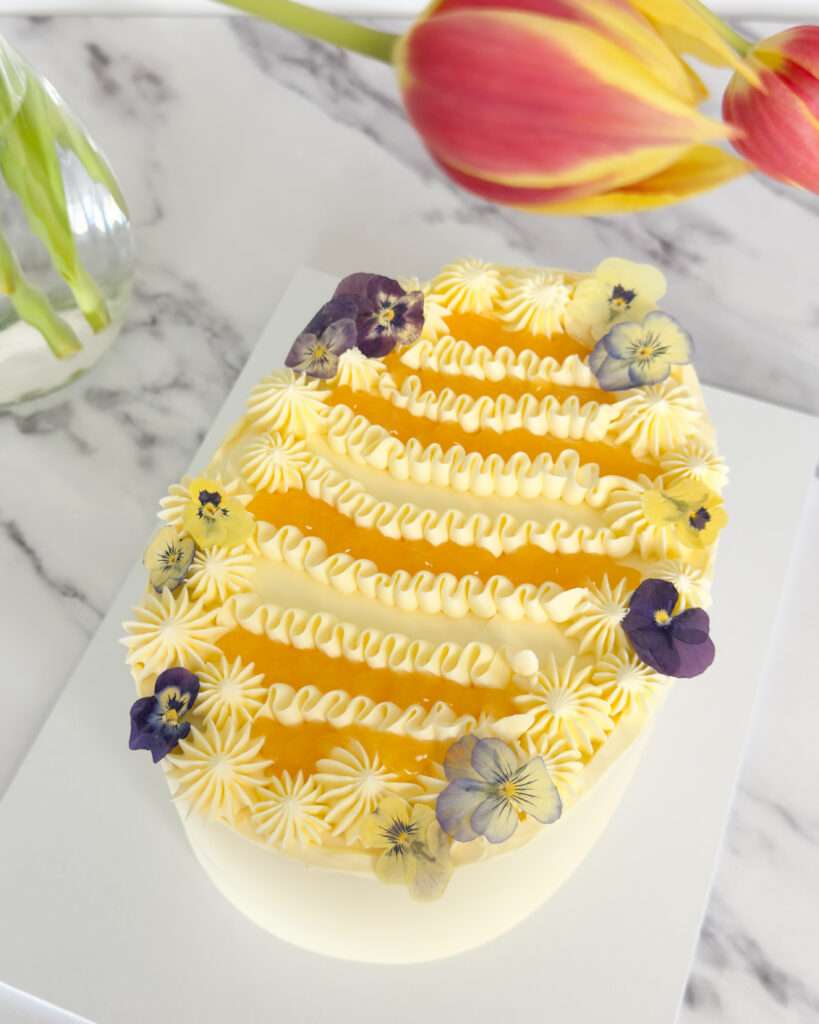
This vanilla Easter sheet cake is soft, buttery and light, filled with lemon curd, finished with silky Swiss meringue buttercream, and decorated in a simple oval design that looks so lovely for spring tables, Easter gatherings, picnics or afternoon tea. It has that fresh, delicate look that feels a little special, but it’s still very easy to make at home.
I made this in a 15 x 10 inch sheet cake tin, then used the oval cake plates from The Cake Decorating Company to cut and shape the layers. The finished cake gives you two soft vanilla sponge layers, a generous filling of lemon curd and buttercream, and enough slices for around 20 people, depending on how generously you cut it.
If you love a classic vanilla cake recipe but want something a little prettier for the season, this is such a good one to keep in your back pocket.
Why you’ll love this vanilla Easter cake
You’ll love it because:
- it’s based on a reliable soft vanilla cake recipe
- the lemon curd filling adds freshness and stops it feeling too sweet
- it’s easy to decorate even if you’re not confident with piping
- the oval shape gives it that lovely old-fashioned spring cake feel
- it’s ideal for Easter entertaining or any spring occasion
- it serves a crowd without needing a towering layer cake
It also feels a bit more relaxed than a traditional celebration cake. A sheet cake is easier to bake, easier to assemble and easier to transport.
Ingredients
- 300g caster sugar
- 80ml neutral oil (vegetable or sunflower)
- 200g unsalted butter, softened
- 5 eggs, at room temperature
- 1 tsp vanilla extract
- 60g sour cream
- 300g self-raising flour
Pro tip: Room temperature eggs and sour cream are super important here – they emulsify into the batter much more smoothly and are part of why you get that even, velvety crumb. Take them out of the fridge at least 30 minutes before you start.
Method
1. Prep your tins and oven
Preheat your oven to 190°C (170°C fan). Grease and line your cake tin.
2. Cream the fats and sugar
Add the caster sugar, oil, and softened butter to a stand mixer fitted with the paddle attachment – or a large mixing bowl if you’re using a hand mixer. Beat on medium-high speed for a few minutes until the mixture looks noticeably lighter and fluffier.
This step is incredibly important. You’re building air into the batter here, and that air is what gives the finished cake its soft, open structure.
3. Add the vanilla and eggs
Add the Vanilla and then the eggs one at a time, mixing well after each addition. The mixture may look slightly split or curdled at this point but that’s completely normal. Keep going. It’ll come together once the flour goes in, and it won’t affect the finished cake at all.
4. Fold in the flour
Sift the self-raising flour directly over the bowl. Mix on the lowest speed, or fold in gently by hand, until most of the flour is just incorporated. The key word there is just – you want to keep as much air in the batter as possible, so don’t overwork it.
5. Finish with sour cream
Add the sour cream and fold or mix gently until the batter is smooth and evenly combined. It should look glossy and uniform at this stage.
6. Bake
Bake for 35-40 minutes, or until a skewer inserted into the centre comes out clean. All ovens are different and if you have to bake longer, keep checking every 5min to make sure the cake is fully baked without overbaking.
7. Let the cake cool completely
Leave the cake in the tin for around 10 minutes, then carefully turn it out onto a wire rack to cool completely before cutting, filling or decorating. Don’t rush this part. A warm cake will melt buttercream and make decorating much harder than it needs to be.
8. Cut the oval cake shape
Once the cake is completely cool, use the oval cake plates as a guide to cut out two oval cake layers.
This is such an easy way to get that neat spring cake shape without needing a specialist tin.
If you only get one clean oval from the sheet, you can carefully cut and piece together your second layer depending on the size of your template, but ideally your sponge should give you two layers.
If you want very sharp edges, chill the sponge briefly before cutting.
9. Fill and Decorate
I always use my signature Vanilla buttercream as base filling and for covering the cake. It’s incredibly versatile and I have another blog post to give you 9 different flavour options that go with my base recipe.
Filling and Frosting
Lemon curd
Use a good quality lemon curd for the filling and for decoration on top.
You’ll need enough for:
- a generous layer inside the cake
- small spoonfuls or swirls on top for decorating
The lemon curd cuts through the sweetness of the buttercream beautifully and gives the whole cake a fresher, more spring-like flavour.
Swiss meringue buttercream
Use my signature Swiss meringue buttercream recipe for this cake.
It’s the one I always come back to because it’s:
- silky and smooth
- not too sweet
- easy to spread cleanly
- perfect for simple piping work
- ideal if you want a more elegant finish than standard buttercream
If you already have the recipe on your blog, I’d link it here as:
Use my Swiss Meringue Buttercream Recipe
You’ll want enough to:
- fill the centre
- crumb coat if needed
- fully frost the outside
- pipe the border and top decoration
Storing Your Vanilla Cake
This is one of those cakes that really improves after a short rest – which is a big part of why I relied on it so much when I was decorating professionally. I’d almost always bake the day before, let the sponges sit overnight in the fridge, and decorate the next morning.
Once baked and cooled, the sponges can be:
- Wrapped tightly and stored at room temperature for up to a day
- Refrigerated for up to two days
- Frozen (wrapped well in cling film, then foil) for up to a month
If your cake is already filled and frosted, keep it in an airtight container. It’ll hold well at room temperature for 2–3 days, or in the fridge for up to 5 days – just let it come back to room temperature before serving for the best texture.