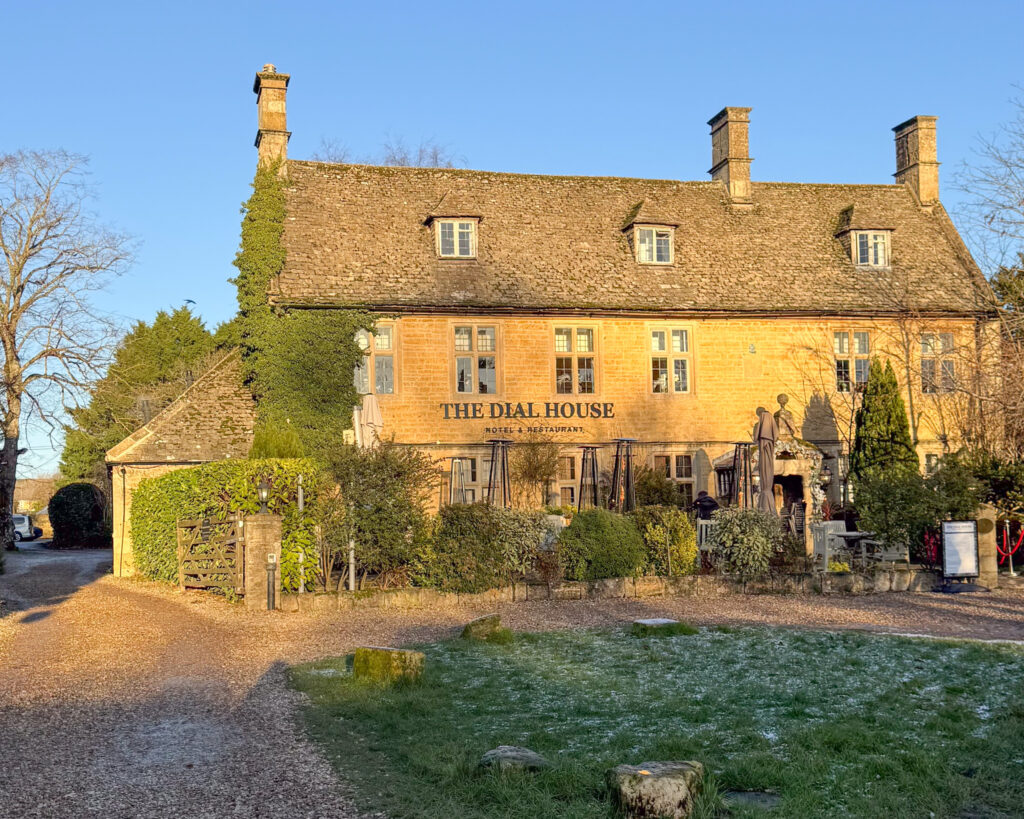
There’s a reason the Cotswolds attracts 38 million visitors every year. This isn’t just England’s largest Area of Outstanding Natural Beauty – it’s the England of your imagination made real. Honey-coloured stone villages that look lifted from storybooks. Rolling hills divided by miles of ancient dry-stone walls. Market towns where wool merchants built their fortunes in the Middle Ages. Thatched cottages with roses climbing the walls. Gentle valleys where time genuinely seems to move slower.
We’ve spent years exploring the Cotswolds, returning in every season, discovering villages that don’t make the guidebooks alongside the famous names everyone visits. This is our complete guide – everything you need to know about visiting one of England’s most enchanting regions, from the practical details to the hidden corners that make the Cotswolds special.
Where Are the Cotswolds?
The Cotswolds covers nearly 800 square miles of south-western and west-central England, running roughly 90 miles long and 25 miles across. The region stretches from just south of Stratford-upon-Avon in the north down to Bath in the south, with Oxford marking its eastern edge.
The area spans six English counties, though most of it sits in Gloucestershire and Oxfordshire. The boundaries also extend into parts of Warwickshire, Worcestershire, Wiltshire, and Somerset. This can make it slightly confusing to define exactly where “the Cotswolds” begins and ends – some people go by the official Area of Outstanding Natural Beauty boundary, others group together places sharing similar honey-stone architecture and rolling landscape.
The highest point is Cleeve Hill at 330 metres, just east of Cheltenham. The region’s spine runs southwest to northeast, with its northern and western edges marked by steep escarpments down to the Severn Valley – a dramatic landscape feature known as the Cotswold Edge.
What makes the Cotswolds distinctive is its geology. The bedrock is Jurassic limestone, created around 170 million years ago when this area lay under a warm, tropical sea. This limestone, when quarried and used as building material, creates that characteristic honey-gold colour you see throughout the region. The same geology creates rare limestone grassland and supports the ancient beech woodlands that cover roughly 10% of the area.
The region was designated an Area of Outstanding Natural Beauty in 1966, making it England’s largest protected landscape of this type. In November 2023, all AONBs were rebranded as “National Landscapes,” though the legal designation remains AONB.
Getting to the Cotswolds
The Cotswolds’ location northwest of London makes it remarkably accessible. Most visitors can reach the region within a couple of hours by train or car from major cities.
By car: The M4 and M5 motorways provide excellent access, connecting to a well-established local road network. Main roads through the area include the A46 (Bath-Stroud-Cheltenham), A419 (Swindon-Cirencester-Stroud), A429 (Cirencester-Stow-on-the-Wold-Moreton-in-Marsh), and A40 (Oxford-Burford-Cheltenham). Many of these follow ancient routes, some laid down by the Romans.
By train: The region is bounded by two major rail routes – the Bristol-Bath-London high-speed line to the south, and the Bristol-Birmingham main line to the west. Moreton-in-Marsh is now accessible by train from London Paddington, making it an excellent starting point. Other towns with good rail connections include Cheltenham, Gloucester, and Stroud.
From London: The Cotswolds makes an excellent day trip from London (though we’d recommend staying longer if possible). It’s roughly 90 miles and about two hours by car or train to the nearest parts of the region.
The reality is that whilst it’s possible to explore the Cotswolds without a car using buses and trains, having your own transport gives you far more freedom to discover the smaller villages and stop wherever catches your eye.
When to Visit the Cotswolds
The Cotswolds is beautiful year-round, but each season offers something different.
Spring (March-May): Gardens burst into bloom, lambs frolic in the fields, and the countryside turns vivid green. It’s one of the best times for visiting gardens and walking, though you might encounter occasional spring showers. The villages are less crowded than summer, and accommodation is easier to find.
Summer (June-August): Peak season brings warm weather, long daylight hours, and the countryside at its most lush. This is when the Cotswolds gets genuinely busy, particularly in the famous villages. Expect crowds in places like Bourton-on-the-Water and Bibury, and book accommodation well ahead. The upside is that everything is open, gardens are at their best, and you have maximum daylight for exploring.
Autumn (September-November): Many consider this the best time to visit. The leaves turn golden and amber, ivy creeps red across honey-stone buildings, and the crowds thin out after the school holidays end. The weather remains mild through September and October, and the autumn light is spectacular for photography. You’ll avoid peak tourist numbers whilst still enjoying pleasant weather.
Winter (December-February): The Cotswolds at its quietest and, on crisp clear days, absolutely magical. Yes, it’s cold, and some attractions have reduced hours or close entirely. But a winter walk through a Cotswolds village dusted with snow, followed by lunch in a pub with a roaring fire, is genuinely special. The days are short, so plan carefully to make the most of limited daylight. Christmas markets and festive events add charm to December visits.
The Most Beautiful Villages and Towns
With hundreds of villages to choose from, where do you start? These are the Cotswolds’ most beloved destinations, plus some lesser-known gems.
The Famous Four
Bourton-on-the-Water: Often called the “Venice of the Cotswolds,” though that’s perhaps overselling it. The River Windrush flows through the centre of the village, crossed by low stone bridges, with willow trees overhanging and ducks paddling about. It’s undeniably pretty, but also the most touristy village in the Cotswolds. Visit early morning or late evening to avoid the worst crowds. The village hosts an annual river football match, which is as eccentric as it sounds.
Bibury: William Morris called it “the most beautiful village in England,” and Arlington Row – a terrace of 17th-century weavers’ cottages – is one of the most photographed locations in the Cotswolds. The cottages sit beside the River Coln with lush water meadows behind. Expect coach parties and crowds, particularly in summer. Early morning is essential for decent photos.
Castle Combe: Frequently referred to as “the prettiest village in England,” and the setting is genuinely stunning. The 14th-century market cross sits surrounded by honey-coloured cottages, with St Andrew’s Church (home to a faceless clock, thought to be one of England’s oldest) overlooking the village. The beauty has attracted filmmakers – Spielberg’s War Horse, Stardust, and The Wolf Man all filmed here.
The Slaughters (Upper and Lower): Two villages with unfortunate names – “Slaughter” derives from the Old English “slohtre,” meaning muddy place, referring to the rivers. Lower Slaughter has the Old Mill (now a museum), St Mary’s Church, and golden stone houses reflecting in the River Eye. Upper Slaughter is smaller and quieter, with postcard-perfect cottages. Both are exceptionally pretty, though Lower Slaughter sees more visitors.
The Best Market Towns
Stow-on-the-Wold: The highest town in the Cotswolds, sitting atop a hill where eight roads meet. The large market square once hosted massive sheep fairs, and you can still see the wide streets designed for moving livestock. The real treasure is St Edward’s Church, where a 13th-century door is framed by two ancient yew trees – this is said to have inspired Tolkien’s Doors of Durin in The Lord of the Rings. The town has excellent shops, restaurants, and antiques dealers.
Chipping Campden: One of the finest market towns in the Cotswolds, with a magnificent High Street lined with terraced houses built from wool wealth. The town was a major centre for the wool trade, evident in the Grevel House and the wool merchant’s St James Church. The hills surrounding the town are ideal for walking, and it sits on the Cotswold Way long-distance footpath.
Burford: Often called the “Gateway to the Cotswolds,” with a steep High Street that descends to the River Windrush. The street is lined with medieval buildings housing independent shops, galleries, tea rooms, and antiques stores. It’s an excellent base for exploring the region, with good accommodation options and a less touristy feel than some villages.
Cirencester: The unofficial capital of the Cotswolds and its largest town. Founded by the Romans (who called it Corinium), it retains a market town atmosphere with independent shops and a thriving Monday and Friday market. The Corinium Museum houses one of Britain’s finest Roman collections. The town is less picturesque than smaller villages but has genuine character and excellent facilities.
Winchcombe: A quaint Anglo-Saxon town characterized by its curved High Street (the name means “valley with a bend”). Full of characterful inns, tea rooms, and independent shops including the beloved White Hart pub. The surrounding area is lush with rolling hills, and nearby Sudeley Castle (final resting place of Katherine Parr, Henry VIII’s last wife) is well worth visiting.
Tetbury: An elegant market town known for its antiques shops and the bizarrely British Woolsack Races (competitors race up and down a steep hill carrying 60-pound woolsacks). Prince Charles’s Highgrove Estate is nearby, and the town has good restaurants and accommodation.
Moreton-in-Marsh: A bustling market town on the Fosse Way Roman road, now accessible by train from London Paddington. The wide High Street hosts a popular Tuesday market. It’s an excellent base for exploring, being centrally located and well-connected.
Hidden Gems Worth Finding
Painswick: Known as the “Queen of the Cotswolds,” this elegant hillside town is famous for its church surrounded by 99 yew trees (legend says the 100th tree never survives). The town has stunning Cotswold stone architecture and beautiful gardens, including the Rococo Garden – one of England’s finest 18th-century gardens.
Snowshill: A tiny, unspoilt village tucked into the hills with Snowshill Manor (National Trust) containing an eccentric collection gathered by the last private owner. The village sees far fewer visitors than the famous names.
Blockley: A working village built on steep hills with a stream running through. It was a centre for silk mills in the 19th century, and you can still see mill buildings. It’s appeared in TV’s Father Brown and has an authentic, lived-in feel.
Northleach: A small market town with a magnificent wool church (St Peter and St Paul) that’s one of the finest in the Cotswolds. The town sees relatively few tourists but has excellent pubs and an interesting history.
What to Do in the Cotswolds
Walking and Hiking
The Cotswolds has over 3,000 miles of public footpaths and bridleways. The landscape is gentle enough for casual walkers but offers plenty of variety.
The Cotswold Way: A 102-mile National Trail running from Chipping Campden to Bath along the Cotswold escarpment. You can walk the entire trail over 7-10 days, or tackle sections as day walks. The views from the escarpment are spectacular.
The Thames Path: Follows the River Thames from its source in the Cotswolds (near Kemble) all the way to London. The source to Lechlade section is particularly lovely.
Shorter walks: Every village has footpaths leading into the surrounding countryside. Look for “kissing gates” and public footpath signs. The Cotswold Voluntary Wardens (a group of 350+ volunteers established in 1968) maintain roughly 3,000 miles of paths and dry-stone walls.
Stately Homes and Gardens
Blenheim Palace: Just outside the Cotswolds boundary near Woodstock, but too magnificent to miss. This UNESCO World Heritage Site is Winston Churchill’s birthplace and one of England’s finest palaces. The gardens, designed by Capability Brown, are spectacular.
Sudeley Castle: Near Winchcombe, this castle is the final resting place of Katherine Parr (Henry VIII’s last wife). The award-winning gardens surrounding the medieval ruins are beautiful, and the castle rooms contain fascinating history.
Hidcote Manor Garden: National Trust property near Chipping Campden, considered one of England’s finest gardens. Created in the early 20th century, it features a series of outdoor “rooms” with different themes.
Kiftsgate Court Gardens: Neighboring Hidcote, these terraced gardens contain the famous Kiftsgate Rose (one of the world’s largest roses) and spectacular views.
Family Activities
Cotswold Farm Park: Founded by Adam Henson (of BBC Countryfile fame), this working farm allows children to interact with rare breed animals. There’s a touch barn, wildlife walk, adventure playground, and farm safari.
Cotswold Wildlife Park: Near Burford, home to over 260 species including rhinos, giraffes, and red pandas. The Victorian manor house and gardens provide a beautiful setting.
Birdland Park and Gardens: In Bourton-on-the-Water, featuring over 500 birds including penguins, pelicans, and flamingos.
Cotswold Water Park: The UK’s largest water park (not in the theme park sense – it’s 150 lakes created from gravel extraction) offering watersports, beaches, walks, and cycling. It has its own inland beach.
Quirky Cotswolds Events
Cheese Rolling, Cooper’s Hill: Every May, competitors chase a 9-pound wheel of Double Gloucester cheese down an absurdly steep hill (1:1 gradient in places). It’s chaotic, slightly dangerous, and utterly British.
Tetbury Woolsack Races: Competitors race up and down Gumstool Hill carrying 60-pound woolsacks (men) or 35-pound sacks (women). It’s as eccentric as it sounds.
Bourton-on-the-Water Football in the River: An annual Boxing Day tradition where teams play football in the River Windrush. Exactly what it says on the tin.
Bibury Duck Race (Boxing Day): Rubber ducks race down the River Coln whilst spectators cheer them on. Quintessentially British village fundraising.
Where to Eat and Drink
The Cotswolds punches well above its weight for food and drink, with Michelin-starred restaurants, traditional pubs, farm shops, and artisan producers.
Traditional Pub Food
The Cotswolds is heaven for pub enthusiasts. Expect 17th-century inns with flagstone floors, inglenook fireplaces, and menus featuring local lamb, game, and produce. Sunday roasts are a religion here. Some beloved pubs include The Wild Rabbit (Kingham), The White Hart (Winchcombe), The Swan (Swinbrook), and The Horse and Groom (Bourton-on-the-Hill).
Fine Dining
Despite being rural, the Cotswolds has several Michelin-starred establishments and high-end restaurants drawing on local produce. Raymond Blanc’s Le Manoir aux Quat’Saisons is nearby in Oxfordshire, whilst Daylesford Organic Farm Café offers excellent farm-to-table dining.
Local Produce
Artisan cheese, local ales, Cotswold gin, farm shops selling seasonal vegetables, traditional bakeries – the Cotswolds is excellent for food shopping. Look for farmers’ markets in market towns.
Afternoon Tea
Cream tea (scones with jam and clotted cream) is taken seriously. Tearooms abound, from village cafes to luxury hotel lounges. The debate over whether jam or cream goes on first is fierce (the Cotswolds tends towards cream first, though Devonians and Cornish will disagree).
Where to Stay
From thatched cottages to five-star country house hotels, the Cotswolds offers accommodation to suit every budget and style.
Luxury: The Cotswolds attracts affluent London weekenders, so luxury options abound. Think country house hotels with spas, Michelin-starred restaurants, and impeccable service. The Cotswolds is also home to Soho Farmhouse (members’ club but also open to non-members) and other high-end retreats.
Mid-Range: Market towns offer good boutique hotels, characterful inns, and B&Bs in historic buildings. Expect comfortable rooms, hearty breakfasts, and knowledgeable hosts.
Self-Catering: Holiday cottages are popular, from honey-stone cottages in villages to farmhouses in the countryside. This works well for families or longer stays.
Budget: Youth hostels, camping, and budget B&Bs exist, though the Cotswolds isn’t the cheapest region. Staying slightly outside the most famous villages can save money.
Practical Information
How long do you need? A weekend gives you a taste. Three to four days allows proper exploration. A week lets you slow down and really soak in the atmosphere.
Do you need a car? Ideally, yes. Whilst buses connect major towns and trains serve some areas, having a car lets you discover smaller villages and stop wherever catches your eye. The roads are narrow and winding but well-maintained.
Parking: Some towns charge for parking, others offer free parking. Many villages have limited parking, and popular spots fill up quickly in summer. Arrive early.
Population: About 139,000 people live within the National Landscape area, with another two million living within a 20-minute drive. Yet it still feels genuinely rural, thanks to careful planning controls and the protected status.
Tourism impact: With 38 million visitors annually, tourism generates about £1 billion for the local economy and supports roughly 20,000 jobs. This makes the Cotswolds dependent on visitors but also means some villages feel overwhelmed in peak season.
Our Honest Take
The Cotswolds delivers exactly what it promises – chocolate-box villages, rolling countryside, historic market towns, and a slice of England that feels remarkably preserved. Yes, the famous villages can be touristy. Yes, in high summer you’ll be sharing Bourton-on-the-Water with coach parties. And yes, it’s not cheap.
But step away from the honeypot sites, visit off-season, take time to walk the footpaths, have Sunday lunch in a village pub, explore the market towns on market day, and you’ll understand why people fall in love with this region. The Cotswolds isn’t stuck in time – it’s a living, working landscape where people farm, run businesses, and go about their lives. But the honey-stone architecture, the ancient field patterns, the villages that grew from wool wealth – these create a sense of continuity with the past that’s increasingly rare.
The best approach is to combine the famous villages (they’re famous for good reason) with lesser-known spots, spend time walking rather than just village-hopping by car, and let the rhythm of the place slow you down. The Cotswolds rewards those who take their time.
Start in spring or autumn when the weather is good but crowds are manageable. Base yourself in a market town like Stow-on-the-Wold, Chipping Campden, or Burford. Visit the famous villages early morning or evening to avoid peak crowds. Walk the footpaths. Have cream tea. Spend an afternoon in a pub garden. Visit a stately home or garden. Shop in antiques stores. And resist the urge to see everything – this is a region for savouring, not ticking boxes.
The Cotswolds isn’t about ticking off sights. It’s about slowing down enough to notice the roses climbing cottage walls, the ducks on the village stream, the way the honey-stone glows in late afternoon light. It’s about the England of your imagination, made real.