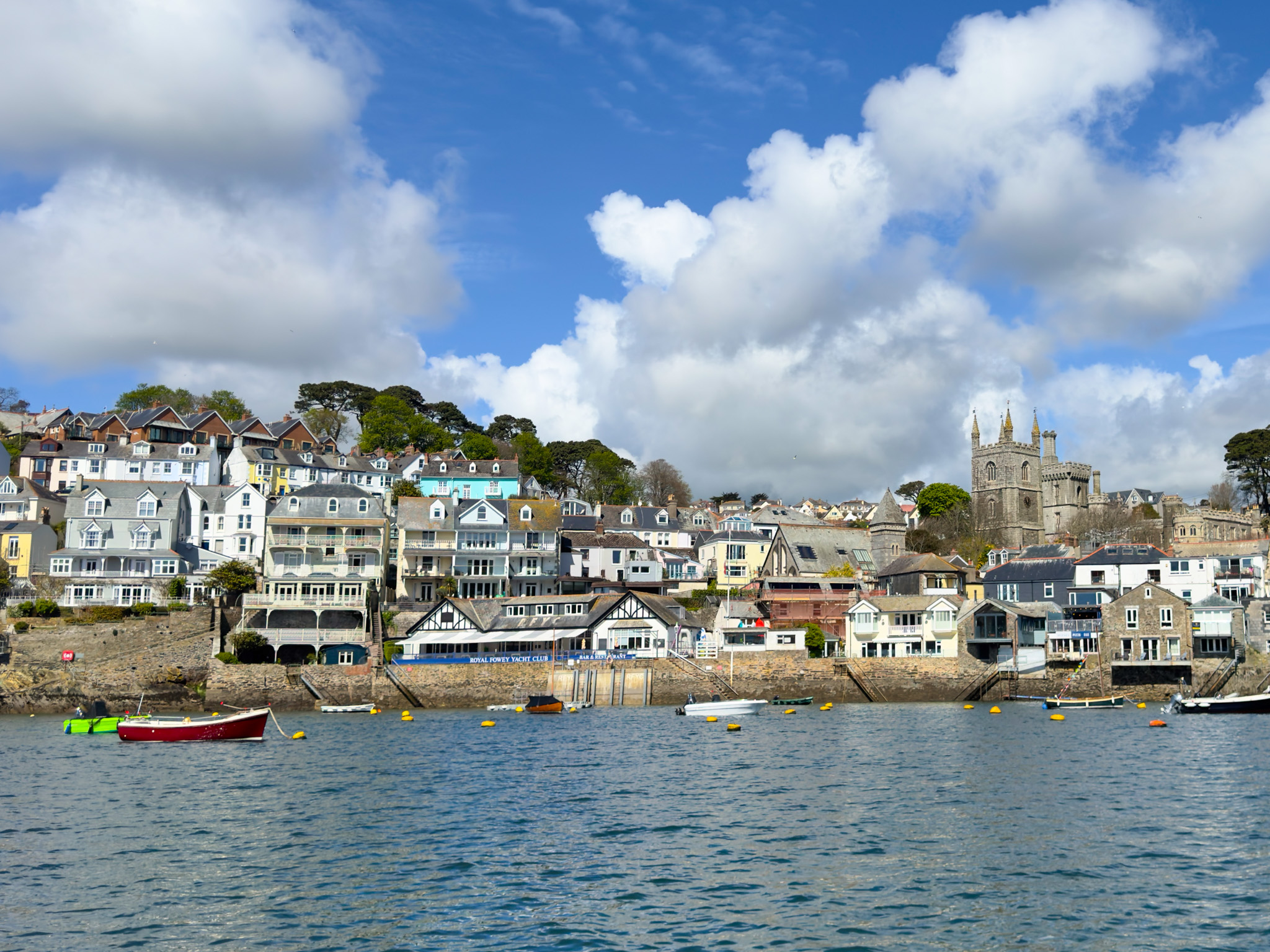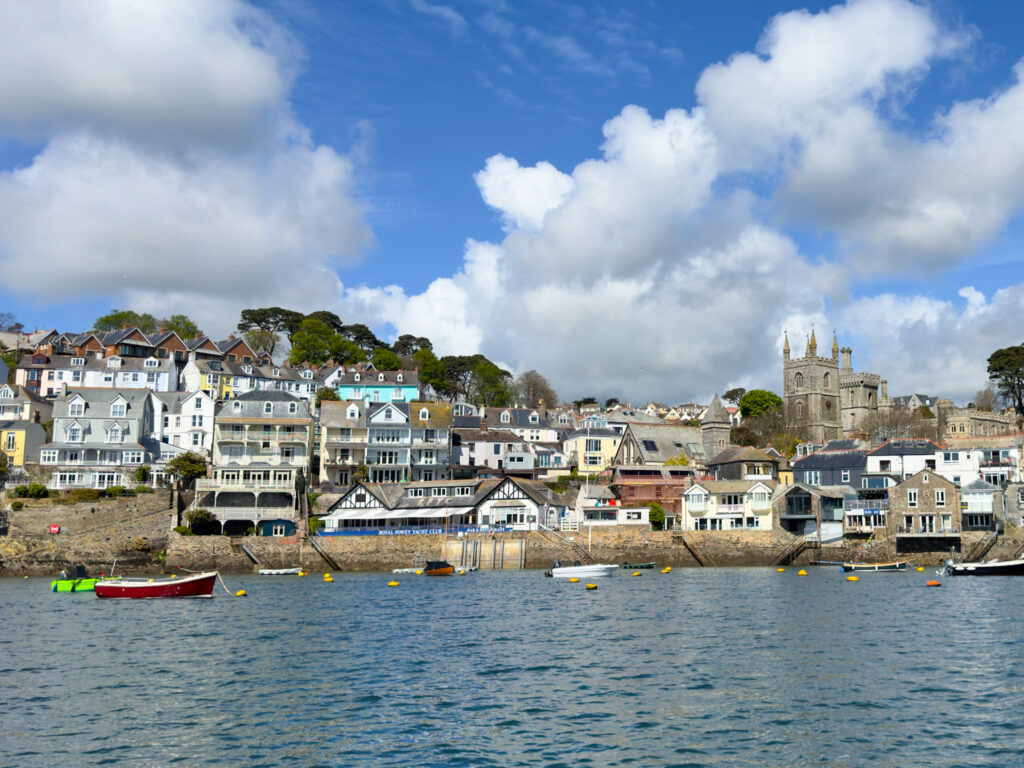
There’s something about Cornwall that gets under your skin. Maybe it’s the dramatic coastline where cliffs plunge into turquoise water. Maybe it’s the fishing villages that look like they haven’t changed in centuries. Or maybe it’s simply the way the light hits the sea on a clear afternoon, turning everything golden and impossibly beautiful.
We spent a long weekend in Cornwall with Fowey as our base, and it reminded us exactly why this corner of England pulls people back time and again. This is our complete guide – from the drive down from London to the coastal walks that took our breath away, with a day trip to Padstow thrown in for good measure.
The Drive from London to Fowey
Let’s start with the practical bit: getting there. From London to Fowey is roughly 260 miles, which translates to about 5 hours driving in good traffic. The reality? Allow 5-6 hours, especially if you’re travelling on a Friday afternoon or during school holidays.
There are two main routes from London to Cornwall, and we’ve tried both:
Route 1: M4 → M5 → A30 (via motorways) This is the route most sat navs will suggest. Take the M4 west, join the M5 at Bristol, then pick up the A30 at Exeter. It’s slightly longer in miles (around 280 miles) but entirely on motorway until you hit the A30 in Devon. The advantage is predictability – motorways mean you can maintain speed and estimate arrival times fairly accurately. The disadvantage is monotony. It’s motorway driving for hours.
Route 2: M3 → A303 → A30 (the scenic route) This is our preferred option. The M3 from London leads onto the A303, which weaves through Wiltshire and Somerset before joining the A30 in Devon. It’s slightly shorter (around 260 miles) and considerably more interesting. Yes, parts of the A303 are single carriageway where you might get stuck behind a tractor or lorry. But you drive right past Stonehenge (you can see it from the road), through rolling countryside, and the journey feels like part of the holiday rather than just the commute to it.
The A30 continues as dual carriageway through most of Devon and Cornwall now, making the final stretch into Fowey relatively straightforward. Once you leave the A30 at the appropriate junction, it’s about 15-20 minutes of smaller roads through lovely Cornish countryside before you reach Fowey.
Top tip: Set off early if you can. Leaving London by 6-7am means you’ll miss the worst traffic and arrive in Fowey with most of the afternoon ahead of you. Pack snacks for the car – service stations exist but aren’t frequent once you’re past Exeter.
Parking in Fowey: The town has several car parks. We used Caffa Mill Car Park near the Bodinnick Ferry, which costs around £7-9 for the day. Fowey’s streets are narrow and winding – trust us, you’ll want to park and explore on foot.
Why Fowey Makes the Perfect Base
Fowey (pronounced “foy” to rhyme with “joy” – yes, we got it wrong initially too) sits on the south Cornish coast where the River Fowey meets the sea. It’s small enough to feel like a proper Cornish fishing village, but large enough to have excellent restaurants, good accommodation, and proper facilities.
The town cascades down steep streets toward a working harbour where fishing boats moor alongside sailing yachts. Ice-cream-coloured cottages line narrow lanes. Independent shops sell everything from Daphne du Maurier novels (more on her later) to proper Cornish pasties. And the ferry across to Polruan runs every 15 minutes, opening up walks on both sides of the estuary.
What makes Fowey special as a base is location. You’re on the South West Coast Path, one of Britain’s most spectacular long-distance trails. Dramatic coastal walks extend in both directions. The town itself is charming enough for lazy afternoons. And you’re within an hour’s drive of most of South Cornwall’s highlights, making day trips perfectly feasible.
Why Cornwall is Perfect for Dogs (And Alan’s First Holiday)
We brought our mini Dachshund Alan to Fowey when he was just six months old for his very first holiday, and honestly, we couldn’t have chosen a better destination for his introduction to travel. Cornwall has a well-deserved reputation as one of the UK’s most dog-friendly regions, and Fowey exemplified exactly why.
Alan had an absolute ball. From the moment we arrived, he was in puppy heaven – new smells, exciting walks, beaches to explore, and plenty of other four-legged friends to socialise with along the coastal paths.
Dog-Friendly Beaches Around Fowey
Cornwall has over 330 beaches along 250 miles of coastline, and the vast majority welcome dogs. Around Fowey specifically, you have excellent options:
Year-round dog-friendly beaches:
- Polridmouth Cove: Just a couple of hours’ walk from Fowey, this sheltered spot allows dogs all year. At low tide you get two distinct beaches. It’s rarely crowded, and the walk through wooded farm tracks makes it feel like an adventure. Alan loved exploring the rock pools here.
- Par Sands: About 10 minutes from Fowey with a pay-and-display car park. Popular with dog walkers, and watching Alan charging across the sand, digging holes, and diving into the waves was pure joy.
- Lantic Bay: Between Fowey and Polperro, this stunning National Trust beach is accessible via the Hall Walk. The half-hour trek from the car park means it stays relatively quiet. The turquoise water and white sand made Alan’s first beach experience genuinely spectacular.
- Coombe Haven: Within 15 minutes’ walk from Fowey, accessible all year for dogs.
Seasonal restrictions (no dogs Easter to 1st October):
- Readymoney Cove: Just 5 minutes from the beach car park, 20 minutes from Fowey town centre
- Polkerris Beach: 5 minutes from the car park with a dog-friendly pub
- Whitehouse Beach: 10 minutes from Fowey car park (only accessible at low tide)
The seasonal restrictions are manageable – there are so many year-round beaches that you’ll never struggle to find somewhere for your dog to run. And even the restricted beaches welcome dogs in winter, spring, and autumn.
Dog-Friendly Coastal Walks
The South West Coast Path around Fowey is absolutely brilliant for dogs. Yes, you need to keep them on leads in certain sections (near livestock and cliff edges), but the walks offer everything a dog could want – interesting smells, varied terrain, other dogs to meet, and incredible views.
The Hall Walk (our favourite) is particularly dog-friendly. The Bodinnick car ferry takes dogs across from Fowey (we just walked Alan on with us), and the passenger ferry from Polruan back to Fowey charges just 40p for dogs. The path itself has plenty of water sources – the creeks and streams meant Alan could cool off when needed. We kept him on lead for most of it due to the cliff sections and livestock in fields, but he absolutely loved it.
The Gribbin Head walk gave Alan his first experience of proper clifftop coastal paths. We kept him on lead (those sudden drops are no joke), but the grassy sections allowed him to bound about, and the beaches we passed meant regular swimming opportunities.
Dog-Friendly Pubs and Cafés
This was the revelation – Fowey’s pubs and cafés genuinely welcome dogs, not just tolerate them. We’re talking water bowls at the door, dog treats behind the bar, and outdoor seating designed with four-legged visitors in mind.
The Haveners (a St Austell Brewery pub) was particularly brilliant. Right on the water, it even serves “Proper Dog” – a dog-friendly beer you can share with your pup. After a long coastal walk, sitting in the pub garden with Alan snoozing at our feet while we had lunch and a pint felt absolutely perfect.
The Ship Inn (Fowey’s oldest pub) and The Galleon Inn both welcomed Alan warmly. The Old Ferry Inn in Bodinnick (passed on the Hall Walk) has outdoor seating where dogs are more than welcome.
Even cafés and delis like Kittows had water bowls outside and welcomed well-behaved dogs. The general attitude in Fowey seemed to be “of course dogs are welcome” rather than “we suppose we’ll allow it.”
Practical Dog Tips for Fowey
Ferries: Both the car ferry (Fowey to Bodinnick) and passenger ferry (Fowey to Polruan) welcome dogs. The passenger ferry charges a nominal 40p per dog. Alan wasn’t fazed by either ferry – they’re short crossings and dogs seem completely normal to the operators.
Poo bags and bins: The coastal paths are well-used by dog walkers, and there’s a good culture of cleaning up. That said, dog waste bins aren’t everywhere, so carry spare bags and be prepared to carry waste for a bit. We always packed extra.
Water: Bring a collapsible bowl and water, especially for longer walks. While there are streams along many routes, not all are accessible, and dogs get thirsty on coastal paths.
Weather: Even in summer, coastal weather can change quickly. We found Alan got muddy fairly quickly on paths after rain. Many accommodations and pubs have outdoor taps or hose-down areas – genuinely helpful when you’ve got a dachshund who’s discovered his first muddy stream.
Vets: Just in case – Pelyn Veterinary Group has practices in nearby St Austell and Lostwithiel. We didn’t need them, but it’s reassuring to know veterinary care is available.
Why it worked for Alan’s first holiday: Fowey offered the perfect combination – new and exciting for a six-month-old puppy, but not overwhelming. The coastal walks were adventures without being too challenging. The beaches gave him his first experience of sea and sand. The dog-friendly culture meant we never felt like we were imposing. And the sheer number of other dogs we met on walks meant he had constant socialisation opportunities.
Watching Alan experience his first beach, first coastal walk, first ferry crossing – it made the holiday special in a way we hadn’t anticipated. He’d come home exhausted every evening (in the best way), sleep soundly, then wake up ready for the next adventure.
If you’re considering Cornwall for your dog’s first holiday, or if you simply want a destination where your four-legged friend is genuinely welcomed rather than merely tolerated, Fowey absolutely delivers. That first Fowey trip showed us how much Alan loves travelling with us, isn’t fazed by ferries, and that he has lots more walking stamina than we thought.
The Best Coastal Walks from Fowey
Cornwall’s South West Coast Path offers some of England’s most stunning coastal walking, and Fowey sits right on it. We tackled several walks during our long weekend (with Alan trotting along happily), ranging from easy shoreline strolls to more challenging clifftop hikes.
The Hall Walk: Fowey’s Classic Circuit (4-6 miles)
This is Fowey’s signature walk, and rightly so. It’s a 4-mile circular route (though you can extend it to 6-7 miles) that includes two ferry crossings, wooded creeks, estuary views, and clifftop paths. The National Trust grades it as “moderate” due to some steep sections, but benches appear at regular intervals for rest stops.
The route: Start by taking the car ferry from Caffa Mill Car Park across to Bodinnick (the ferry takes vehicles and foot passengers, runs daily, costs around £4 for a car or £1.50 for foot passengers). Walk up the steep lane past the Old Ferry Inn and St John’s Church. About halfway up on the right, you’ll spot a narrow footpath signed “Hall Walk” – easy to miss, so watch for the wooden fingerpost between cottages.
The path dates back to at least the 16th century and takes you along Penleath Point with sweeping views of Fowey Harbour and Polruan. You’ll pass the ‘Q’ memorial – a granite monument to Sir Arthur Quiller-Couch, the novelist and scholar who lived in Fowey from 1891 until his death in 1944. Interestingly, his friend Kenneth Grahame (author of The Wind in the Willows) stayed with him, and the wooded creeks around Pont Pill are said to have inspired parts of that classic.
The path then runs high along Pont Pill, a tidal creek that’s only navigable at high water. The still, green waters and overhanging trees create an almost otherworldly atmosphere. At Pont, a tiny quayside hamlet, cross the small bridge and climb past Lanteglos Church (where Daphne du Maurier married in 1932) through woods before descending to Polruan.
From Polruan, take the passenger ferry back to Fowey (runs every 15 minutes, £2.30 for adults, 40p for dogs). The ferry drops you at either Whitehouse Point or Town Quay depending on the tide.
Why we loved it: The variety. Woodland, estuary, village, views – it packs extraordinary diversity into four miles. And the two ferry crossings add a sense of adventure that makes it feel more than just a walk. Alan particularly loved the woodland sections and cooling off in Pont Pill.
Time: Allow 2-3 hours at a leisurely pace with stops.
Fowey to Gribbin Head (5-6 miles return)
This walk heads west from Fowey along the South West Coast Path, passing beaches, clifftops, and the distinctive Gribbin Daymark – an 84-foot red-and-white striped tower built in 1832 as a navigation beacon.
The route: Start at Readymoney Cove, a sheltered beach just 10 minutes’ walk from Fowey town centre. Head up the path past St Catherine’s Castle (a Tudor fort built on Henry VIII’s orders – you can explore the ruins for free, and dogs are allowed) and join the coastal path westward. The path climbs through fields and along cliffs with stunning sea views. You’ll pass Coombe Haven and eventually reach Gribbin Head, crowned by its distinctive daymark tower.
On clear days, the views are spectacular – endless blue sea, dramatic cliffs, secluded coves. The National Trust allows climbing the tower on certain summer days, but even if it’s closed, the headland offers gorgeous panoramas.
You can either return the same way or create a circular route by heading inland past Polridmouth (where a shipwreck inspired the ending of Daphne du Maurier’s Rebecca) and back to Fowey via the Saint’s Way footpath. The circular option adds distance but offers lovely variety.
Why we loved it: Classic Cornish coastal scenery – rugged cliffs, turquoise water, hidden coves. And that distinctive daymark tower is genuinely striking against the sky. Alan’s first proper clifftop walk, and he took to it brilliantly (on lead, naturally).
Time: 2-3 hours return; 3-4 hours if you do the circular route.
Polruan to Lantic Bay (Extension of Hall Walk, 6-7 miles total)
If you want to extend the Hall Walk, add the spectacular Lantic Bay section. From Polruan, instead of taking the ferry back to Fowey immediately, follow the South West Coast Path east from the village. The path is signed from Battery Lane and takes you along dramatic clifftops.
After about a mile, you’ll reach Lantic Bay – an unspoiled beach accessed by a steep path down to the sand. The bay is National Trust land, relatively quiet even in summer, and absolutely stunning. The climb back up is steep (the National Trust warns about this), but the beach is worth the effort if you have time.
From Lantic Bay, you can either retrace your steps to Polruan or continue on a circular inland route through fields and past a small church, eventually rejoining the Hall Walk near Pont Pill.
Why we loved it: Lantic Bay feels genuinely remote and unspoiled. The coastal path section offers some of the best views in the area. And Alan loved having a beach where he could run and swim (it’s dog-friendly year-round).
Time: Add 2-3 hours to the basic Hall Walk, depending on whether you descend to the beach.
Readymoney Cove: The Easy Option
Not every walk needs to be epic. Readymoney Cove sits just a 10-minute stroll from Fowey town centre and offers a perfect short walk for arrival day or when you fancy something gentler.
The sheltered cove has crystal-clear water, a small sandy beach, dramatic cliffs, and St Catherine’s Castle perched above. Grab an ice cream from the beach shop, paddle in the water, or simply sit and soak in the view. On calm days, the water is perfect for swimming or paddleboarding.
Why we loved it: Sometimes you just want easy access to a beautiful beach without a major hike. Readymoney delivers exactly that. Perfect for Alan’s first evening walk after the long drive from London – not too demanding but interesting enough for a six-month-old puppy.
A Day Trip to Padstow
Padstow sits on Cornwall’s north coast, about 35 miles (roughly 50 minutes’ drive) from Fowey. The A30 and A39 make the journey straightforward, though expect some narrower roads as you approach Padstow itself.
While Fowey offers south coast charm and coastal walks, Padstow brings a different energy – a bustling harbour town famous for food (thanks largely to Rick Stein’s restaurant empire), the Camel Estuary, and excellent beaches nearby.
Padstow Harbour
The heart of Padstow is its working harbour, where fishing boats unload alongside pleasure craft and the smell of salt and fish hangs in the air. The harbour front is lined with shops, galleries, and restaurants. We spent a happy hour simply sitting on the harbour wall watching boats come and go, eating Cornish ice cream (and guarding it from the notoriously bold Padstow seagulls).
The harbour is genuinely working – this isn’t a theme park version of a fishing port. You’ll see fishermen mending nets, boats heading out to sea, and the authentic bustle of a town that still depends on the ocean.
Rick Stein’s Padstow
Love him or hate him, Rick Stein put Padstow on the foodie map. The town now houses several of his establishments: The Seafood Restaurant (his original and flagship), St Petroc’s Bistro, Rick Stein’s Café, Stein’s Fish & Chips, and more. Seriously, Padstow has a lot to answer for when it comes to Stein saturation.
We didn’t book The Seafood Restaurant (it requires advance reservations and isn’t cheap), but we did try the fish and chips – proper fresh fish, perfectly battered, served with proper chips. Simple, but done exceptionally well.
Beyond Stein, Padstow has other excellent food options. Paul Ainsworth’s restaurants (including Paul Ainsworth at No. 6 and Rojano’s in the Square) have Michelin recognition. And numerous independent cafés and pubs serve good food using local ingredients.
The Camel Trail
The Camel Trail is an 18-mile traffic-free cycling and walking route that follows a disused railway line beside the scenic Camel Estuary. It connects Padstow to Wadebridge (5.5 miles) and continues to Bodmin (11.25 miles total from Padstow).
The trail is predominantly flat, making it perfect for cycling, walking, or running. The estuary views are lovely, and you’ll spot birds and wildlife along the way. Numerous hire shops in Padstow rent bikes at reasonable rates if you don’t have your own.
We didn’t cycle the entire trail (time constraints), but we walked a section from Padstow toward Wadebridge with Alan and thoroughly enjoyed it. The path is well-maintained, easy to follow, and offers beautiful riverside scenery. If you don’t fancy the return journey, the 11A bus connects Padstow, Wadebridge, and Bodmin.
Dog note: The Camel Trail is brilliant for dogs – flat, traffic-free, and plenty of other dog walkers. Alan loved it.
National Lobster Hatchery
Located on South Quay, the National Lobster Hatchery is a conservation charity working to protect Cornwall’s vulnerable lobster population. It’s small but fascinating – you’ll see baby lobsters in the nursery, learn about their life cycle, and understand the conservation efforts to increase their numbers.
Friendly staff guide you through exhibits explaining the hatchery’s work. The highlight is seeing tiny baby lobsters up close before they’re released into the wild. There’s a gift shop where purchases support the charity. It’s perfect for families or anyone interested in marine conservation.
Beaches Near Padstow
Padstow itself doesn’t have a beach, but stunning stretches of sand sit within easy reach:
- Trevone Bay: Family-friendly beach with a large expanse of sand, rock pools, and surf suitable for all levels
- Harlyn Bay: Popular surf beach with consistent waves
- Constantine Bay: Beautiful beach backed by dunes, excellent for surfing
- Porthcothan Beach: Quieter option with dramatic rock formations
We visited Constantine Bay and found it genuinely spectacular – golden sand, clear water, decent surf, and dramatic coastal scenery. Even in busier periods, the beach felt spacious enough not to feel crowded. And crucially for us, it’s dog-friendly year-round, so Alan got his north coast beach experience.
Padstow parking: Can be challenging, especially in summer. Several car parks exist around town. We parked near the harbour and walked – much easier than trying to navigate narrow streets in the car.
Where to Eat in Fowey
Fowey punches well above its weight for food and drink, with everything from traditional pubs to excellent seafood restaurants.
Fitzroy: The newest arrival but already a favourite, from the team behind London’s Primeur and Westerns Laundry. Elegant yet laid-back with dusty pink walls, cosy lighting, and a daily changing menu showcasing local seafood. The charred half lobster is spectacular, as are the salted raw courgettes. Natural wine list. Not cheap, but worth it for a special meal.
Sam’s on the Beach: Located at Polkerris (about 3 miles from Fowey), this beachfront restaurant serves fresh seafood and relaxed beach food with stunning views. Perfect for lunch after a coastal walk.
The Ship Inn: Fowey’s oldest pub with dark beams, wonky angles, and decent ales. Traditional pub atmosphere. Dog-friendly.
Galleon Inn: Particularly good for the back terrace with gorgeous River Fowey views. Dog-friendly.
The Haveners: Right on the water with outdoor seating. Very dog-friendly – they even serve “Proper Dog” beer. Alan approved.
Kittows Delicatessen: For proper Cornish pasties, local meats, quiches, and picnic supplies. They make gluten-free pasties too.
Bookends of Fowey: The blue-painted bookshop houses an excellent collection of Daphne du Maurier novels alongside general books. Perfect for browsing before picking up lunch supplies.
The Daphne du Maurier Connection
Fowey and the surrounding area are inextricably linked with Daphne du Maurier. The author lived in several houses around the estuary, and her novels drew heavily on the Cornish landscape.
Ferryside, on the Bodinnick side of the river (visible from the Hall Walk), was the du Maurier family home from 1926. Daphne later rented Readymoney Cottage overlooking Readymoney Cove. Her most famous residence was Menabilly, the estate that inspired Manderley in Rebecca. The house itself is private and not accessible, but you can walk the coastal paths around the Menabilly peninsula.
The shipwreck at Polridmouth Bay inspired the ending of Rebecca. The churches, creeks, and wooded valleys all appear in her novels. If you’re a du Maurier fan, Fowey offers a genuine pilgrimage – you’re walking through the landscapes that shaped her most famous works.
Practical Tips for a Long Weekend in Cornwall
How long do you need in Fowey? A long weekend (3-4 days) gives you enough time to explore Fowey properly, tackle several coastal walks, and fit in a day trip to Padstow or another destination. You could easily spend a full week here and not run out of things to do.
Best time to visit: Late spring (May-June) and early autumn (September-October) offer the best combination of good weather, manageable crowds, and lower prices. July-August is peak season – expect busy coastal paths, higher accommodation costs, and busier restaurants. Winter is quiet and can be beautiful on clear days, but some attractions have reduced hours.
What to pack: Layers. Cornwall’s weather is famously changeable. You might need shorts and a fleece in the same day. Waterproof jacket essential. Good walking shoes or boots for coastal paths – the terrain can be uneven and muddy after rain. Swimwear if you’re brave enough for the sea (even in summer, it’s bracing).
Tides: If you’re planning coastal walks or beach visits, check tide times. Some beaches disappear at high tide. And high tide at creeks like Pont Pill changes the landscape dramatically.
Mobile signal: Generally good in towns, can be patchy on coastal paths. Download offline maps before heading out.
Dogs: Cornwall is very dog-friendly. Most coastal paths welcome dogs (some restrictions during bird nesting season, and keep on leads near livestock and cliff edges). Many pubs and cafés allow dogs. The Hall Walk passenger ferry charges 40p for dogs. See the dedicated dog section above for beach restrictions and specific dog-friendly recommendations.
Our Honest Take
Cornwall rewards those who take their time. Yes, you can drive down for a quick weekend and tick off the famous beaches. But the magic comes from slowing down – taking the longer coastal walk, stopping at the quiet cove, having lunch in the pub where locals still drink, watching the light change over the estuary in the evening.
Fowey gave us exactly that. It’s small enough to feel intimate, large enough to have proper character. The coastal walks are genuinely stunning without requiring mountain-climbing fitness. The food scene is excellent for a town this size. And the Daphne du Maurier literary connection adds layers of interest for book lovers.
The day trip to Padstow offered a different flavour – busier, more touristy, undeniably food-focused. It’s worth visiting, but we were glad to return to Fowey’s quieter charms.
And bringing Alan on his first holiday? That made it extra special. Watching a six-month-old dachshund experience his first beach, his first coastal walk, his first ferry crossing – it added a layer of joy we hadn’t anticipated. Cornwall’s dog-friendly culture meant we never felt like we were imposing. Every pub, café, and path seemed designed with four-legged visitors in mind.
Would we come back? Absolutely. Cornwall gets under your skin. Once you’ve walked those clifftop paths with the sea crashing below (and your dog trotting happily alongside), once you’ve sat in a harbour-side pub watching boats come in, once you’ve tasted proper fresh fish cooked simply and perfectly – you understand why people return year after year.
The drive from London is long but manageable. The coastal walks are spectacular. The seafood is exceptional. The area is brilliantly dog-friendly. And there’s something about the Cornish light, the way it hits the water and the cliffs and the pastel-painted cottages, that stays with you long after you’ve driven back up the A30 toward home.
Start planning your long weekend in Cornwall. Fowey is waiting, and trust us – it won’t disappoint. Especially if you’re bringing your four-legged friend along for the adventure.