Greenwich feels like it shouldn’t work. A UNESCO World Heritage Site sitting next to a riverside market selling vintage band t-shirts and handmade jewellery. Historic naval buildings backing onto indie record shops and craft beer pubs. Yet somehow, this Southeast London neighbourhood has managed to be both a significant historical site and an actual place where people live, work, and spend Saturday afternoons.
I’ve been visiting Greenwich for years, and what keeps bringing me back isn’t just the obvious attractions (though the park views are genuinely spectacular). It’s the way you can spend a morning in the 17th century at the Royal Observatory, have lunch at a Vietnamese café that’s been run by the same family for 20 years, then browse independent bookshops before ending the day with a pint overlooking the Thames. Greenwich has layers, and the longer you spend here, the more you discover.
This isn’t a guide to ticking off the tourist sites. It’s the Greenwich I’ve come to know through early morning park walks, lazy Sunday lunches, evening drinks by the river, and those perfect autumn afternoons when the whole neighbourhood seems to glow.
Getting to Greenwich
By Train:
- Greenwich National Rail (from London Bridge, Cannon Street, or Charing Cross) – 10-15 minutes from central London, right in the heart of Greenwich
- Maze Hill (one stop further) – quieter station, good if you’re heading straight to the park
By DLR (Docklands Light Railway):
- Cutty Sark for Maritime Greenwich – Right by the river, closest to the market and main attractions
- Greenwich – Just up the hill from Cutty Sark, closer to the town centre
By River: Thames Clippers run regularly from central London piers (Westminster, Embankment, Tower). Takes about 45 minutes but the journey itself is lovely. You arrive right at Greenwich Pier.
By foot through the Greenwich Foot Tunnel: If you’re already at Island Gardens on the north side of the Thames, you can walk through the Victorian foot tunnel under the river. Atmospheric, free, and you emerge right by the Cutty Sark.
Best approach: Train is fastest. DLR gives you views over Docklands. River boat is the most scenic but takes longest. Choose based on your priorities.
When to Visit Greenwich
Weekday mornings: The neighbourhood at its best. Park walks without crowds, cafés with available tables, market stalls setting up without the weekend chaos. You can actually appreciate the architecture without fighting through tour groups.
Saturday (market days): Busiest day. Greenwich Market is in full swing, streets are packed, riverside pubs are rammed by 2pm. Arrive before 11am or after 4pm to avoid peak crowds.
Sunday afternoons: Lovely balance. Market is on but slightly calmer than Saturday. The park is busy with families and dog walkers, giving it that proper neighbourhood feel. Many Londoners make this their Sunday routine.
Avoid: Bank holiday weekends (overwhelmed), Saturday afternoons in summer (too crowded to enjoy properly), and late December when Christmas market crowds are at their peak.
Best seasons: Spring for park blossoms and longer daylight, early autumn for golden light on those Georgian terraces and fewer tourists.
Greenwich Park: The Main Event
Let’s start with the obvious. Greenwich Park isn’t just a park – it’s one of London’s eight Royal Parks, covers 180 acres, and has some of the best views in the city.
The Classic Walk
Enter at the riverside gate (near Cutty Sark), walk up the tree-lined avenue, past the Flower Garden on your left, and climb to the Royal Observatory at the top. The views from here stretch across Canary Wharf, the City, and on clear days you can see right into central London.
Time: 20-30 minutes if you walk steadily, longer if you stop to actually enjoy it Difficulty: Uphill all the way but not steep. Paved paths. Best for: Views, first-time visitors, photos that make your friends jealous
The Quiet Side
Most visitors follow the central avenue. Go left instead, towards the Flower Garden and Wilderness Deer Park. Ancient sweet chestnut trees, fewer people, and if you visit early morning you might see the deer.
Time: 30-45 minutes loop Best for: Peaceful walks, nature, avoiding crowds When: Weekday mornings, early Sunday before noon
The Long Route
Enter at Maze Hill station, walk through the wild eastern side of the park, past the tennis courts and children’s playground, up to the Observatory, then down through the centre. This gives you the full Greenwich Park experience.
Time: 1-1.5 hours Best for: Proper walks, seeing the whole park, exercising dogs (on leads in certain areas)
Practical Park Details
- Open: 6am – 6pm (winter), until 9:30pm (summer)
- Toilets: Near the Pavilion Café and at the Observatory
- Café: Pavilion Café (good coffee, decent pastries, outdoor seating)
- Dogs: Welcome but must be on leads near deer and in certain areas
- Views: Best from the Observatory terrace and the statue of General Wolfe
My favourite time: Early morning, 7-8am. You’ll have the place almost to yourself, the light is beautiful, and deer are more visible.
The Royal Observatory and Prime Meridian
The reason Greenwich exists as a tourist destination. This is where time begins – literally. The Prime Meridian (0° longitude) runs through the courtyard, and every timezone in the world is measured from here.
Entry: £18.50 adults (includes Flamsteed House and Meridian courtyard) Worth it? If you’re interested in navigation, astronomy, or history – absolutely. If you just want the Instagram shot standing on the meridian line, you can do that for free in the courtyard outside the buildings.
What’s included: Historic telescope rooms, Harrison’s marine chronometers (fascinating if you’re into problem-solving), planetarium shows, and yes, that brass line marking 0° longitude.
Best time to visit: First thing when they open (10am) to beat tour groups, or late afternoon when day-trippers have left.
Skip it if: You’re not particularly interested in maritime history or astronomy. The courtyard view is free and honestly that’s the main attraction for most people.
National Maritime Museum
Right at the base of the park, this is one of the best museums in London. And it’s free.
What’s there: Three floors covering Britain’s naval history, from Nelson’s uniform (with the bullet hole from Trafalgar) to Arctic exploration, the slave trade, and modern maritime issues.
Allow: 2-3 hours minimum if you’re actually reading things Best sections: Nelson gallery, Atlantic Worlds gallery (doesn’t shy away from Britain’s role in the slave trade), and the Pacific Encounters exhibition
Why I like it: It’s thoughtful about history rather than just celebratory. Yes, there’s plenty about naval victories, but there’s also honest engagement with empire, colonialism, and the human cost of maritime trade.
Good for: History enthusiasts, free activity on rainy days, families (very child-friendly) Restaurant: The Galley café inside is decent for lunch, nothing special but convenient.
The Old Royal Naval College
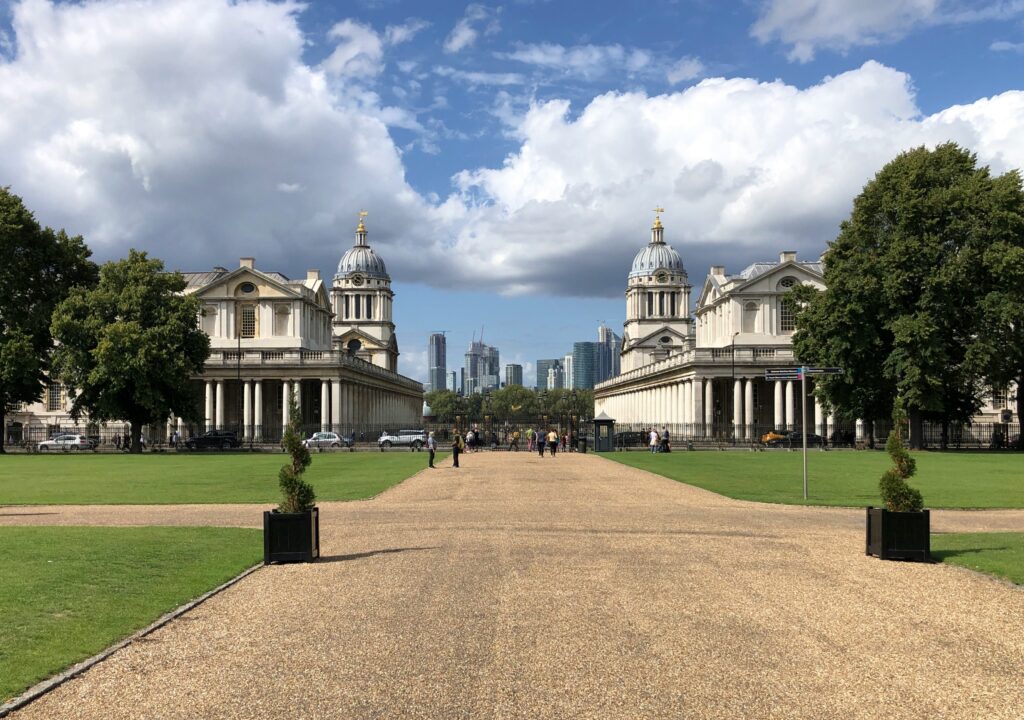
Those grand Baroque buildings you see from the river. Built as a hospital for naval pensioners, now part-museum, part-university campus, and absolutely worth seeing inside.
The Painted Hall: Called the “Sistine Chapel of the UK” and honestly, the comparison isn’t absurd. The ceiling and wall paintings took 19 years to complete and they’re genuinely spectacular.
Entry: £15 for adults (includes Painted Hall and Chapel) Worth it? Yes, especially for the Painted Hall. It’s extraordinary. Free bits: You can walk through the grounds and courtyards for free, which gives you the architectural experience even if you don’t go inside.
Best time: Weekday mornings when it’s quiet enough to actually look up at the ceiling without people bumping into you.
Cutty Sark
The clipper ship that’s become Greenwich’s icon. Preserved in dry dock, raised up so you can walk underneath and see the hull.
Entry: £17.50 adults Worth it? Depends on your interest in ships. The engineering is impressive, the history is interesting (tea trade from China), and the hull view from below is unique. But £17.50 is steep for what’s essentially one ship.
Alternative: Walk around it for free, admire the exterior, save your money for lunch.
Good for: Maritime history enthusiasts, kids who like climbing into ship spaces Skip if: You’re not particularly interested in 19th century shipping
Greenwich Market
The covered market that’s been here since the 1830s, though what’s sold has changed considerably.
Open: Tuesday-Sunday, 10am-5:30pm Closed: Mondays (some cafés around the edge still open)
What’s Actually There
Antiques and Collectibles (Tuesday-Thursday, some Friday): The original market traders. Vintage jewellery, old prints, vinyl records, antique silverware. Quality varies but you can find genuine treasures if you know what you’re looking for.
Arts and Crafts (Friday-Sunday): Handmade jewellery, prints, ceramics, textiles, leather goods. Mixed quality – some genuinely talented makers alongside people selling the same mass-produced stuff you see at every market.
Food Stalls (Every day): The most consistent section. Ethiopian, Vietnamese, Mexican, vegan options, fresh juices. Generally good quality and around £6-10 for lunch.
Is It Worth Visiting?
Yes, if: You enjoy browsing, you’re looking for handmade gifts, or you want lunch from the food stalls.
Skip if: You’ve been to any other London market recently – they’re all fairly similar now. Camden, Borough, Portobello – Greenwich Market has the same vibe.
My approach: Walk through, grab lunch if something looks good, browse the antiques on a Tuesday or Wednesday when it’s quieter. Don’t expect to find something extraordinary but you might.
Where to Eat in Greenwich
Goddards at Greenwich (22 King William Walk)
Traditional pie and mash shop that’s been here since 1890. Eel, meat pies, mashed potato, liquor (parsley sauce). Proper working-class London food done the way it’s been done for over a century.
Why it’s special: Authentic, cheap (£7-9 for pie and mash), and a piece of living history
Order: Steak and kidney pie, mash, liquor. Or eel if you’re adventurous.
Note: Very basic. Tiled walls, functional furniture, cash only. It’s not trying to be trendy.
The Old Brewery (Pepys Building, Old Royal Naval College)
Restaurant and bar in the Old Royal Naval College grounds. Run by Meantime Brewery (until they sold up – it’s now Young’s).
Good for: Lunch after seeing the Painted Hall, outdoor terrace in summer, reliable pub food
Menu: British classics – fish and chips, burgers, Sunday roasts
Price: £15-25 per person
Atmosphere: Heritage building but relaxed, not formal
Tai Won Mein (49 Greenwich Church Street)
No-frills Chinese noodle shop. Small, basic interior, excellent noodle soups and dumplings at very reasonable prices.
Why locals love it: Authentic, generous portions, cheap
Order: Wonton noodle soup, pork dumplings
Price: £8-12 per person
Bianco43 (47 Greenwich Church Street)
Neapolitan pizza. Proper wood-fired oven, puffy charred crusts, quality ingredients. One of the better pizza spots in Southeast London.
Good for: Casual dinner, groups, reliable food
Price: £12-18 per person
Booking: Recommended for weekend evenings
The Gipsy Moth (60 Greenwich Church Street)
Riverside pub with outdoor terrace overlooking the Thames and Cutty Sark. The view is the main attraction.
Good for: Drinks with a view, casual lunch, sunny days
Food: Standard pub food, nothing special but decent
Why go: The location and outdoor space
Price: £15-20 for food
Inside (19 Greenwich South Street)
Modern European restaurant. Small, intimate, seasonal menu. One of the better proper restaurants in Greenwich.
Good for: Date night, special meal, when you want something beyond pub food
Menu: Changes regularly, local ingredients, well-executed
Price: £35-50 per person
Booking: Essential for weekends
Café Bicicletta (69 Royal Hill)
Italian café and deli on the hill between Greenwich and Blackheath. Excellent coffee, fresh pasta, Italian provisions.
Best for: Weekend breakfast, coffee stop during a walk, picking up good olive oil and pasta
Atmosphere: Neighbourhood café, locals working on laptops, relaxed
Price: £8-15
Greenwich Market Food Stalls
When you don’t want to sit down for a meal – there are so many options. I absolutely love working my way through all the different stalls and cuisines the market has to offer.
Walks Beyond the Park
Thames Path to Island Gardens
Walk east along the Thames Path from Greenwich Pier. You’ll pass the Old Royal Naval College, continue past modern apartments, and reach Island Gardens with views back to Greenwich across the river. Walk through the foot tunnel to return.
Distance: 2km one way Time: 30-40 minutes each way Good for: River views, feeling like you’ve escaped the tourist area
Greenwich to Blackheath
Walk up Royal Hill from Greenwich centre. It’s uphill but not steep. You’ll reach Blackheath – a large open common with views, pubs around the edges, and a completely different atmosphere.
Distance: 1.5km Time: 20 minutes Good for: Seeing the residential area, linking to Blackheath pubs and cafés
Maze Hill to Greenwich via the Park (east side)
Take the train one stop to Maze Hill, enter the park at the eastern gate, walk through the wilder side with ancient trees, reach the Observatory, then descend into Greenwich proper.
Distance: 2-3km Time: 45 minutes – 1 hour Good for: Peaceful park walk, fewer crowds
Seasonal Highlights
Spring (March-May)
Cherry blossom in the park – Several trees near the Flower Garden, usually peak late March/early April Longer daylight – Park stays open later, evening walks become possible Flower Garden blooms – Worth visiting specifically in May
Summer (June-August)
Outdoor cinema in the park – Luna Cinema usually runs for a few weeks Busy riverside – Pubs with outdoor seating, evening energy Longer opening hours – Park open until 9:30pm Warning: Peak tourist season, very busy on weekends
Autumn (September-November)
Best light – Golden hour hits the Georgian terraces beautifully Park colours – Ancient trees turning, leaves covering paths Fewer crowds – September especially is lovely Comfortable walking weather
Winter (December-February)
Christmas market – Takes over the main market area, festive but crowded Crisp park walks – Beautiful on clear days, muddy when wet Fewer tourists – January and February are quiet Early darkness – Park closes at 6pm, plan accordingly
The Greenwich Foot Tunnel
Victorian tunnel under the Thames, connecting Greenwich to Island Gardens on the north side. Opened in 1902, still in daily use.
Access: Lifts at both ends (though they break down regularly – stairs are backup)
Length: 370 metres
Cost: Free
Experience: Atmospheric. White-tiled walls, gentle curve so you can’t see the end, footsteps echoing. Cyclists are supposed to dismount but many don’t.
Worth doing? Yes, if only for the experience. It’s a piece of functional Victorian engineering still doing its job 120+ years later.
Photo tip: The spiral staircases at each end photograph well if the lift is broken and you have to use the stairs.
Practical Information
Toilets
- Greenwich Market (inside market building – small charge)
- National Maritime Museum (free, multiple locations)
- Pavilion Café in the park (customer use)
- Most pubs if you’re polite (buying a drink helps)
Weather Planning
Greenwich is exposed. The park is on a hill, the riverside is windy. Bring layers even in summer.
Rainy day plan: Maritime Museum (2 hours), Painted Hall (1 hour), lunch at The Old Brewery, browse Halcyon Books, coffee at a café. You can do a full Greenwich day without being outside.
Parking
Council car parks near Cutty Sark and around the Naval College. Expensive. Weekend parking restrictions in residential streets. Honestly, take the train.
Accessibility
- Park paths are mostly paved but hilly
- Maritime Museum is fully accessible
- Cutty Sark has lift access
- Royal Observatory involves hills – there’s step-free access to the courtyard but not to all buildings
- Greenwich Market is flat and accessible
- Check specific venues before visiting
How Long to Spend in Greenwich
Half day (3-4 hours): Park walk, one major sight (Maritime Museum or Observatory), lunch, quick market browse. You’ll see the highlights.
Full day (6-8 hours): Leisurely park walk, Maritime Museum and Painted Hall, proper lunch, market browsing, riverside walk, evening drink with Thames views.
Full day + evening (8+ hours): Everything above plus Cutty Sark or Observatory, dinner at a proper restaurant, sunset views from the park.
My recommendation: Full day if you’re interested in the history and want to appreciate Greenwich properly. Half day if you’re primarily here for the park and views.
Combine with: Blackheath (10 minute walk uphill) if you want to extend the day, or riverside walk east towards Docklands.
Common Questions
Is Greenwich worth visiting if I’m not interested in maritime history? Yes. The park alone justifies the trip, plus it’s just a pleasant neighbourhood to wander. Skip the paid attractions, enjoy the park and riverside walk.
Do I need to book anything in advance? Only if you want guaranteed entry to the Royal Observatory on a weekend, or you’re eating at Inside. Everything else is walk-in.
Can I do Greenwich and the O2 in one day? Geographically yes (the O2 is in Greenwich), but they’re completely different experiences. If you’re seeing a show at the O2, come to Greenwich neighbourhood earlier in the day. Don’t try to squeeze Greenwich into a couple of hours before a concert.
Is it safe? Yes. Greenwich is safe, well-policed, and heavily visited. Standard London awareness applies – watch your belongings in crowded areas.
Where’s the best view? Observatory terrace, hands down. The statue of General Wolfe has the postcard view.
Final Thoughts: What Makes Greenwich Special
After countless visits, here’s what I’ve learned: Greenwich works because it hasn’t tried to be just one thing. It’s both a tourist destination and a functioning neighbourhood. It’s historically significant but not preserved in amber. You can spend a day engaging seriously with British maritime history, or you can ignore all that and just enjoy a beautiful park with river views.
What keeps me coming back is the layering. The grand Baroque buildings sitting alongside Vietnamese cafés. The UNESCO World Heritage Site that also has a market selling vintage band t-shirts. The way you can walk from the 17th century (Old Royal Naval College) through the 18th century (Georgian terraces on Crooms Hill) into the 19th century (Cutty Sark) and end up drinking craft beer in a 21st century pub.
Greenwich has been shaped by the Thames for centuries – first as a place where the river was measured and navigation science developed, now as a place where Londoners come to walk beside the water and remember the city has a waterfront. That relationship with the river is what makes it distinct.
The tourists will always come for the meridian line and the park views. But spend a bit longer, walk the quieter streets, eat at the Vietnamese café rather than the heritage venue, and you’ll find the neighbourhood beneath the tourist destination. That’s the Greenwich worth knowing.
Save This Guide
Bookmark this page for your next visit to Southeast London. Greenwich changes with the seasons – park blossoms in spring, riverside buzz in summer, golden light in autumn, crisp winter walks. Each visit shows you something different.
Want more London neighbourhood guides? I write regularly about discovering the city beyond the obvious landmarks, the walks worth taking, and the cafés where locals actually go.
Have you explored Greenwich? Found a café or walk I’ve missed? Leave a comment – I’m always looking for new recommendations.