There’s something about Notting Hill that feels different from the rest of London. Maybe it’s the pastel-painted townhouses catching the afternoon light, or the way Portobello Road Market spills onto the pavement every Saturday. Whatever it is, this West London neighbourhood has held onto its village charm despite becoming one of the city’s most sought-after postcodes.
I’ve been exploring Notting Hill for years now, and it never quite loses that initial magic. Yes, it’s become more polished since the film made it famous, but if you know where to look, you’ll still find the independent spirit that makes this area special. This isn’t a tourist’s hit-list of Instagram spots – it’s the Notting Hill I’ve come to know through countless Saturday mornings at the market, stolen weekday afternoons in quiet cafés, and those perfect summer evenings when the whole neighbourhood seems to spill onto the streets.
Whether you’re planning your first visit or you’re a Londoner looking to rediscover this corner of West London, here’s what you actually need to know about Notting Hill.
Getting to Notting Hill
By Tube:
- Notting Hill Gate (Central, Circle, District lines) – the main station
- Ladbroke Grove (Circle, Hammersmith & City lines) – quieter, northern entrance
- Holland Park (Central line) – southern edge, near Kensington
Best for: Portobello Market and main shopping street
Quieter entrance: Come up at Ladbroke Grove for fewer crowds
By Bus: Routes 7, 23, 52, 70, 94, and 390 all serve the area. The 52 is particularly useful if you’re coming from Victoria or King’s Cross.
Walking from nearby areas:
- 15 minutes from Paddington Station
- 20 minutes from Hyde Park
- 25 minutes from Kensington High Street
When to Visit Notting Hill
Saturday mornings (8am-1pm): Peak Portobello Market time. Get there before 10am if you want to browse the antiques section without battling crowds. The market officially starts at 9am, but stallholders are setting up from 8am and it’s much quieter.
Weekday mornings: The neighbourhood at its most authentic. Cafés filled with locals working on laptops, no queue for the Gail’s sourdough you’ve been eyeing, and Portobello Road as an actual street rather than a tourist attraction.
Sunday afternoons: Most shops are closed, but the residential streets are beautiful for wandering. Locals are out walking dogs, the pubs have that perfect lazy Sunday atmosphere, and you get a real feel for what it’s like to actually live here.
Avoid: Saturday afternoons after 1pm (market chaos), bank holiday weekends (overwhelmed), and August (peak tourist season).
Best seasons: Spring for the wisteria-covered houses in full bloom, early autumn for golden afternoon light on those pastel facades.
Portobello Road Market: What You Need to Know
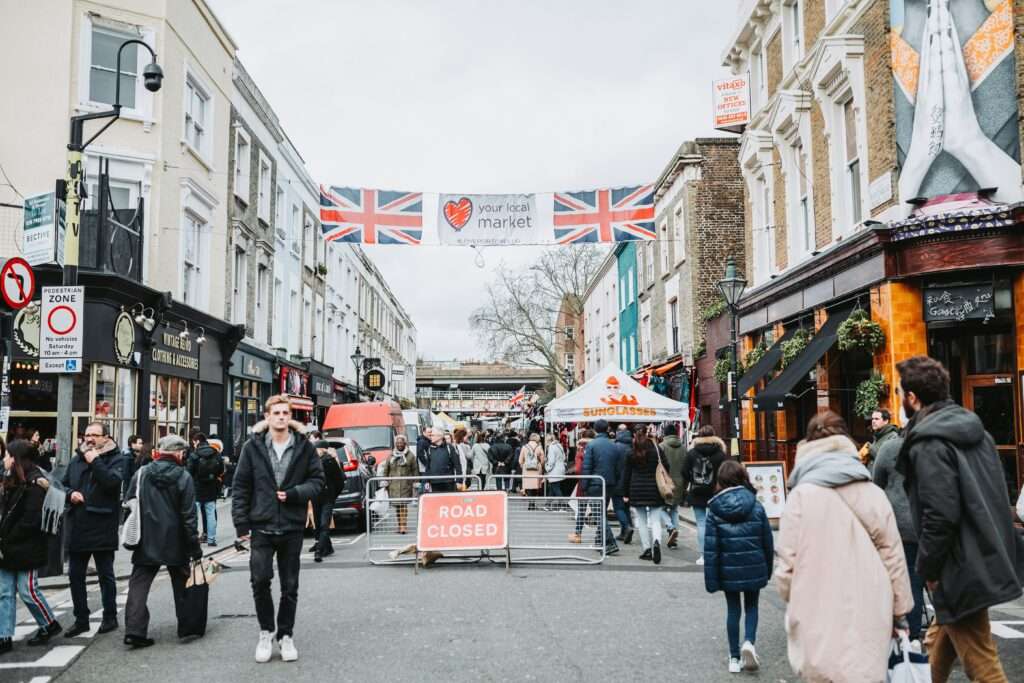
Let’s address the main reason most people come to Notting Hill. Portobello Market stretches for about a mile along Portobello Road, but it’s not one market – it’s several markets in one.
The Antiques Section (Chepstow Villas to Elgin Crescent)
Saturdays only, 9am-6pm
This is the famous bit. Vintage jewellery, antique silverware, old cameras, vinyl records, and the kind of curiosities you didn’t know you needed. Quality varies wildly from genuine antiques to tat, but that’s part of the charm.
My tip: Most dealers know their stuff, so proper bargains are rare. But if you’re looking for something specific and you visit regularly, you’ll start to recognise the dealers who specialise in your interest. They’re usually happy to chat and far more knowledgeable than a quick Google search.
What to look for: Vintage jewellery (especially at the northern end), mid-century ceramics, old Penguin paperbacks, vintage prints and maps.
The Food Market (Talbot Road to Lancaster Road)
Monday-Saturday, 9am-6pm (Thursday until 1pm)
Fresh produce, artisan bread, international food stalls, and some of the best street food in West London. This section runs all week, not just Saturdays.
What to get: Gail’s sourdough if you haven’t already tried it, fresh pasta from the Italian deli, seasonal fruit from the greengrocer near Talbot Road, and coffee from any of the stalls—they’re all decent.
Lunch here: The Moroccan food stall near Lancaster Road has been there for years. The falafel wraps are excellent and about £6. There’s also a Spanish tapas stall that does proper tortilla.
The Fashion and Vintage Clothing (Westbourne Grove end)
Fridays and Saturdays, 9am-5pm
Less touristy than the antiques section. Vintage Levi’s, retro sportswear, second-hand designer pieces, and a lot of fast-fashion stalls mixed in.
Worth it if: You enjoy digging for vintage finds and don’t mind that 80% of stalls are selling the same mass-produced festival clothing.
General Market Survival Tips
- Start at the Notting Hill Gate end and walk north. You’ll hit the good antiques section first when you’re still fresh, and can decide if you want to continue up to the fashion bit.
- The real treasures are in the permanent shops, not on the street stalls. The antique shops along Portobello Road (especially in the arcade at 290) are open Tuesday-Saturday and often have better quality pieces.
- Watch your bag. Saturdays get packed, and pickpockets know this.

Cafés Worth Your Time
Farm Girl (59 Portobello Road)
The Australian café that started the whole rose latte trend. Yes, it’s Instagram-famous. Yes, there’s often a queue. But the food is genuinely good—fresh, colourful, and the kind of breakfast you actually want on a Saturday morning.
Order: The ricotta hotcakes or the green shakshuka. The coffee’s decent too.
Best time: Weekday mornings (9-11am) to avoid the weekend crowd.
Price: £12-18 for breakfast
Granger & Co (175 Westbourne Grove)
Bill Granger’s London outpost. More polished than Farm Girl, slightly less Instagrammable, arguably better food. The corn fritters and scrambled eggs are excellent.
Why I like it: Large windows, lots of natural light, and they don’t rush you. Good spot for working if you’re okay with café noise.
Best time: Any weekday morning
Price: £14-20 for breakfast
Gail’s Bakery (Multiple locations on Portobello Road)
The London bakery chain that actually deserves the hype. Sourdough bread, excellent pastries, proper coffee. There are three Gail’s in Notting Hill, which tells you something.
Order: Cinnamon bun (the best in London, genuinely), bacon sandwich on sourdough, or just a loaf of their olive bread to take home.
Best time: First thing in the morning for warm pastries
Price: £4-8
Electric Coffee Co (inside The Electric Cinema, 191 Portobello Road)
Tiny coffee counter attached to the historic cinema. Simple menu, excellent coffee, and that rare thing in Notting Hill—no queue.
Why it’s special: Feels like a secret. Most people walk straight past to the cinema without noticing.
Order: Flat white and a pain au chocolat
Price: £5-7
Daylesford Organic (208-212 Westbourne Grove)
Part café, part farm shop, entirely Notting Hill. Organic everything, beautiful interior, and prices that make you wince slightly. But the quality’s there.
Best for: Special weekend breakfast, or picking up beautiful provisions for a picnic
Signature: Biodynamic porridge, house-made granola, seasonal salads
Price: £15-25 for breakfast
Local cafés that don’t get enough attention:
Biscuiteers (194 Kensington Park Road) – Iced biscuit shop with a small café counter. Hot chocolate here in winter is excellent.
Lisboa Patisserie (57 Golborne Road) – Portuguese bakery at the far northern end. Proper custard tarts, strong coffee, tiles on the walls, and about £3 for both. Worth the walk.
Books for Cooks (4 Blenheim Crescent) – Bookshop café. Tiny, cramped, and serving a simple lunch menu that changes daily. You’ll probably have to wait for a table, but that’s because the food’s good and cheap.
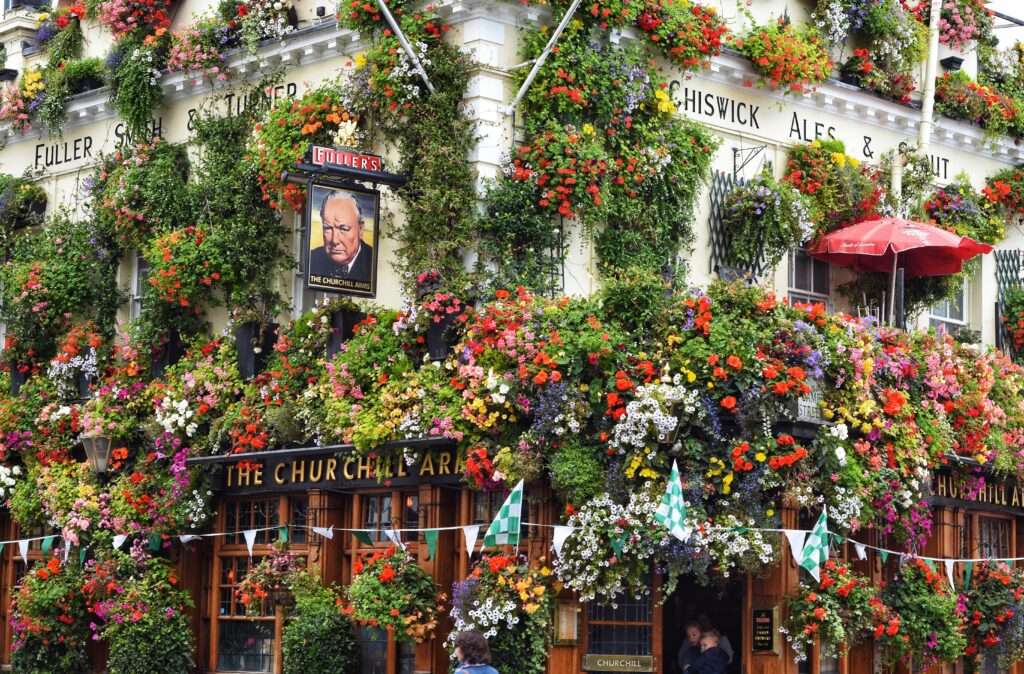
Pubs That Feel Authentic
The Churchill Arms (119 Kensington Church Street)
Technically on the edge of Notting Hill, but impossible to miss. The exterior is famous—covered in hanging baskets and flowers that get photographed constantly. The Thai restaurant inside is less famous but surprisingly good.
Worth it for: The spectacle and a pint. Also excellent Thai food if you’re hungry. Best time: Early evening before it gets packed
The Earl of Lonsdale (277-281 Westbourne Grove)
Neighbourhood pub with good food. Nothing particularly special, which is exactly why locals like it. Taylor Walker pub group, so reliable quality.
Good for: Sunday roast, weeknight dinner, watching football Atmosphere: Comfortable, unfussy
The Walmer Castle (58 Ledbury Road)
Gastro pub with a focus on wine and seasonal British food. Small, gets busy, booking recommended.
Why I like it: Feels like someone’s converted their living room into a pub. Intimate and well-run. Good for: Date night, special meal that’s not fine dining Price: £30-45 per person
The Portobello Star (171 Portobello Road)
Market-side pub that’s been here forever. Gets absolutely rammed on Saturdays. Come on a Tuesday instead.
Character: Proper local, bit rough around the edges Good for: Pint after work, casual atmosphere
Quiet Streets Worth Wandering
The real charm of Notting Hill isn’t on Portobello Road – it’s one street over, where tourists rarely venture.
Lancaster Road to St Luke’s Mews
Walk north from Portobello Road up Lancaster Road. Quieter, residential, beautiful terraced houses. Turn left onto St Luke’s Mews – a private cobbled street lined with former stables now converted into mews houses. Not somewhere you can linger (it’s private property), but worth walking past.
Colville Terrace and Colville Square
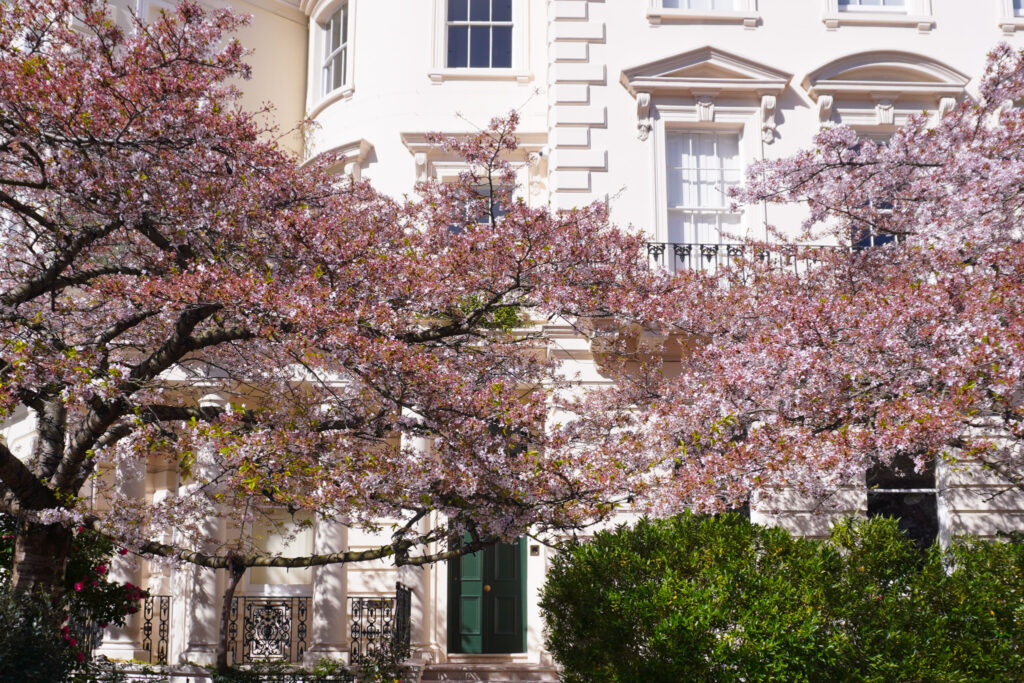
Pastel-painted houses that look particularly beautiful in late afternoon light. Spring brings wisteria trailing over doorways and railings. These streets are residential, so be respectful – this is where people actually live.
Kensington Park Gardens
Wide tree-lined street with substantial townhouses. More architecturally grand than the cottages on Portobello Road. Walk it in autumn when the plane trees are turning.
Pembridge Road to Pembridge Villas
The streets running perpendicular to Portobello have a village feel – independent shops, café windows with hand-written menus, neighbourhood rather than destination.
All Saints Road
This street has changed character multiple times. Once the edgy heart of Notting Hill, now more gentri fied but still with an independent spirit. Good coffee at All Saints Coffee Company.
Walking Routes
The Classic Saturday Route (2-3 hours)
Start at Notting Hill Gate tube. Walk up Pembridge Road to Portobello Road. Turn right and follow the market north, stopping where interests you. Continue to Golborne Road if you want to see the less touristy northern end. Return via Ladbroke Grove, cutting through residential streets back to your start.
Good for: First-time visitors, market exploration Best time: Saturday morning, 9am start
The Quiet Residential Walk (1 hour)
From Notting Hill Gate, walk up Kensington Church Street. Turn left on Hillgate Street (beautiful mews). Continue to Farmer Street, then explore the residential streets between Portobello Road and Ladbroke Grove. End at the Portobello Road market area.
Good for: Photography, seeing where people actually live Best time: Sunday afternoon or weekday morning
The Architecture Walk (1.5 hours)
Start at Notting Hill Gate. Walk up Pembridge Gardens (grand Victorian terraces). Continue to Kensington Park Gardens. Cross to explore the streets between here and Ladbroke Grove – stunning 19th-century architecture, communal gardens behind locked gates. End at Holland Park.
Good for: Architecture lovers, quieter exploration Best time: Any time
Seasonal Highlights
Spring (March-May)
Cherry blossom on St Luke’s Road – Usually peaks late March/early April Wisteria on Colville Terrace and surrounding streets – Full bloom mid-to-late April Garden squares opening for Open Garden Squares Weekend (one weekend in June, technically early summer) – Rare chance to see those private communal gardens
Summer (June-August)
Notting Hill Carnival (late August Bank Holiday weekend) – Europe’s largest street festival. Colourful, vibrant, crowded, loud. Transformative but exhausting. Most residents leave for the weekend. Al fresco dining – Cafés and restaurants put tables outside. Portobello Road comes alive on warm evenings. Evening market atmosphere – Some stalls stay open later, bars are bustling, whole neighbourhood has energy.
Autumn (September-November)
Best light for photography – Golden hour hits those pastel houses perfectly Harvest season at the food market – English apples, pumpkins, autumn produce Fewer tourists – September especially is lovely and quieter
Winter (December-February)
Christmas lights on Portobello Road – Nothing spectacular, but charming Cosy pub season – Pubs with fires, Sunday roasts, hunkering down Fewer crowds – January and February are quiet. Cold, but you’ll have the place to yourself.
What to Skip
The Travel Bookshop (13-15 Blenheim Crescent) Yes, it inspired the bookshop in Notting Hill the film. No, it’s not particularly special now. Small, overpriced, mostly trading on film fame.
Anything claiming to be “the house from the film” Multiple addresses claim this. None are actually open to visitors because they’re private residences. Please don’t knock on doors.
The Electric Cinema on Saturday evenings It’s a lovely cinema—velvet sofas, footstools, side tables for wine. But it’s expensive (£25-45 per ticket), and Saturday evenings are packed with tourists doing it for the Instagram story.
Portobello Market on Sunday It’s not really on. A few permanent shops are open, maybe a handful of stalls, but you’re seeing the ghost of Saturday’s market. Come during the week instead.
Restaurants directly on Portobello Road With a few exceptions (Raoul’s, Pizza East), restaurants on the main drag tend to be overpriced and tourist-focused. Better food is one street over.
Practical Information
Toilets
Public: Inside Portobello Green Arcade (near Portobello Road/Thorpe Close junction) – small charge
Cafés: Most cafés have toilets for customers. Gail’s is usually a safe bet.
Pubs: Churchill Arms, Earl of Lonsdale, others will let you use facilities if you’re polite (buying a drink helps)
ATMs
Cash machines on Notting Hill Gate high street. Many charge fees. Plan ahead.
Parking
Forget it. Controlled parking zones throughout, resident permits required, and nowhere to park on Saturdays anyway. Take the tube.
Accessibility
Portobello Road market is flat and accessible, but Saturday crowds make wheelchair navigation difficult. Weekday mornings are easier. Most tube stations in the area (Notting Hill Gate, Ladbroke Grove) have step-free access, but check TfL website before travelling.
How Long to Spend in Notting Hill
Quick visit (2-3 hours): Saturday market stroll, coffee at Gail’s, wander the main drags. You’ll see the highlights.
Half day (4-5 hours): Market, lunch, explore residential streets, coffee and cake, maybe Holland Park at the end.
Full day (6+ hours): Leisurely market exploration, late breakfast, residential wandering, lunch at a proper restaurant, afternoon coffee, early dinner or drinks. This gives you time to let the neighbourhood reveal itself.
My recommendation: Half day is the sweet spot. Longer than that and you’ll start repeating yourself—Notting Hill is charming but geographically small.
Final Thoughts: What Makes Notting Hill Special
Here’s what I’ve learned after countless visits: Notting Hill is at its best when you’re not trying too hard. Yes, see the famous pastel houses on Instagram. Yes, go to Portobello Market. But also duck down random streets, sit in a café longer than you planned, chat to the antiques dealer about their collection, pick up a bunch of flowers from a market stall just because they’re beautiful.
The neighbourhood has changed enormously in the past 20 years – rents have risen, independent shops have closed, the bohemian edge has been polished away. But there’s still something here. It’s in the way light hits those townhouses on a Saturday morning. It’s in the Portuguese bakery that’s been on Golborne Road for 40 years. It’s in the fact that, despite everything, this still feels like a neighbourhood where people actually live, not just a set for Instagram photos.
The film made Notting Hill famous, but the reality is more interesting than the movie ever was. Come with curiosity rather than a checklist, and you’ll find it.
Save This Guide
Bookmark this page for your next visit, or better yet, keep it handy when you’re planning your next London weekend. Notting Hill isn’t going anywhere, but the neighbourhood’s constantly evolving. The cafés change, new market stalls appear, old favourites close. That’s the nature of any living neighbourhood.
Want more London neighbourhood guides? I write regularly about discovering the city’s hidden corners, the cafés worth visiting, and the walks that show you London beyond the obvious landmarks.
Have you been to Notting Hill? Found a café or street I’ve missed? Leave a comment – I’m always looking for new recommendations.