Valencia has my heart to this day. I lived there for six months during my university years – one of those Erasmus placements that’s supposed to be about studying and ends up being about something else entirely. Something like learning how to actually live. How to do Siesta right, eat dinner with friends on a weekday at 9pm in your favourite local restaurant and make a lunch trip to the beach the most normal thing in the world. How to sit in a plaza with nowhere to be. How to order a jug of Agua de Valencia and watch an afternoon dissolve into evening without even realising.
I came home completely changed by that city, and I’ve been going back almost every year since. At this point it feels like a second home. I know which café to go to on a Sunday morning in Ruzafa. I know which beach restaurant is worth the wait and which ones are coasting on location. I know the exact walk through the Turia Garden at golden hour that makes you understand why people move there and never leave.
Valencia is Spain’s third-largest city, sits on the Mediterranean coast about two and a half hours by flight from London, and has been quietly getting on with being extraordinary while Barcelona and Madrid collect all the headlines. It has beaches 15 minutes from the city centre. It has Gothic architecture, futuristic design, and one of the best food markets in Europe all within walking distance of each other. It’s more affordable than either of its more famous rivals. And the people — genuinely, the warmth of the people here is something I have never quite found anywhere else.
If you haven’t been, this is the guide I wish I’d had before I first arrived. And if you have been, maybe this will convince you it’s time to go back.
Quick Facts Before You Go
Getting there: Direct flights from London Gatwick, Heathrow, Stansted, and Luton – around 2 hours 30 minutes. easyJet, British Airways, Vueling, and Ryanair all operate routes. Valencia Airport connects to the city centre via metro (Lines 3 and 5) in about 20 minutes. Skip the airport taxis unless you’re splitting the cost.
When to go: Spring (April–June) and autumn (September–October) are the sweet spots – warm, manageable crowds, and the city at its most alive. Summer is hot and wonderful if you’re beach-focused, but prices rise and the tourist numbers in the Old Town get relentless. Winter is mild (15–18°C), almost empty of tourists, and criminally underrated. I’ve been in February and had the entire Mercado Central to myself. It was brilliant.
How long do you need: Two days is enough for a taste and you’ll leave wanting more – which is the point. Three to four days is the ideal trip. Five or more and you have time to actually slow down and do it properly, with day trips built in.
Budget: Noticeably cheaper than Madrid or Barcelona. A mid-range hotel, a menú del día lunch, and a proper dinner out will come to around €80–100 per day per person. The menú del día – a three-course set lunch with wine, offered by almost every restaurant – is typically €12–16 and is one of the great civilised institutions of Spanish life.
Getting around: Valenbisi is Valencia’s public bike-share scheme and it’s excellent – grab a day pass via the app and you’ll cover more ground, more comfortably, than any other combination of transport. The Turia Garden runs the length of the city and is entirely traffic-free. The old town is completely walkable. Tram Line 4 connects the centre to the beaches at Malvarrosa in about 20 minutes.
The Best Time to Visit (And the One Date You Need to Know)
Valencia’s climate is genuinely exceptional – around 300 sunny days a year, mild winters, and the kind of light in spring and autumn that makes everything look better than it has any right to.
Spring (April–June) is my personal favourite. Orange trees in bloom, comfortable temperatures, manageable crowds, and the city in full swing after the post-Fallas calm. The light in May is extraordinary.
Summer (July–August) is peak beach season and a completely different energy – louder, busier, more expensive, and more fun if you embrace it. The beaches are genuinely good and the evening culture really comes into its own when the days are long.
Autumn (September–October) runs spring very close. Warm sea, thinner crowds, lower prices, and the restaurant scene at its most creative as the seasonal ingredients shift.
Winter (November–February) is Valencia’s secret. Cold evenings but warm midday sun, almost no queues anywhere, and a quieter, more authentic version of the city. I’ve done a long weekend in January twice now and left wondering why more people don’t do it.
Las Fallas (15–19 March): I need to talk about this separately because it’s one of the most spectacular things I’ve experienced anywhere in the world. For months, neighbourhood groups build enormous sculptural monuments – ninots – out of papier-mâché and painted figures, some reaching 30 feet high. They fill the streets. Then on the final night, they burn all of them simultaneously. The whole city becomes a fire festival. There are fireworks, marching bands, people in traditional dress, and a noise level that makes you feel the vibrations in your chest. It’s chaotic, sleepless, and completely unforgettable.
If you want to go during Fallas, book your accommodation at least three to six months in advance. The city fills up entirely.
MotoGP Grand Prix of Valencia (November): Something we only discovered in recent years – and now it’s firmly in the calendar. The Valencian Community Grand Prix takes place at Circuit Ricardo Tormo in Cheste, about 20 minutes outside the city, and it’s traditionally the final race of the entire MotoGP season. Which means the atmosphere is something else – championship titles are often on the line, the grandstands hold up to 150,000 people, and the circuit layout means you can see almost the full track from any seat. We started going right after Covid and it’s become one of our favourite reasons to book a late November trip. The city has none of the summer crowds, the weather is still mild enough to sit outside in the evenings, and you get the race on top of everything else Valencia already offers. The 2026 race weekend runs 20-22 November. Book tickets early – it sells out.
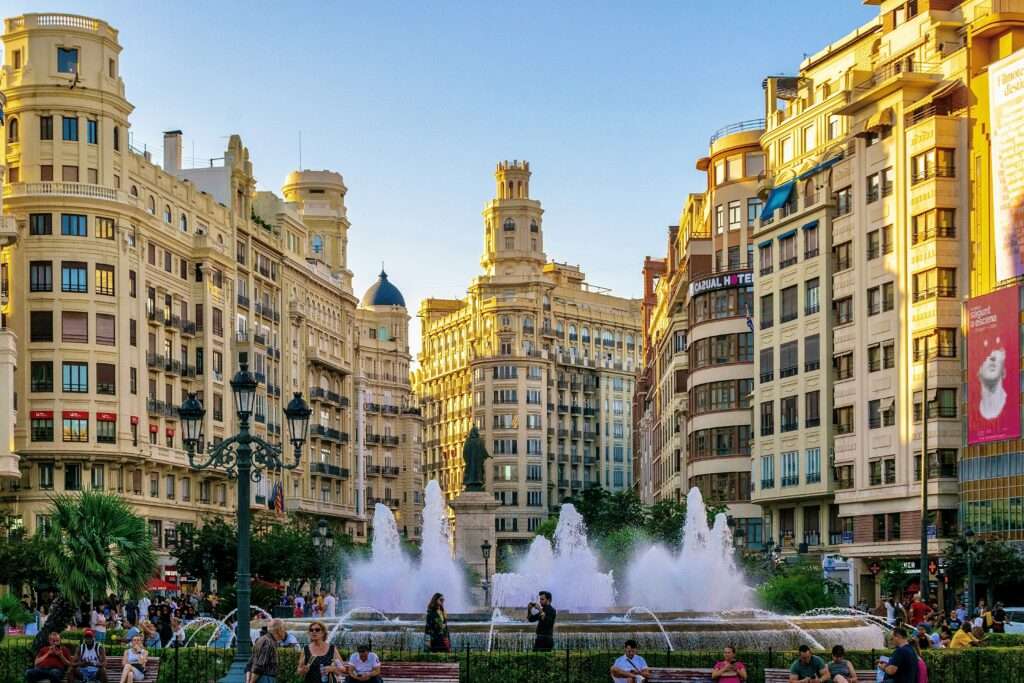
Where to Stay: The Best Neighbourhoods in Valencia
Valencia is compact enough that almost anywhere central works – you’re rarely more than 20 minutes’ walk from anything that matters. But the neighbourhood you choose will shape how you experience the city.
Ciutat Vella (Old Town) – For atmosphere and history
This is where I lived during my Erasmus year, in a flat above a pharmacy on a narrow street in El Carmen that I still walk past whenever I’m back. The old town splits into several micro-neighbourhoods: El Carmen, La Seu, La Xerea, and El Mercat. Each has its own character, but together they form one of the most walkable, beautiful historic centres in Spain.
El Carmen has been transformed by its street art scene over the past decade – the walls here are genuinely among the best in Europe, and wandering without a plan is actively encouraged. La Seu is quieter, closer to the cathedral, and the kind of neighbourhood where locals have lived for generations.
Stay here if you want to be in the thick of it, a short walk from the cathedral, the Silk Exchange, and the Mercado Central. Be aware that some streets get noisy at weekends – the old town’s bar culture doesn’t apologise for itself.
Don’t miss: Plaza del Negrito for an early evening Agua de Valencia, Calle Caballeros at any hour, and the Torres de Quart (medieval gates) for photos at sunset.
Ruzafa (Russafa) – For food, coffee, and independent culture
If the old town is Valencia’s history, Ruzafa is its present. This is where the designers, freelancers, chefs, and musicians live – the neighbourhood that’s been quietly becoming one of the most interesting places in Spain for about a decade now, without making too much noise about it.
Walking Ruzafa feels like a reward: independent boutiques, craft beer bars, excellent brunch spots, and the Mercado de Ruzafa – around 160 stalls of fresh produce, seafood, cured meats, and bakery treats in a setting that has none of the tourist pressure of the central market. Saturday mornings here are a genuine pleasure.
This is where I tend to stay now. It’s slightly removed from the main tourist flow, the coffee is better, and the evenings have a warmth to them that’s harder to find when you’re surrounded by other visitors.
Don’t miss: Dulce de Leche café (the cake display alone justifies the detour), Ubik Café inside a bookshop for laptop-friendly mornings, and the Michelin-starred La Salita for a properly special dinner.
El Cabanyal – For beaches and authentic neighbourhood life
The old fishermen’s quarter stretching back from Malvarrosa Beach, El Cabanyal is the neighbourhood that stayed stubbornly itself through decades of development pressure, and it’s better for it. The tiled facades of the old fishermen’s houses are extraordinary – colourful, weathered, and completely individual. The neighbourhood is gentrifying slowly, but it still feels like a place people actually live rather than a backdrop for visitors.
The food here is worth the 20-minute tram ride from the centre on its own. Casa Carmela and La Pepica are both pilgrimage spots for paella done properly. Casa Montana has queues out the door at weekends – reserve in advance.
Stay here if you want beach access, a more local pace, and slightly lower prices than the centre.
Don’t miss: La Fabrica de Hielo, a former ice factory converted into a cultural space hosting live music and exhibitions – check the calendar before you go.
Eixample – For convenience and value
The grid-planned expansion neighbourhood between the old town and Ruzafa. Not the most characterful choice, but extremely practical: wide streets, excellent transport, a good mix of restaurants and cafés, and generally better value accommodation. Gran Vía is the main artery – a beautiful boulevard of modernist buildings that doesn’t get nearly enough attention. A good base if you’re travelling with family or if you want access to everything without the noise of the old town at weekends.
What to Eat and Drink in Valencia
I want to be honest about something: the food in Valencia is the reason I keep going back. Not just the paella (though the paella is extraordinary). The whole food culture – the pace of it, the ritual of it, the way a Tuesday lunch can become a two-hour event that improves everything about the rest of your day.
A few things worth knowing before you sit down anywhere: lunch is the main meal, served between 2pm and 4pm. Dinner doesn’t start until 9pm at the earliest – eating at 7pm puts you firmly in the tourist category. The menú del día is your best friend for lunch: three courses with wine and bread, offered by almost every restaurant on weekdays, and typically extraordinary value.
Paella Valenciana
The real thing. Not seafood – chicken and rabbit, which surprises almost everyone. Cooked in a wide, flat pan over a wood fire, loaded with garrofó beans, runner beans, rosemary, and saffron. The socarrat – the slightly caramelised crust on the bottom of the pan – is the part locals argue about. Order it in El Palmar, the village in the Albufera wetlands where it was originally invented, and eat it at a table overlooking the rice fields. It’s one of the best meals I’ve had anywhere.
Where to eat it: Casa Carmela and La Pepica in El Cabanyal for a classic beachside experience. Casa Roberto in the Gran Vía area for something more central. El Palmar village for the full pilgrimage.
Horchata and Fartons
A cold, creamy drink made from tiger nuts (chufa) grown in fields just outside the city. It tastes somewhere between almond milk and rice milk, slightly sweet, and it’s served with fartons – long, sugar-dusted brioche buns made for dipping. This is Valencia’s afternoon ritual and I have participated in it more times than I can count. Even people who claim not to like it tend to be converted after one proper glass at Horchatería Santa Catalina, where the building itself – all beautiful antique tiles and marble – is as good as what’s in the glass.
Where to drink it: Horchatería Santa Catalina in the old town, or Casa de L’Orxata at Mercado de Colón.
Agua de Valencia
Valencia’s cocktail. Freshly squeezed orange juice, cava, vodka, and gin, served in a large jug and poured into wide-rimmed glasses at the table. It’s dangerously drinkable, considerably stronger than it tastes, and the kind of drink that turns an afternoon into an evening without you fully understanding how. Best ordered as a group drink. Best consumed at Café de las Horas near Plaza de la Virgen – the interior is extraordinary, all velvet and chandeliers, and it feels appropriately dramatic for a drink this lethal.
Tapas and Seafood
Valencian tapas lean heavily on seafood and simplicity. Puntilla – fried baby squid with flaky salt and aioli. Esgarraet – roasted red pepper with salt cod and good olive oil. Gamba roja – red prawns from the nearby coast that are some of the finest in Spain, simply grilled with garlic. Mussels steamed with white wine. Jamón Ibérico. Croquetas that bear no resemblance to the school dinner variety.
Casa Montana in El Cabanyal is one of the best tapas bars I know anywhere – ultra-traditional, queues out the door, entirely worth it. Taberna Pare Pere in Ruzafa is the locals’ version: tiny, no tourists, excellent fish and daily specials that aren’t on the menu, so ask.
Fideuà
Paella’s less famous sibling, made with short noodles instead of rice, cooked in the same wide pan with seafood – typically monkfish, prawns, and mussels. It originated in nearby Gandia and is a fixture on Valencia’s restaurant menus. Excellent if you find paella too rich. Also excellent if you’ve already eaten paella and need a reason to order something similar the next day.
The Oranges
Valencia’s oranges are famous for a reason. The city streets are lined with orange trees, but don’t eat from those – they’re ornamental and very bitter. The fruit at Mercado Central is another thing entirely: vivid, sweet, and worth every cent. Freshly squeezed juice here tastes like proof that the supermarket version is a completely different product.
Mercado Central
I should give this its own section because it deserves it. Built in 1928 with stunning modernist architecture – tiled mosaics, wrought iron, a soaring glass dome – the Mercado Central is the oldest and one of the most beautiful covered markets in Europe. The produce inside is extraordinary: Iberico ham carved to order, fresh fish landed that morning, mountains of citrus, garrofó beans, the cheeses and cured meats that make up the best impromptu picnic you’ll have anywhere. Go before 1pm – it closes at lunchtime, and nothing about arriving at 12:55 is a good idea.
The Top Things to Do in Valencia
The City of Arts and Sciences
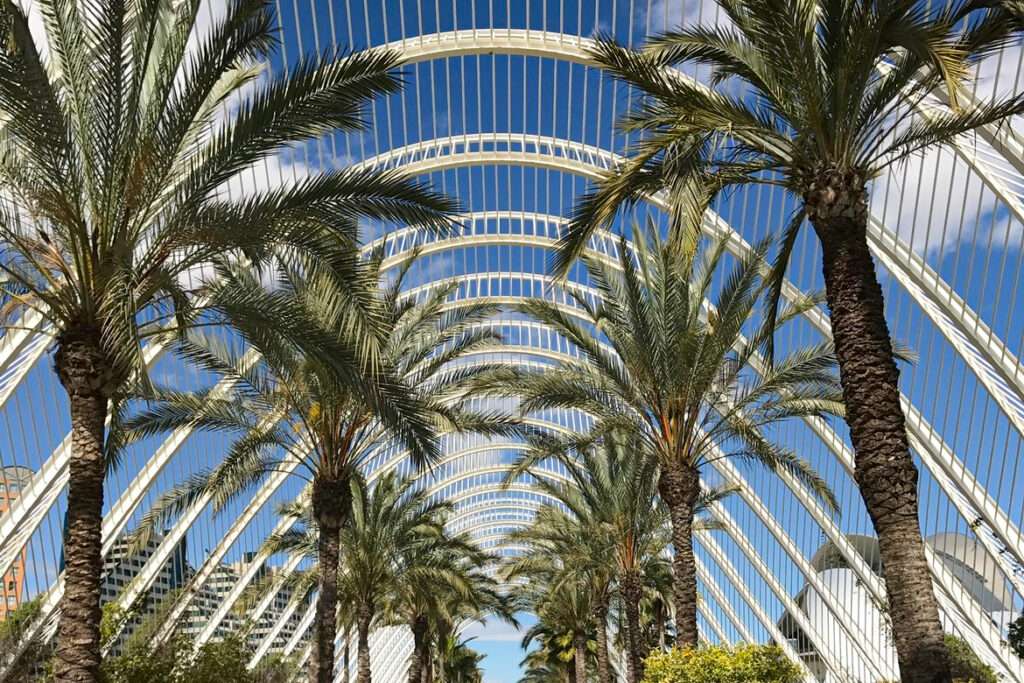
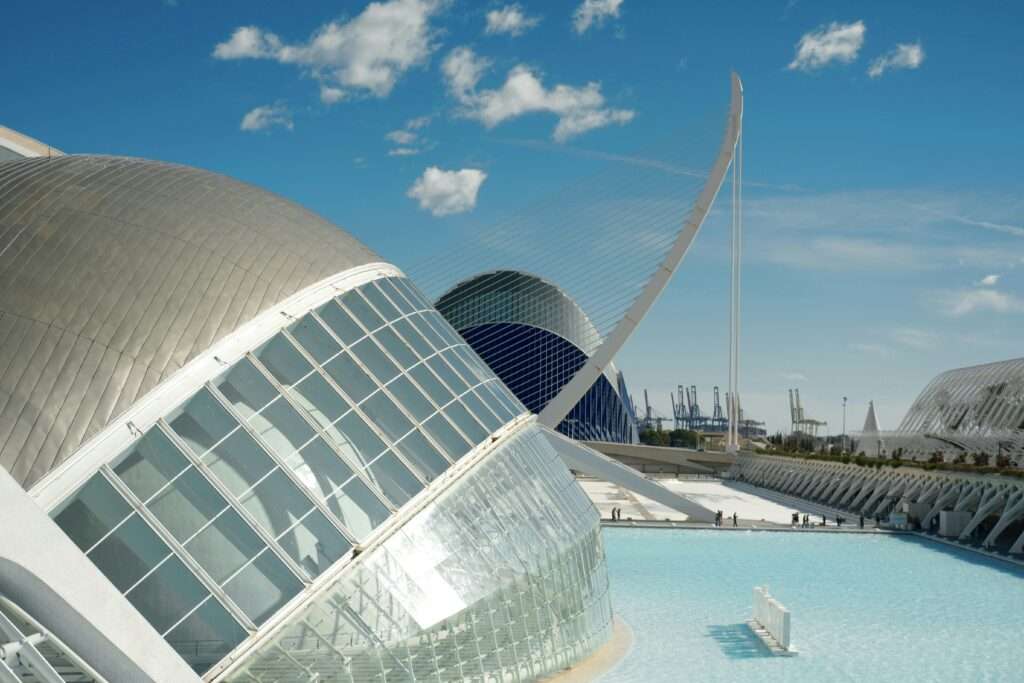
Santiago Calatrava and Félix Candela’s extraordinary complex stretching along the old Turia riverbed is one of the most impressive pieces of architecture I’ve seen anywhere in the world, and I say this as someone who has to physically restrain herself in the presence of good design. The gleaming white structures – the Oceanogràfic (Europe’s largest aquarium), the L’Hemisfèric IMAX theatre, the Príncipe Felipe Science Museum, and the Palau de les Arts opera house – look completely implausible in the best possible way. Come at sunset when the whole complex reflects in the surrounding water and the light turns everything gold. Come at night too – it’s lit magnificently.
Book tickets online in advance, especially in peak season. A combo ticket is better value than buying individually. The Oceanogràfic alone takes two to three hours if you’re doing it properly.
Turia Garden
When the River Turia flooded Valencia catastrophically in 1957, the decision was made to divert the river entirely. The old riverbed – a nine-kilometre arc through the heart of the city – was transformed into a linear park, and it’s one of the best things about living in Valencia. Cycling its length from the old town out to the City of Arts and Sciences takes about 40 minutes and passes through orange groves, rose gardens, sports pitches, playgrounds, and some of the prettiest stretches of city greenery I’ve found anywhere. I do this every single time I visit. It never gets old.
Valencia Cathedral and Miguelete Tower
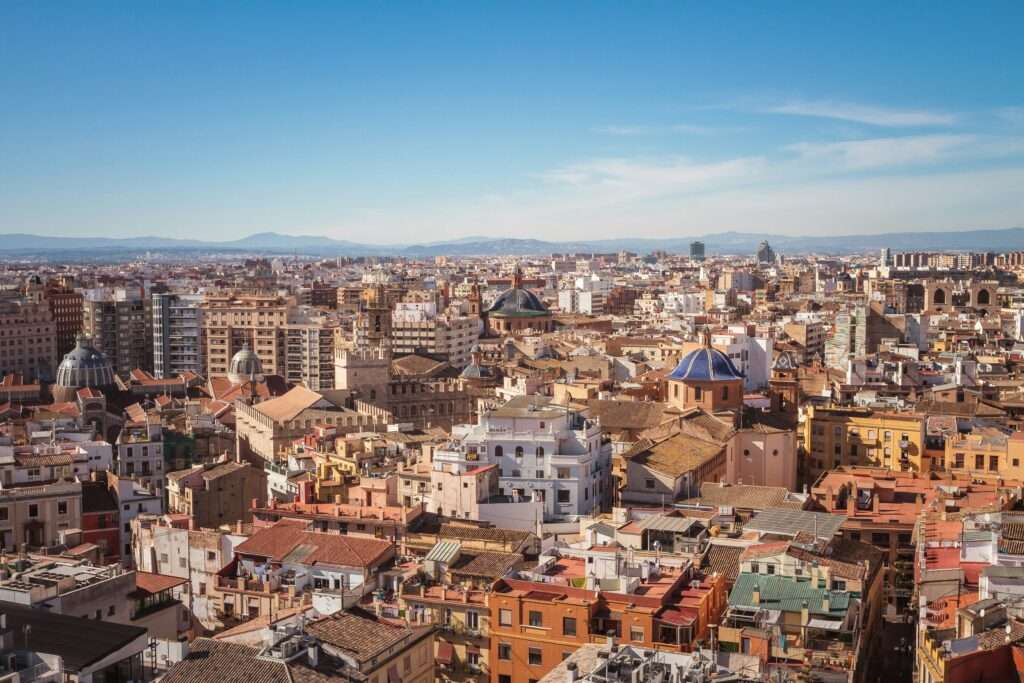
The cathedral in the heart of the old town houses what many believe to be the actual Holy Grail – the Santo Cáliz, a first-century stone chalice in the Chapel of the Holy Chalice. The debate about its authenticity has been running since the 14th century and is unlikely to be resolved soon, but the Gothic architecture and the art inside are extraordinary regardless. Climb the 207 steps of the Miguelete Bell Tower for panoramic views over the terracotta rooftops to the sea. Tower entry is €9 (2026) and worth every cent on a clear day.
La Lonja de la Seda (The Silk Exchange)
One of the finest examples of Gothic civil architecture in Europe and genuinely one of my favourite buildings in Spain. Built in the 15th century when Valencia was one of the wealthiest trading cities on the Mediterranean, the Silk Exchange was the commercial heart of a booming silk trade. The Hall of Columns – 24 spiral pillars twisting up to the vaulted ceiling – is breathtaking in the literal sense. You walk in and your breath actually catches. UNESCO listed, and completely deserving of it.
El Carmen Street Art
The street art in El Carmen has been transforming the neighbourhood for years and the results are genuinely some of the best public art in Spain. There’s no map needed – just walk and look up. The contrast between the medieval architecture and the enormous murals covering entire building facades is part of what makes it so good. Budget a morning with no other plans.
Malvarrosa Beach and El Cabanyal
Valencia’s main city beach is far better than most people expect: wide, clean, with a long promenade of cafés and restaurants and a view of the Mediterranean that on clear days stretches impossibly far. It’s accessible by tram in about 20 minutes from the centre, or by bike through the Turia Garden. The combination of a morning at the beach, a long lunch at one of the classic paella restaurants in El Cabanyal, and a wander through the neighbourhood’s extraordinary tiled streets is one of the best possible ways to spend a day in this city.
For a quieter beach, head to Playa de El Saler through the Albufera Natural Park. Mediterranean dunes, very few tourists, and genuinely beautiful.
Museum of Fine Arts
The second-largest art gallery in Spain, almost always free of queues, and one of those excellent museums that flies completely under the radar. The collection spans medieval Valencian altarpieces, Baroque masters, and a room of Joaquín Sorolla’s luminous, light-filled paintings that I find myself lingering in every time. Entry is free. Go.
The Best Day Trips from Valencia
One of Valencia’s biggest underrated advantages is its position as a base for exploring the surrounding region. These are the day trips I’d send my closest friends on – all tried, all worth the journey.
L’Albufera Natural Park (20 minutes by bus or taxi)
Spain’s largest freshwater lagoon, surrounded by the rice fields that supply Valencia’s paella, and a world away from the city in feel and pace. Flamingos, herons, eels, and traditional fishing boats on still water. The sunset here is one of those views that makes you stop mid-sentence. Take a 40-minute boat ride in a traditional albuferenc boat, then eat paella in the village of El Palmar – where the dish was originally invented – surrounded by rice paddies. If you only do one day trip, make it this one.
Buses 24 and 25 run from the city centre, or book a guided tour if you want the context and a boat ride handled for you. Cycling from Valencia along the coast is also beautiful if you’re feeling energetic.
Xàtiva (50 minutes by train, around €9 return)
My most-recommended easy day trip from Valencia. Xàtiva is a small historic city birthplace of two Renaissance popes from the Borgia family – and the castle perched above it on a ridgeline is one of the most dramatically sited medieval fortresses in Spain. The walk up takes about 30 minutes – go early before the heat builds. The views from the top are extraordinary. Below, the old town has a beautiful collegiate church, a Plaça del Mercat that feels unchanged for centuries, and a quietness that makes it feel like stepping out of time. The train journey passes through farmland and orange groves. It’s a pleasure from start to finish.
Cuenca (around 50 minutes by AVE high-speed train)
One of those places that seems impossible until you’re standing in front of it. A medieval city built on a narrow ridge between two gorges, with the famous Casas Colgadas – the Hanging Houses – literally cantilevered over the cliff edge. It’s a UNESCO World Heritage Site and one of the strangest, most beautiful things I’ve seen. The Castilla-La Mancha landscape is completely different from Valencia’s coast – dry, ochre-toned, vast – and the contrast makes the journey feel like more of an adventure than the travel time suggests. Wear comfortable shoes and take the bus up to the old quarter rather than walking – your knees will thank you.
Altea (about 1 hour 30 minutes by train)
A peaceful Costa Blanca town with a whitewashed hillside quarter, a blue-domed church that appears on every postcard from the region, and a relaxed seafront lined with excellent seafood restaurants. Altea has become something of a haven for artists – small galleries and ceramics workshops fill the narrow streets. It has the feel of a Mediterranean village that has managed to stay genuine despite being objectively very beautiful, which is increasingly rare.
Requena (about 1 hour by train or bus)
Valencia’s wine country. The Utiel-Requena denomination is home to the Bobal grape – a native Valencian variety producing complex, full-bodied reds and some excellent rosés that don’t get nearly the attention they deserve. The town has a medieval quarter with cave cellars dug beneath the streets and a slower pace that’s genuinely restorative after a few days of city life. A morning in the old town, an afternoon at a bodega, and a long lunch of local roast meats. Ideal for anyone who needs to decompress.
Chulilla and the Hanging Bridges (about 1 hour by car)
For the trip that isn’t another town. The route through the Túria River Canyon to the village of Chulilla takes you through landscapes that bear no resemblance to the Valencia most visitors see – dramatic gorges, turquoise river pools, and the famous hanging bridges spanning the canyon. The Charco Azul natural swimming pool is genuinely one of the most beautiful places I’ve swum. This one requires a car to reach comfortably, but if you can arrange it, it’s worth every second.
The Practical Bits
Language: Spanish and Valencian are both official. You’ll see signage in both, which can be slightly confusing. A handful of Spanish words goes a very long way and is always appreciated – locals are not precious about language, they’re just genuinely pleased when you try.
Transport: Valencia’s metro, tram, and bus network is clean and reliable. The Valencia Tourist Card covers unlimited public transport and discounts at major attractions – worth buying for trips of three days or more. Valenbisi bike hire is genuinely the best way to see the city day-to-day.
Book ahead: City of Arts and Sciences tickets sell out in peak season – always book online. Las Fallas accommodation needs to be booked months in advance. Casa Montana in El Cabanyal is worth reserving even for a weeknight.
Churches: Covered shoulders and knees required. This includes the cathedral – keep a scarf in your bag.
Siesta: In Valencia city, most shops and restaurants stay open. In smaller day-trip towns like Xàtiva, everything shuts from roughly 2pm to 5pm. Plan accordingly.
Tap water: Safe to drink.
Tipping: Not obligatory. Rounding up or leaving small change is the local norm. A big tip on a menú del día will genuinely surprise the staff.